

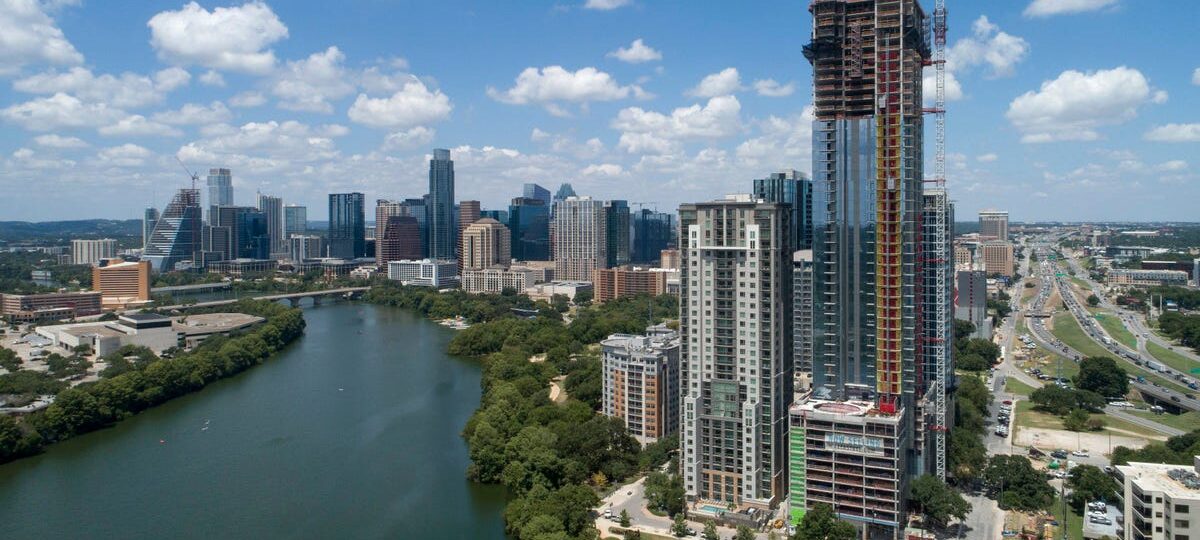
Rents have moved in opposite directions across major US cities since mid-2023, and changes in where Americans are moving and how much those cities built in response could explain why.
Cities like New York and Chicago have seen their rents rise, while others, like Austin, have seen them fall by around 8%, according to a study by Aziz Sunderji, founder of Home Economics, a publication about the US housing market.
Sunderji found that increases in supply in expensive markets with decreased inflows of new residents pushed rents down, while the local labor market, as measured by remote work and tech, had the least impact.
That drop in rents could reflect what Sunderji called a “timing mistake by developers,” who responded to early demand surges without knowing it would calm down and result in excess inventory, he said.
Austin rents have fallen about 8% since mid-2023.
Migration to Austin from other parts of the US fell between 2021 and 2024, slowing housing demand.
Meanwhile, many residential buildings — with permits approved from 2021 to 2023 during a demand boom — began to flood the market, increasing supply.
The study suggests that a mismatch led to the decrease in rents.
In addition, rents also weakened more in areas where prices had risen unusually high relative to local incomes and their historical norms.
Sunderji said that “Austin is the extreme case on every part of the combination, but the combination is general.” The migration slowdown does not mean these areas lost people; “they only stopped gaining them as fast,” Sunderji said, causing those demand surges to slow.
The decrease in Austin roughly doubled San Antonio’s 4% decline, the city with the second-biggest rent price decline among the 21 cities he measured.
The metros that saw rent declines — Austin, San Antonio, Denver, Phoenix, Dallas — all experienced high rent valuations and a deceleration in migration, except Denver, said Sunderji.
US cities facing rising rents and a high cost of living have been searching for policies to lower housing costs.
New York City, for example, passed a rent freeze for rent-stabilized apartments, and NYC Mayor Zohran Mamdani’s Block-by-Block plan plans to build 200,000 affordable homes over the next decade.
Yet, Sunderji said the factors that may have brought down rents in Austin, for example, were not policy-engineered.
Developers responded to a surge in demand that “they could not know would stop, and are now sitting on excess inventory with compressed margins, offering concessions and rate buydowns to move it,” he said. “Engineering that is neither possible nor desirable; you cannot plan a cycle,” he said.
By contrast, the three metros with the strongest rent growth since mid-2023 — New York, San Francisco, and Chicago — had home valuations near historical norms, while fewer residents moved away to other parts of the country.
Sunderji also looked into how rents were influenced by places with warm winters and the number of remote and tech workers in the cities.
Remote work and tech jobs had the least impact on lowering rents, given that New York, San Francisco, Seattle, and Boston have high levels of tech and remote workers and saw large rent increases.
The warm-winter factor served as a “proxy,” shedding light on the general trend of most people moving toward warmer places, thereby affecting migration inflows in certain areas.
Yet weather patterns did not play a major role in the study, said Sunderji.
Discover more from NAIRAVOICE.COM.NG
Subscribe to get the latest posts sent to your email.