


 Reuters
Sir Keir Starmer is “determined to publish” the long delayed military spending plan before next month’s Nato summit, according to the defence secretary.
John Healey outlined the prime minister’s latest timetable for the 10-year defence investment plan (DIP), as unions and defence firms warned the continued delays are a “threat” to British jobs, skills and national security.
Prospect general secretary Mike Clancy said defence workers and civil servants are “crying out for certainty”, while trade body ADS said some small and medium enterprises are “really struggling”.
The DIP was initially expected to be published in autumn 2025. The Nato summit takes place from 7 July.
The DIP will explain how new equipment and defence infrastructure will be funded over the coming decade and follows the wide-ranging Strategic Defence Review (SDR) published on 2 June 2025.
Speaking in the Commons on Monday, Conservative shadow defence secretary James Cartlidge asked if the Treasury has signed off the plan.
Healey did not offer a direct answer, replying: “I can say to him very clearly that the prime minister is determined that we publish the defence investment plan before the Nato summit.”
Cartlidge countered: “No wonder the defence investment plan is so late – Labour still haven’t worked out how to pay for it.”
Liberal Democrat MP Edward Morello said firms are “frustrated by the repeated delays” to the DIP and the Commons was likely to note Healey’s announcement “with a degree of scepticism”.
The West Dorset MP said: “Companies in my constituency have been telling me that at this rate they will be European or US headquartered by this time next year.
“We risk losing jobs, sovereign capability and billions of pounds of investment.”
Defence Minister Luke Pollard said the government has signed “1,200 major defence deals” since the general election in July 2024 and it is “not waiting” for the DIP to secure agreements with “companies large and small”.
Starmer challenged over defence investment plan delay
UK facing £28bn defence spending gap claims
At a glance: Key points from government’s defence strategy
Ahead of the exchanges in the Commons, Unite general secretary Sharon Graham said: “The government’s ongoing failure to produce the DIP is a threat to British jobs and skills, as well as a serious threat to national security now and for generations to come.”
Graham said “money must be spent in the UK” when the DIP is finally agreed and “anything else would be a betrayal”.
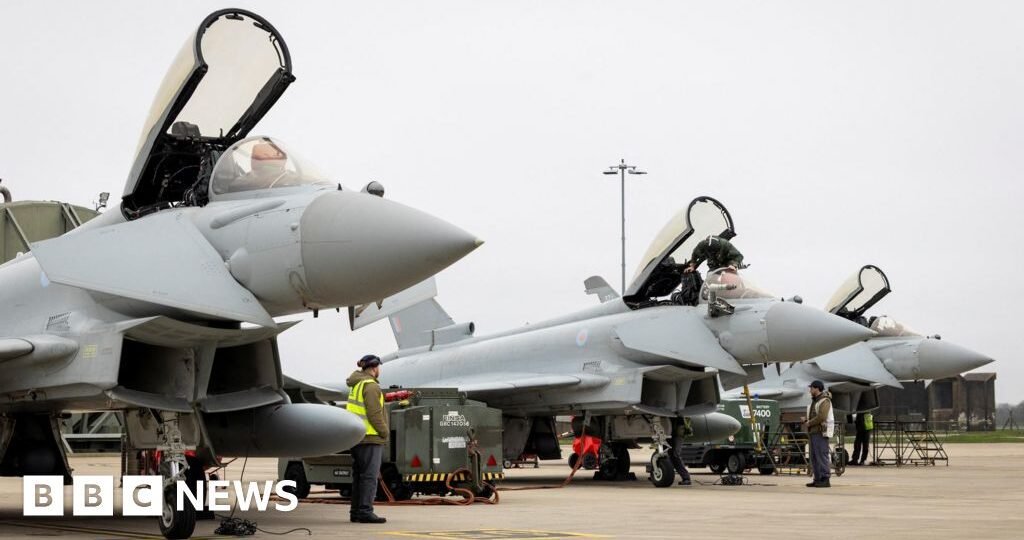
She added: “The government has a duty to ensure that contracts including a new tranche of Typhoon fast jets, the Skynet satellite and the A400M transport plane are signed off and production lines in Britain are rolling as soon as possible.”
ADS, a trade association for the UK’s aerospace, defence, security, and space industries, urged ministers to get on with the DIP.
Chief executive Kevin Craven described the 12-month gap between the SDR and the DIP as “pretty abysmal”.
He told the BBC: “We’re in a world where all of the threat assessments say that 2027 could be the point at which we come under credible military threats.
“Whether we do or we don’t, I’m not being alarmist about it, we need to be ready for that and we’re not, simplistically.”
Craven noted that ADS members, particularly smaller firms, are warning about the threats to their long-term future should things not start progressing.
He said: “We have seen firms either moving out of the sector or changing direction and it will continue, no question about that.”
Clancy, from Prospect and also a member of the Defence Industrial Joint Council, said: “Every month of delay is a month where fewer jobs and training places are created, and where industry is unable to invest in the infrastructure we will need to ensure sovereign capability.”
‘Real world consequences’
The SDR outlined a shift towards “warfighting readiness” to deter threats and pledged billions in extra spending for extra ammunition, next-generation fast jets, drones, and new attack submarines.
Reports have suggested the DIP has been held up over disagreements within government about new funding, as well as how to fund existing defence arrangements.
On Tuesday, the Conservatives will attempt to force the government to put in law when it will publish the DIP.
The Opposition has tabled an amendment to the Armed Forces Bill requiring the government to put the DIP before Parliament within a month of the legislation being approved.
While the amendment is unlikely to pass due to the government’s sizeable majority in the Commons, the debate could give a further insight into frustration among Labour MPs about the wait.
Michelle Scrogham, the Labour MP for Barrow and Furness, warned in March that arms suppliers were having to lay off staff and put investment decisions on hold while they wait for the report to be published.
Labour’s Catherine McKinnell, who represents Newcastle upon Tyne North, told the King’s Speech debate last month that the DIP delay risks having “real world consequences”.
She added “certainty” is needed on what is coming to protect supply chains and the big contractors.

Sign up for our Politics Essential newsletter to keep up with the inner workings of Westminster and beyond.
Discover more from NAIRAVOICE.COM.NG
Subscribe to get the latest posts sent to your email.