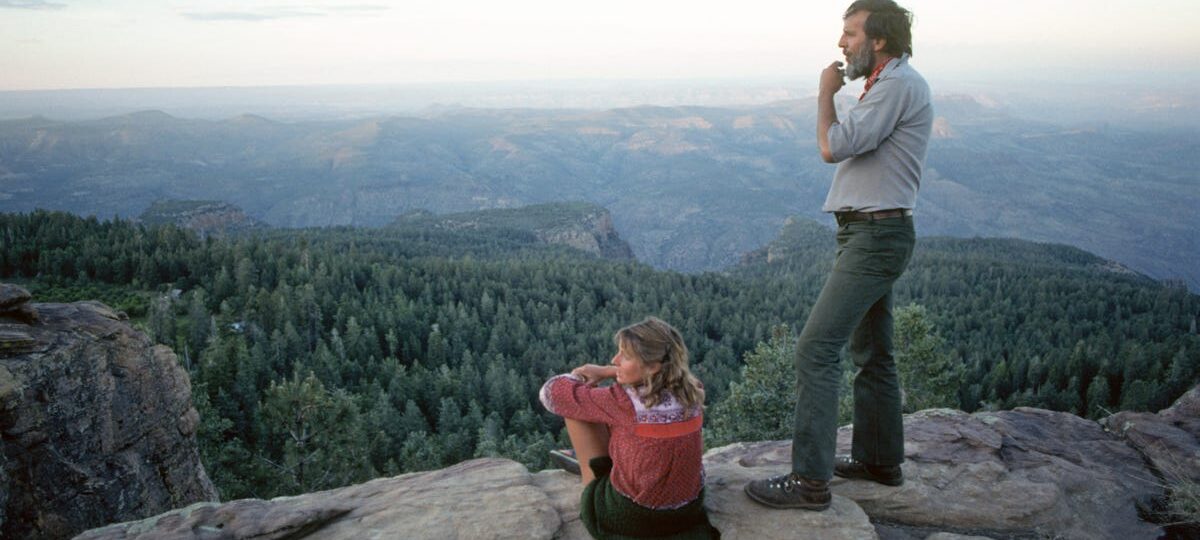
Before federal rangers became stewards of America’s 63 national parks, responsibility was fragmented among several agencies — including the Department of the Interior, the US Army, and the Forest Service.
At the time, federal lands, largely in the western US, received minimal management due to a lack of coordinated leadership and policy from the era’s politicians.
Some Americans also questioned the idea of converting land and monuments into parks.
That all changed on August 25, 1916, when President Woodrow Wilson signed the “Organic Act of 1916,” creating what is now known as the National Park Service.
In the first decade following the act’s adoption, American industrialist and conservationist Stephen Tyng Mather became the first NPS director and helped establish Grand Canyon, Acadia, Bryce Canyon, Zion, and Denali (formerly Mount McKinley) as national parks, and successfully lobbied for legislation allowing the purchase of land from private owners in the eastern US.
Today, the NPS — which celebrated its 110th birthday on Tuesday — oversees 433 sites across 85 million acres of federal land, from national parks and monuments to historic sites, battlefields, trails, rivers, and recreation areas.
The goal is to conserve each location’s scenery, wildlife, and historical objects.
The NPS has also worked alongside numerous federal work-relief programs over the decades, particularly during the New Deal era.
The Civilian Conservation Corps, or CCC — Franklin D’ Roosevelt’s so-called “tree army” — was one of them.
Within months of the program’s creation in 1933, the US Army and other agencies were developing plans to have 250,000 young men in camps around the country by July 1 that year. “They built everything from some of the most well-known structures in parks in the country to things in your own backyard that you might not even be aware of,” Neil Maher, a historian at the New Jersey Institute of Technology, previously told Business Insider.
CCC workers later played a role in disaster relief, including during the March 1937 Ohio River flood in Louisville, Kentucky.
The NPS and its partners have also worked to fight fires, create and expand access to state and national parks, and string telephone lines.
Recent federal cuts to NPS, however, have raised concerns about its ability to maintain the parks and sustain normal operations, including visitor centers and search-and-rescue facilities.
According to the nonprofit National Parks Conservation Association, the NPS has lost nearly 25% of its permanent workforce since January 2025.
The staff cuts have left some parks littered with trash, the restrooms closed or unclean, and visitors stuck in long entry lines.
The agency’s discretionary funding requests have also fallen.
After rising from $3.5 billion in 2022 to $3.8 billion in 2024, the NPS requested $3.6 billion in 2025 and just $2.1 billion for 2026.
Still, Americans love to visit the parks.
The NPS saw 323 million visits in 2025, a slight decrease of 2.7% from 2024.
Here’s how the NPS has evolved over the years, and how its employees and sister programs have fundamentally reshaped the landscape of the US.
Discover more from NAIRAVOICE.COM.NG
Subscribe to get the latest posts sent to your email.