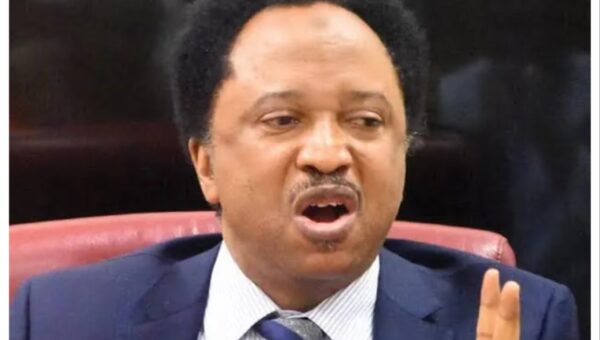

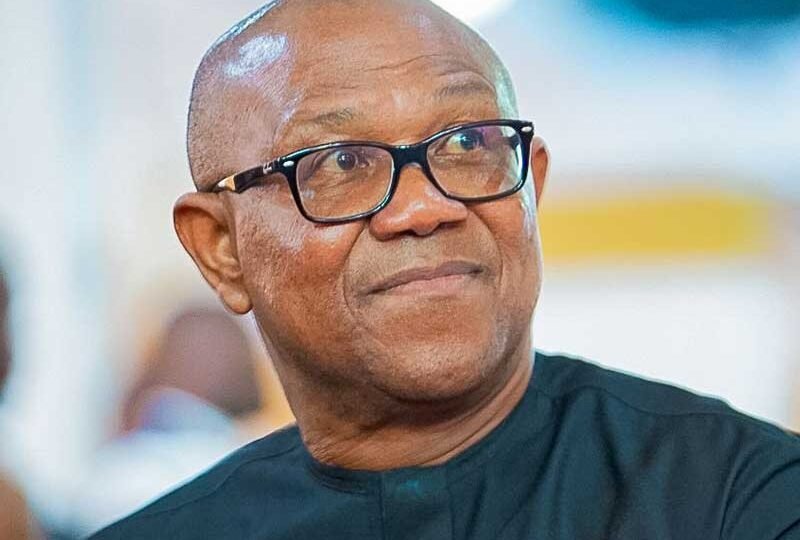
A political alliance between former Labour Party presidential candidate, Peter Obi, and the leader of the Kwankwasiyya movement, Rabiu Musa Kwankwaso, is already generating fresh conversations ahead of the 2027 presidential election.
Although neither politician has officially emerged as the presidential candidate of the Nigeria Democratic Congress (NDC) yet, both men are seen as preferred candidates to contest against the ruling party and other strong opposition parties in the next election cycle.
Political observers believe the talks are largely driven by the electoral realities of the 2023 presidential election, where both candidates recorded impressive but regionally limited performances.
Obi secured more than six million votes nationwide under the Labour Party and won 11 states alongside the Federal Capital Territory (FCT). However, in the northern region, his victories were limited to Plateau and Nasarawa states, as well as the FCT, where he enjoyed considerable support.
Kwankwaso, who contested on the platform of the New Nigeria Peoples Party (NNPP), won Kano State and secured nearly one million votes, reinforcing his influence in the North-West.
The proposed alliance is now raising questions about whether Kwankwaso’s northern political structure could help Obi improve his acceptance across the region in 2027.
Speaking with DAILY POST in an exclusive interview, political analyst and lecturer at the Aliko Dangote University of Science and Technology, Professor Murtala Muhammad, said Obi’s appeal in the North during the 2023 election was mostly concentrated among urban youths and citizens seeking alternatives to mainstream political parties.
“Peter Obi demonstrated some electoral strength in parts of Northern Nigeria during the 2023 presidential election, particularly in Abuja and among urban youths, middle-class voters, and citizens dissatisfied with the traditional political establishment,” he said.
According to him, electoral trends showed that Obi’s strongest support base remained outside the North.
“Electoral analyses estimated his northern vote share at roughly 14 per cent, compared to over 40 per cent in Southern Nigeria,” Muhammad stated.
He explained that while an alliance with Kwankwaso could strengthen Obi’s chances in Kano and parts of the North-West, it may not significantly alter the broader regional voting pattern.
“Although a potential alliance with Rabiu Musa Kwankwaso could improve Obi’s competitiveness, particularly in Kano through the Kwankwasiyya movement, it does not automatically guarantee widespread northern support,” he added.
Muhammad argued that voting behaviour across most parts of the North-West is still heavily influenced by religion, regional identity, longstanding party loyalty, and local political interests.
“Consequently, many northern voters may still be reluctant to support Obi despite Kwankwaso’s endorsement, making it analytically inaccurate to assume that Kwankwaso’s northern identity alone can deliver the wider North-West voting bloc to Obi,” he said.
Also speaking on the development, Kano-based politician and State House of Assembly aspirant, Aminu Abdullahi Ibrahim, acknowledged that Obi has gained more visibility among northern youths since the last election.
“I believe Peter Obi has gained a level of popularity in parts of northern Nigeria, especially among young people, urban voters, Christians in the North-Central region, and Nigerians who are frustrated,” Ibrahim said.
He maintained, however, that Obi still faces stiff political limitations in the core North-West states, where established political structures remain dominant.
“His popularity in the core North-West, particularly in states like Kano, Katsina, Jigawa, Kebbi, Sokoto, and Zamfara, still remains limited when compared to established northern political figures such as Atiku Abubakar,” he added.
Despite those limitations, Ibrahim said a merger between both politicians could still create a stronger opposition platform than what existed during the 2023 election.
“That said, if Peter Obi and Kwankwaso eventually form a political alliance ahead of future elections, it could make a significant difference compared to 2023,” he stated.
According to him, any serious challenge in 2027 would depend on more than just popularity or online support.
“They require strong grassroots mobilization, party unity, trusted local structures, religious and ethnic balancing, and the ability to protect votes across polling units. Even if Obi and Kwankwaso work together, translating public excitement into nationwide electoral victory will still be a major challenge,” Ibrahim said.
As coalition discussions continue, analysts say the success of any Obi-Kwankwaso partnership may ultimately depend on whether both politicians can transform their individual regional strengths into a truly national political movement capable of competing across Nigeria’s diverse electoral landscape.
Discover more from NAIRAVOICE.COM.NG
Subscribe to get the latest posts sent to your email.