
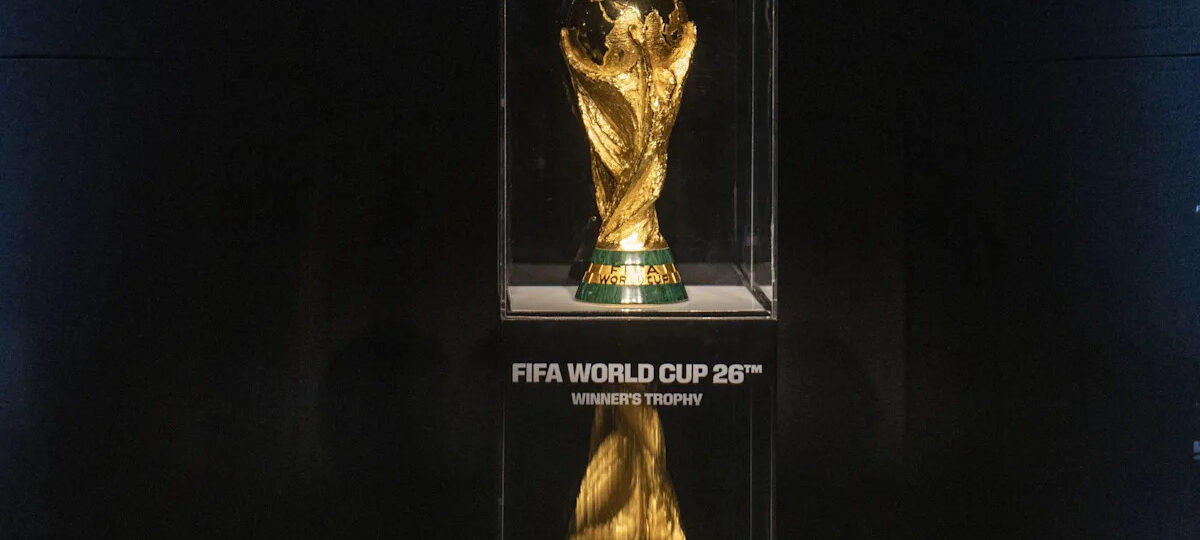

We need to talk about the fake outrage that exists in women’s football and the LGBTQ+ community. This demographic was very loud and proud in criticising the 2022 FIFA World Cup in Qatar, and that is valid. However, the lack of a similar collective outrage and rallying about the USA co-hosting this summer’s World Cup is glaring.
Qatar was also the men’s World Cup, so using that as an excuse for the silence this year simply doesn’t wash.
Where did the outrage go?
Qatar is an easy target when it comes to criticism of LGBTQ+ community rights. However, issues in the US have been growing at an alarming rate. The US has seen ongoing attacks on transgender people, the dehumanisation of gay men and linking them to paedophilia, and equal marriage being attacked via the Supreme Court.
It also has ICE and the deportation of thousands of people — many of them who are part of the community — and their deportation to countries that are not safe for them. And yet, I haven’t seen the same level of news articles, social media campaigns or LGBTQ+ leaders on TV condemning the US.
Was the attack on Qatar pushed with the veil of Islamophobia?
One should also be asking: Was the attack on Qatar pushed with the veil of Islamophobia? Because we do need to talk about that.
Football rarely confronts Islamophobia, but there are moments where it comes up. This tends to be around Ramadan and the talk of making extra provisions for players to help them break their fasts. And this often happens only in the men’s game. The women’s space — which likes to call itself progressive — rarely addresses Islam or instead, talks openly about Islam without prompting from Muslim players.
And no one is saying that it’s not right to criticise Qatar, that’s not the problem. The problem was the tone and delivery of the criticism, of the country and its people, which needs to be mentioned. Is it because, as a society, we have convinced enough people that Islam is the villain? That people don’t even realise that their criticism, their call to boycott Qatar, didn’t come from a legitimate place? Instead, it came from a place where the propaganda of the Islamic world won, and how Islam is the villain. This makes Qatar a very comfortable villain in a way that the US is not, due to its global influence — especially in women’s football.
‘It’s harder’ is not a moral argument
Attacking Qatar is easier than attacking the US. Qatar is not economically and culturally dominant, unlike the US. Sponsors, organisations and even players themselves might not want to risk the backlash that speaking out against the US can bring. So it’s easier to pretend that, if you have the moral high ground for a country like Qatar, they may be okay with losing access to it.
Boycotting the US on paper is ‘harder’. We see the impact of what the US can do, and we have seen what happens to those who attempt to boycott it. Francesca Albanese, the United Nations Special Rapporteur, has publicly stated that she is unable to open a bank account due to her position on US foreign policy. The chilling effect of American influence is real and documented.
But ‘it’s harder’ is not a moral argument. It’s exactly the kind of convenience that exposes whether the Qatar outrage was principled or performative.
‘It’s not illegal’ is not a good enough bar
It seems that because the US hasn’t criminalised being part of the LGBTQ+ community in the same way Qatar has, it might be causing some of the silence. Just because it is legal and societally different than Qatar doesn’t mean that people in the US aren’t still being persecuted.
State laws are coming in that pretty much criminalise being part of the community without fully banning it. Federal acts and administrative policies are being implemented that make people feel as if they have to go back into the closet for protection. So while being part of the community is not illegal in the US on paper, in many areas of society, it feels like it is.
And this silence, even with all the laws being brought in, is very baffling. The threshold for outrage shouldn’t just be ‘in this country it’s illegal, let’s protest’. The threshold should be: LGBTQ+ lives, no matter where they live, are just as important, and any country doing anything to make life hard for that marginalised community should not be getting our support.
Whiteness decides what is deemed important
LGBTQ+ people are a huge part of the football space, no matter the gender. They are a massive part of the women’s football community, especially. However, it seems there is an underlying hypocrisy in what people believe is important. Also, how people weaponise sexuality when it comes to activism. Also, how easy it is to condemn and call out countries when the majority of the people are not white. This is an undercurrent in the women’s space. How whiteness plays an important role in what is deemed important.
It very much feels like certain human rights violations make people more outraged when the country doing them is non-white. Is it because of the white saviour complex that women’s football seems to be building on? How women are oppressed in the game, whilst ignoring a growing issue of racism and misogynoir happening in that space? What about the way that Black women are seen as men and Asian women are invisible on the big stage?
Is it easier to ignore human rights violations when they are done by people who look like you? Because it forces people to do some self-reflection and look into why they seem to be angrier at non-white countries. All the while ignoring the fact that many African countries have anti-LGBTQ+ laws due to the British and colonisation?
A pattern of over-contextualising issues, removing nuance from conversations, or pretending not to talk about them exists. It’s not just a football issue — it’s a problem in the broader activism space.
Call it what it is: selective moral outrage
Selective moral outrage based on which country people criticise is lazy activism. The faces of the people running these campaigns and their selectiveness should be called out. They should be made to answer publicly. What are their conscious biases? What are their reasons for giving Qatar more airtime, social media campaigns, and a boycott call, and not the US? Why does it seem like women’s football is very comfortable deciding who they centre, and why it’s never the groups and people who should be?
Where are the players? The ones who were loud and proud against Qatar? Where are the organisations and companies that called for a boycott of Qatar? Where is their voice in boycotting the US?
We have a moral and social responsibility to call out issues such as the legalised criminalising of queer rights. And we should also have the moral and social responsibility to publicly critique the game on what they believe are progressive views. What does that look like in a space like the World Cup?
The standard has to be the same
We should be boycotting the US World Cup, just like we boycotted Qatar. And we should be making sure our energy is just as strong, no matter the country.
Human rights should apply to all, and there should be consistency when it comes to protesting and condemnation. The same level of community push against Qatar should be for the World Cup in the US. The same resources, support and community rallying should also be for the US.
The silence is not just a gap. The silence is the story.
Related articles from Her Football Hub:
- FIFA launches Female Health and Performance Project, bridging the gap in research within the women’s game
- Why do we become football fans?: Types of supporters and the psychology behind it
- Two Palestine women’s national team players abducted by occupying Israeli forces
Discover more from NAIRAVOICE.COM.NG
Subscribe to get the latest posts sent to your email.