
 Chris Ratcliffe / Bloomberg via Getty Images
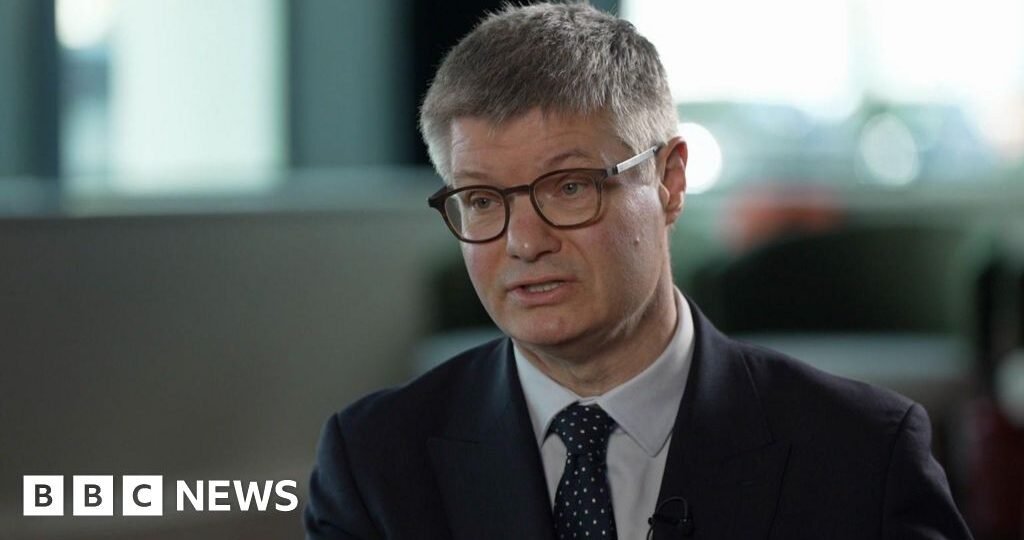
The boss of Next has warned there has been a “dramatic fall” in the number of entry-level job opportunities in the UK.
Lord Wolfson told the BBC that just two years ago, Next typically received 10 applicants for every job in its shops, but that number had since risen to 19.
“That doubling of applicants for shop jobs is indicative of just how big the crisis is in youth unemployment at the moment,” he said.
He also said changes to employment law coming into force next year would make hiring more difficult, but the government says its changes provide a “baseline” of security and predictability for staff.
Conservative peer Lord Wolfson also called on the government to reverse its hike in the rate employers have to pay in National Insurance, along with minimum wage rises. But he said economic growth was the main solution to boosting the jobs market.
“Youth unemployment is really a symptom of wider problems with employment in the economy, and of course, if you’ve got fewer jobs, the people who suffer most are the people with the least experience and that is the youngest,” the chief executive said.
A Treasury spokesperson said increasing the national minimum wage boosted pay for more than 200,000 young workers, and pointed out that employer national insurance contributions were lower when hiring under-21s.
“Cutting wages for the lowest paid during a time of global uncertainty is not the answer,” the spokesperson said, adding a £2.5bn youth employment support package would “deliver a million opportunities across the country”.
A Department for Business and Trade spokesperson said the government’s Budget had allowed it to stabilise the economy and deliver support for families and businesses.
“Lord Wolfson, who earned more than £7m last year, will understand just how important our measures to make work pay are for the financial and job security of working people,” the spokesperson said.
There are growing concerns over the number of young people not working. Latest figures show the unemployment rate for 16 to 24-year-olds is 16.2%, the highest since last 2014, and more than three times the rate of general unemployment at 5%.
High street retailers and hospitality businesses such as restaurants, cafes and pubs often offer the first experience of work for many young people, especially those still at school and in further education.
But businesses including Next have warned that an increase in taxes for employers and higher minimum wages were affecting their ability to create roles, particularly lower paid, part-time jobs. Sluggish economic growth can also have an impact on hiring, as businesses tend to hold off investment.
Lord Wolfson said, as a result of cost increases, Next had fewer staff in individual shops, but its online business was thriving. He previously said government policies had seen Next’s wage bill rise by £70m per year.
He added the retailer was increasingly using automation and other technology, such as self-scanning lockers for customers to return items instead of having staff on tills.
Next is seen as a high street success story and a business that has evolved and adapted while its rivals from years gone by have gone to the wall.
It has hoovered up brands including Joules, Fatface, Cath Kidson, and Made.com that have struggled in recent years, and employs more than 30,000 people across its businesses. Earlier this month, the retailer increased its full-year profit expectations to £1.2bn, with sales up 6.2% in the first quarter.
But Lord Wolfson rejected any suggestion the retailer was choosing shareholders over workers.
“When people talk about a company making a billion pounds, they assume that that’s somehow a person with a billion pounds in their pocket and they must be very, very rich. But the nature of public companies is that we are owned by hundreds of thousands of savers whose savings are often very modest,” he said.
“The average dividend we’ll pay out to an individual saver will be around £300 a year.”
No profit, no business
Lord Wolfson insisted Next had to make a profit. “If you look at retail over the last 25 years… 70 to 80% of the names that were there then have gone. And what you can’t do is say, we just won’t run the business for profit because if you don’t run the business for profit, you just don’t stay in business,” he said.
He also repeated his criticisms of the government’s Employment Rights Act, warning one aspect of the legislation meant it was “going to get much harder” for Next to offer more hours for its staff.
One of the reforms includes a requirement for employers to offer guaranteed hours to casual workers in a bid to curb the use of zero-hours contracts.
While not a fan of zero-hours contracts, Lord Wolfson said the new rules reduced the ability to offer extra hours at busy times “because the risk is you then have to contract for those hours forever”.
“You can’t afford to… have the same number of people in your shop in February as you have in and around Christmas,” the Conservative peer said.
“That’s going to be bad news for our colleagues who want extra hours, particularly students who, in holiday time, need extra hours, and of course bad news for customers because service won’t be as good.”
However the Trades Union Congress said the policy was “hugely popular” and the right to a regular-hours contract “is set to be based on a reference period over several months which will even out peaks and troughs”, and would not impact holiday jobs.
“This will give insecure workers on variable hours security in their working lives which they are so badly lacking at the moment,” a spokesperson added.
But rather than focusing specifically on solving youth unemployment, the long-serving Next boss said the government should focus on reforming planning laws, energy policy and transport networks to boost overall economic growth.
Lord Wolfson called on the government to release more land for building, suggesting the cost of an acre of agricultural land in the south-east of England was about £15,000, but jumped to as high as £1.5m with planning permission.
“All of these things are holding the economy back and if government could just take its foot off the brakes, we could have a much, much faster growing economy,” he added.

Stop blaming young people for being unemployed, says Amazon’s UK boss
Minimum wage: Who is getting a pay rise and how much is it?
Discover more from NAIRAVOICE.COM.NG
Subscribe to get the latest posts sent to your email.