When I sold a book in a six-figure deal back in 2023, I thought my whole life would change.
For starters, that amount of money — for a book I had been working on for free for the past 20-plus years — felt like a windfall.
Given the size of my advance, it was safe to assume my publisher was positioning it as a “big book”: a highly anticipated title launched with a major marketing push and significant financial backing, expected to be a commercial success.
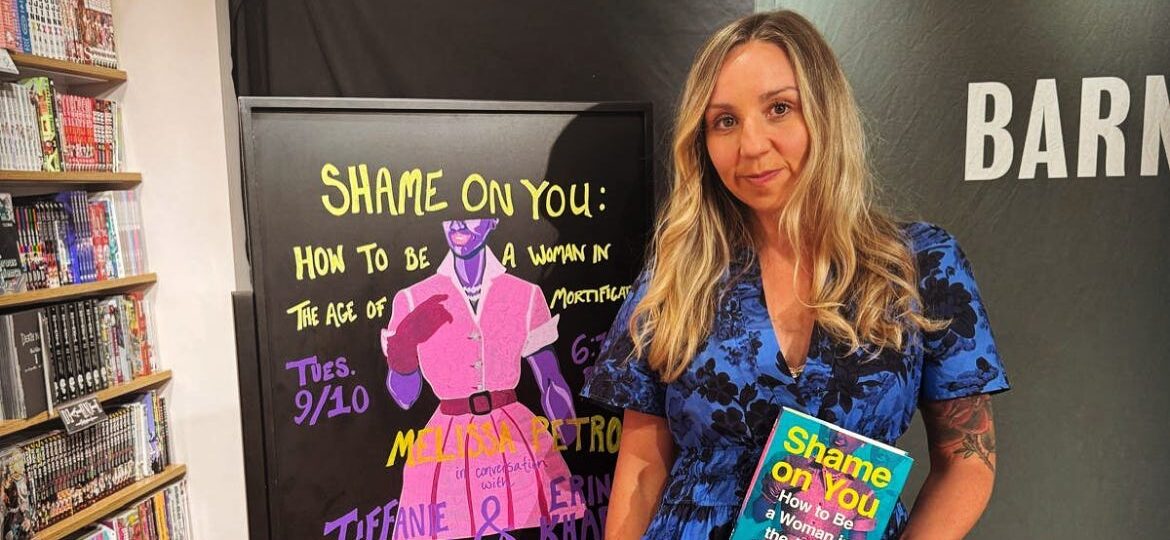
The book was deeply personal and provocative, tracing my journey as a former sex worker and survivor of mass-media humiliation turned stay-at-home mom, and what that experience might teach us all about shame.
Given the outsized response to some of my earlier essays, I anticipated attention.
I also feared catastrophic fallout.
All the hate mail would be worth it, I told myself, because opportunities would come knocking anyway — emails in my inbox, speaking gigs, and other prestigious, lucrative offers.
Then the book came out — and crickets.
I watched it bob along the media landscape for a week or so, competing with other new titles and whatever else was making waves.
I was buoyed by a speaking event at the 92nd Street Y with Kiese Laymon, and being flown to D.C. to appear in conversation with Charlotte Clymer felt equally surreal.
My publisher described first-quarter sales as “quiet.” When my agent emailed to encourage me “not to feel disappointed,” it had the opposite effect.
Here’s the reality I didn’t know: most books don’t earn out — that is, sell enough copies to recoup what the publisher paid the author upfront.
I didn’t know this when I signed my contract.
Instead, I fixated on a line promising a $30,000 bonus if I met a sales benchmark within the first year.
I’ve since been told that’s standard language in most book contracts, but at the time I read it as a personal challenge and made earning out my goal.
Do you know how many books an author has to sell to earn out?
Do you know what a typical debut nonfiction book sells in its first year?
All that mattered was: I was going to sell, sell, sell.
According to industry data, many nonfiction titles sell only a few hundred copies in their first year, and only a small fraction surpass 1,000.
A “successful” debut with a traditional publisher is often defined as somewhere between 1,000 and 5,000 copies.
I sold just over 2,000 copies in my first year.
To earn back my $125,000 advance and trigger that bonus, I learned much later, I would have needed to sell over 44,000 copies in a year.
That threshold is structurally out of reach for almost anyone.
Still, a part of me—even today—feels it’s a personal failure.
For nearly 20 years, my one goal in life was to publish a book and become an author, so when it finally happened, I thought I was set.
I thought being an author would become my full-time job — and in a way, it can.
Even when publicists do their job, authors are still expected to act as their own — or spend tens of thousands of dollars hiring an outside one — and pour in hundreds of unpaid hours promoting a book that is unlikely to ever earn out.
Having already “earned” my advance by writing it, I resented the expectation that I keep working for my publisher for free.
I spent the first year booking podcasts and events, and the only currency was exposure.
Eventually, carving hours out of my workday to volunteer my time felt increasingly untenable — almost irresponsible — when I couldn’t reliably pay my bills.
Today, I recognize that most writers aren’t financially supported by their writing, even the “successful” ones.
There are writers who will never earn significant money and are still, in every meaningful sense, writers.
Even authors who are household names often rely on teaching, consulting, or freelance work to stay afloat.
I get occasional opportunities that look impressive from the outside — speaking invitations, podcast appearances, and conversations with well-known writers.
I also do the unglamorous work: chasing freelance gigs, teaching, and trying to convert visibility into income that actually covers my life.
That’s part of being a working author.
We often think of a book as the be-all and end-all of a writer’s career, but as Anna David often points out in her Substack, “Behind the Book Cover,” it functions more like a business card.
An author gets to keep their advance whether they earn out, but I won’t make another penny from my book beyond the advance.
Even so, having written a book has qualified me for work I couldn’t have accessed otherwise.
It opened the door to ghostwriting, where I make a quarter of what I made from my advance for roughly a quarter of the work, with none of the pressure of publicity or backlash.
It also lets me sell private coaching at a premium rate, teach courses on publishing and craft, and lead personal development workshops for prestigious places like the Esalen Institute.
I was already fairly shame-resilient, but writing this book in particular — and publishing a book in general— deepened my understanding of shame and vulnerability.
I’m less invested in protecting a polished version of “success,” and more willing to name things plainly, even when that means calling something a “failure” and sitting with the judgment that follows.
That ability is a gift the book gave me, and it’s worth more than any royalty check.
Discover more from NAIRAVOICE.COM.NG
Subscribe to get the latest posts sent to your email.