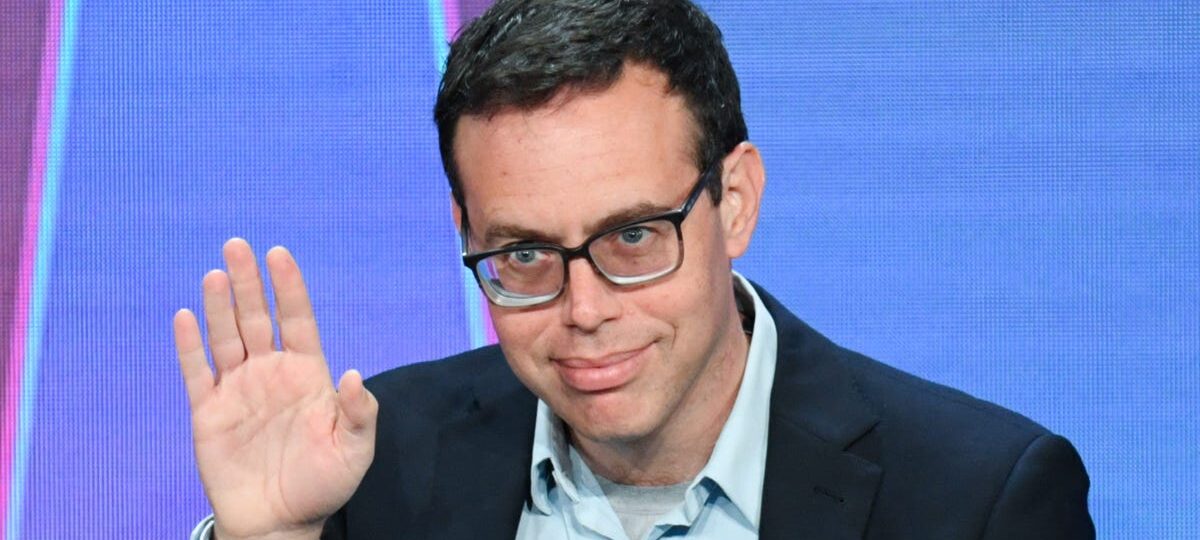
David Robinson, a leader on OpenAI’s Safety Systems team who quit the company this week, once had ambitions to bring philosophy to journalism.
A Rhodes Scholar, Robinson graduated from Princeton in 2004 with a degree in philosophy.
At Princeton, he led the school newspaper’s opinion section.
In a 2003 interview with the Daily Princetonian, Robinson said he wanted to be the kind of reporter who “tells you what the facts are and then gets to the philosophical differences that explain the situation.” Now, Robinson’s name is in the headlines — and a notable byline.
He left OpenAI, the same week three other safety researchers were fired, and issued a blistering essay for The Atlantic about what he said is OpenAI’s inadequate approach to safety. “I agree with other recently departed staff that the companies building this technology aren’t being nearly careful enough,” Robinson wrote in the essay.
Neither Robinson nor the PR firm he said he hired responded to Business Insider’s requests for comment.
A review of his published essays, interviews, and books dating back to his days as an undergraduate paints a picture of a man deeply concerned with the impact of technology on humanity. “All through my life, I’ve been fascinated by the rules that surround technology and how we decide when and how we’re going to use it,” he said in a 2022 interview on the Princeton Alumni Weekly podcast.
Robinson grew up in Potomac, M.D., an affluent suburb of Washington, D.C.
As a child in the 1990s with a mild case of cerebral palsy, Robinson said his teachers created a new rule that allowed him to use a word processor in lieu of pen and paper. “Ever since then, I’ve been interested in the social impacts of new digital technologies,” he said in a UC Berkeley interview in 2021.
During summers as an undergrad at Princeton, he interned at Time Magazine and The Wall Street Journal, according to his LinkedIn page.
He told the Daily Princetonian in 2003 that after gaining experience as a reporter, he hoped to write for a literary magazine like The New Yorker or Harper’s.
After Princeton, Robinson got a degree in philosophy, politics, and economics at Oxford before returning to Princeton to start a research center about the relation between technology and public policy. “Part of the idea was that, if you’re navigating the policy and the values choices that come up around new technologies, it’s a big help to have some real depth of technical expertise,” he said in the Berkeley interview.
In 2011, Robinson and a colleague from Princeton founded Upturn, an organization that aimed to use algorithmic technologies to make government data more accessible.
After research and teaching roles at several universities and a one-year tenure as a faculty director at Apple University, where Robinson gave seminars for Apple executives on the ethical questions prompted by new technologies, Robinson joined OpenAI in 2023.
Originally the head of policy planning at the ChatGPT’s maker, Robinson wrote in a LinkedIn post announcing his new position that “I look forward to helping shape OpenAI’s engagement in the broader AI policy debate, at this critical moment.” In a 2023 appearance at the AI Governance Summit hosted by the World Economic Forum, Robinson said OpenAI performs robust safety checks before releasing models and that the company wasn’t solely motivated by profit. “We believe in deploying gradually and then learning as we go,” he said.
Recently, however, Robinson has posted concerns on X about OpenAI’s ability to balance safety with increasingly advanced models. “Things @openai are indeed changing significantly by the day, but I do not know whether we are changing fast enough,” he said last month. “I think it is still true, as @hilbertspaess puts it, that many of us ‘have not deeply internalized the civilizational stakes.'” Then, on Friday, Business Insider exclusively reported that Robinson was out at the company.
The next day, he published a lengthy essay in the Atlantic explaining why he left.
Robinson’s departure follows that of Jacob Coxon, a former Anthropic engineer who quit last month and warned that AI could cause mass extinction.
In his Atlantic essay, Robinson addressed the argument that he could do more to improve safety by staying at OpenAI than by leaving.
Robinson wrote that, by working on the outside, he “can help more people understand the risks I saw, and strengthen the incentives OpenAI and other firms have to be safer.” He said he chose to leave because “as the company sprints from one launch to the next, it is failing to achieve the level of care that I believe is needed.” In response to Robinson’s essay, an OpenAI spokesperson said in a statement that the company is working to ensure that AI models don’t outpace the safety measures it has implemented. “As our models become more capable, we continue to strengthen our safety and security practices to address the risks we see today while building safety cases to anticipate the risks of future advances,” the spokesperson said. “We’re making sure our models don’t become more capable than we can safely manage and secure, and we pause training or hold back models when we need to slow down.”
Discover more from NAIRAVOICE.COM.NG
Subscribe to get the latest posts sent to your email.