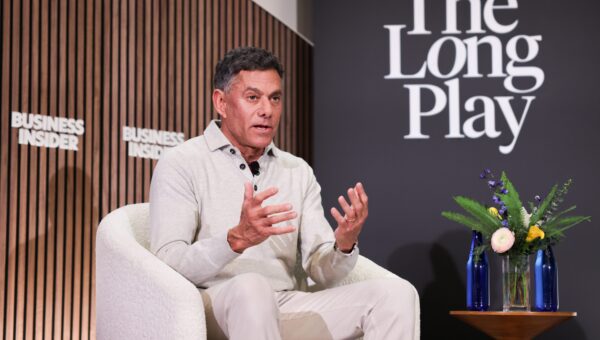

- Mark Cuban says data center developers are using healthcare-style contracts to confuse communities.
- He said healthcare contracts are “so big and so long” that insurers “get to be contractual terrorists.”
- Data centers, which are crucial for the AI boom, have become a hugely contentious issue across America.
“A lot of communities have been really dumb with the deals they’ve negotiated for data centers,” Cuban said on an episode of “The A16z Show” released on Wednesday. “They’ve fallen for the contractual terrorism in a lot of cases.”
Cuban, who co-founded Cost Plus Drugs, a company that sells generic medicines at a transparent markup, previously coined the phrase “contractual terrorism” while discussing healthcare.
On the A16z podcast, he said massive healthcare insurers and their subsidiaries use sprawling, opaque agreements to obscure costs and make it difficult for employers to know where their money is going.
Cuban said those contracts are “so big and so long” that insurers “get to be contractual terrorists” — a formulation he also applied to communities’ data center deals.
Residents living near facilities have reported incessant low-frequency hums, diesel smells, intrusive lights, construction disruption, pressure on water and electricity supplies, and the loss of trees and open land.
A University of Massachusetts Amherst poll of 1,000 Americans from September found that 65% opposed building an AI data center in their local community, including 49% who said they strongly opposed it.
The ghost data center backlash
The race to build AI infrastructure has also produced far more announcements than operating facilities.
Aterio, which tracks projects through satellite imagery, permits, and other records, counted 8,268 announced US facilities as of October 20. But only 2,126 were active, and 861 were under construction.
That is a risk Cuban has warned about.
In a series of X posts in September, he laid out a 10-point playbook for communities considering their first data center, arguing that every promise from a developer should come with a measurable limit, independent oversight, financial backing, and a remedy if it is broken.
Cuban’s advice is to settle those questions before construction begins.
“Resolve it before granting the approval that spends the last of the town’s leverage,” Cuban wrote at the time.
Read the original article on Business Insider
Discover more from NAIRAVOICE.COM.NG
Subscribe to get the latest posts sent to your email.