Stop me if you’ve heard this one before: a murder mystery, a location so drearily symbolic it counts as a non-sentient character, and a damaged detective forced to confront her demons before she can bring the culprit to justice. Although viewers receive these trademark tropes from Peacock’s severely underrated miniseries Long Bright River, the 2025 crime drama’s archetypes double as a sleight of hand disguising its unconventional objective.
Based on the New York Times bestselling novel by author Liz Moore (Netflix is developing her acclaimed 2024 mystery, The God of the Woods, into a limited series starring Maya Hawke) and co-created by Moore and Nikki Toscano, Long Bright River is a remarkably sophisticated and harrowing work rooted in fractured families, communal ties, systemic injustice, and the opioid crisis. Anchored by one of Amanda Seyfried‘s career-best performances as a protagonist with a traumatized past and turbulent present, it delivers on dual fronts — a breathless, moody thriller and a piercingly tragic American drama.
What Is ‘Long Bright River’ About?
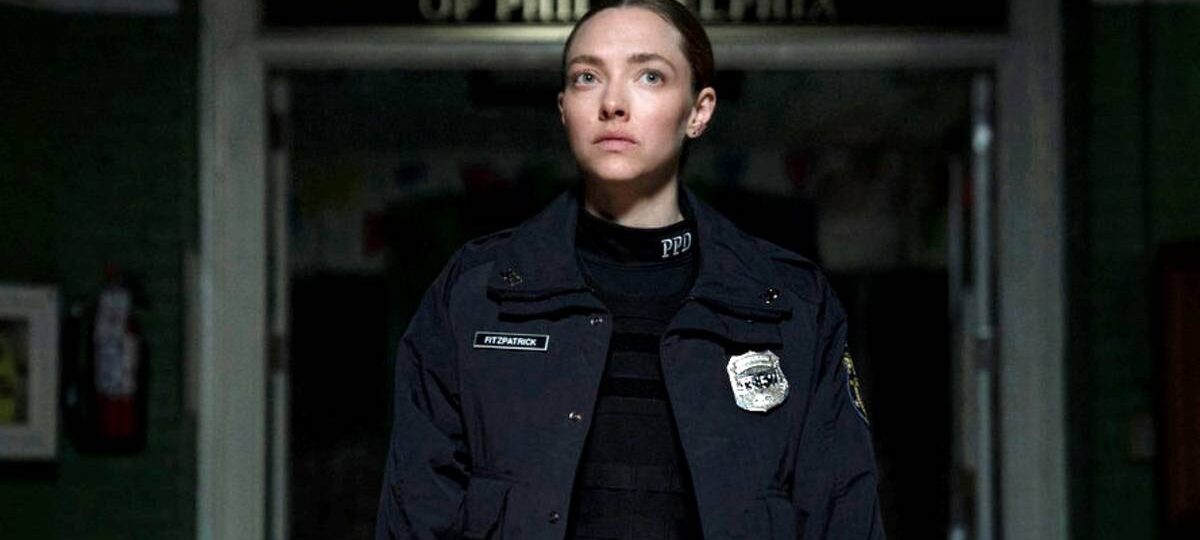
Born and raised in Kensington, Philadelphia, Mickey Fitzpatrick (Seyfried) is an underpaid beat cop, a devoted single mother to her son, Thomas (Callum Vinson), and a perpetually haunted and exhausted woman. She once aimed to become a musician, but those youthful dreams turned to ash in her mouth long ago. Her struggles echo what she witnesses each day on the streets and knows better than the back of her hand: a neighborhood collapsing under the weight of socioeconomic decline, income inequality, and limited opportunities. Everyone, Mickey included, envisioned different futures for themselves than suffocating inside a cruel capitalistic trap designed to spread desperation, despair, shame, and crime among the working class.
Just as often, Mickey witnesses her self-centered colleagues’ rampant disdain for Kensington’s most vulnerable: Black individuals and people of color, the LGBTQIA+ community, sex workers, unhoused individuals, and all those affected by addiction. Mickey’s noble idealism, maintained despite her wounds rather than springing from inexperienced naivety, makes her one of the intolerant police department’s lone exceptions to the rule. Although reserved to a fault, she fiercely cares about Kensington and honors her responsibility by approaching her longtime neighbors with tenderness, understanding, and respect. During her patrol shifts, Mickey can’t help scanning for her estranged sister, Kacey (Ashleigh Cummings), who has cycled back and forth between rehabilitation and substance abuse for her entire life. Kacey’s prolonged disappearance coincides with multiple murdered sex workers, their deaths staged to resemble overdoses.
‘Long Bright River’ Is a Nuanced Depiction of Family and Community
 Image via Peacock
- Image via Peacock
- Image via Jocelyn Prescod / ©Peacock / Courtesy Everett Collection
- Image via Peacock
- Image via Peacock
 Image via Peacock
 Image via Peacock
 Image via Jocelyn Prescod / ©Peacock / Courtesy Everett Collection
 Image via Peacock
 Image via Peacock
- Image via Peacock
- Image via Peacock
- Image via Jocelyn Prescod / ©Peacock / Courtesy Everett Collection
- Image via Peacock
- Image via Peacock
 Image via Peacock
 Image via Peacock
 Image via Jocelyn Prescod / ©Peacock / Courtesy Everett Collection
 Image via Peacock
 Image via Peacock
Long Bright River was inspired by Moore’s experience living in Kensington for almost two decades and accumulating stories directly from the residents. According to her interview with The Creative Process, she consulted the community further during the adaptation’s production, striving to “make sure that [they] felt represented and had a voice at the table.” Meanwhile, Seyfried’s hands-on research included feeling, in Moore’s words, “very moved by the two [Philadelphia] police officers she met, both of whom were single mothers. I think she used a lot of the trauma that they had experienced on and off the job to inform her acting.”
Such weighty intimacy is painstakingly threaded throughout Long Bright River‘s eight episodes. It would’ve been profoundly easy to mishandle the material’s lofty complexity. Instead, Moore and Toscano replace oversimplification, stereotypes, and melodrama with a sensitive portrait of individuals failed and scarred by institutional violence, poverty, intergenerational trauma, misogyny, sexual and emotional abuse, targeted police corruption and abuse of power that’s too pervasive to dismantle and repair from the inside, and the ways addiction tears apart families. No one is a villain, legitimate antagonists notwithstanding; as a microcosm of multiple American crises, the flaws and virtues of the series’ self-contained ensemble are realized with dignity, nuanced detail, and devastatingly humane empathy.
Your answers have pointed to one action hero above all others. This is the person built to have your back — for better or considerably, spectacularly worse.
Your partner doesn’t talk much, doesn’t need to, and will have assessed every threat in your immediate environment before you’ve finished your first sentence. John Rambo is not a man of plans or politics — he is a force of nature shaped by survival, loyalty, and a capacity for endurance that goes beyond anything training can produce. He will not leave you behind. He has never left anyone behind who deserved to come home. What you get with Rambo is the most capable, most quietly ferocious partner imaginable — one who has been through things that would have broken anyone else, and who chose to keep going anyway. You’ll never need to ask if he has your back. You’ll just know.
Your partner will arrive perfectly dressed, perfectly briefed, and with a cover story so convincing it’ll take you a moment to remember what’s actually true. James Bond is the most professionally dangerous person in any room he enters — and the most disarmingly charming, which is the point. He operates in a world of layers, where nothing is what it appears and every advantage is used without apology. You’ll never be bored. You’ll occasionally be furious. But when it matters — when the mission is genuinely on the line and the margin for error has collapsed to nothing — Bond is exactly the partner you want. He has survived things that have no business being survivable. He does it with style. That is not nothing.
Your partner will know the history, the language, the cultural context, and exactly why the thing everyone else is ignoring is actually the most important thing in the room. Indiana Jones is brilliant, reckless, and occasionally impossible — but he is also one of the most resourceful, most genuinely knowledgeable partners you could find yourself beside. He approaches every situation with a scholar’s eye and a brawler’s instinct, which is an unusual combination and a remarkably effective one. He hates snakes and gets personally attached to objects of historical significance, both of which will slow you down at least once. It doesn’t matter. What Indy brings is irreplaceable — and the adventures you’ll have together will be the kind people write books about. Assuming you survive them.
Your partner was not supposed to be here. He does not have the right equipment, the right information, or anything approaching the right odds. He has a sarcastic remark and an absolute refusal to accept that the situation is as bad as it looks. John McClane is the greatest accidental hero in the history of action cinema — a man whose superpower is stubbornness, whose contingency plan is improvisation, and whose capacity to absorb punishment and keep moving would be alarming if it weren’t so useful. He will complain the entire time. He will make it significantly more chaotic than it needed to be. And he will absolutely, unconditionally, without question come through when it counts. Yippee-ki-yay.
Your partner has already run seventeen scenarios by the time you’ve finished reading the briefing, and the plan he’s settled on involves at least two things that should be physically impossible. Ethan Hunt operates at the absolute edge of human capability — technically, physically, and intellectually — and he brings the same relentless precision to protecting his partners that he brings to dismantling organisations that shouldn’t exist. He is not easy to know and he will never fully tell you everything. But he will carry the weight of the mission so completely, so absolutely, that your job is simply to trust him — and the remarkable thing is that trusting him always turns out to be the right call. The mission will be impossible. He will complete it anyway.
Seyfried’s riveting lead turn as a troubled and sympathetic leading woman guides Long Bright River‘s poignancy. Mickey’s reticence makes for a deceptively difficult role, but Seyfried’s subtle expressions and coiled tension express her character’s internalized agony. After a lifetime of violated trust, Mickey’s hypervigilance gives her an excellent observational and outside-the-box eye, even though she isn’t a natural investigator. Regardless, she keeps pouring her all into protecting and helping — all while knowing the harm she causes others disqualifies her from being anyone’s savior. Her emotional shields only lower around Thomas and Truman Dawes (Nicholas Pinnock), her former partner in patrolling and integrity. Pinnock’s warmth nearly steals the show, especially once the pair’s cautious chemistry forges a sanctuary against the world. As Kacey, Cummings’ tragic range is heartrendingly compelling. The Fitzpatrick sisters’ shared grief might burn like swallowed glass shards, but their hearts always beat for each other.
Within this melancholy, Long Bright River takes great pains to celebrate Philadelphia’s vibrant history and cultural traditions, positioning them as a resilient survival mechanism and love letter to the city. These grace notes complete Long Bright River‘s naturalism. The final results are bleak, urgent, and magnificent — as truthful as breathing in a lungful of Kensington’s air.
Discover more from NAIRAVOICE.COM.NG
Subscribe to get the latest posts sent to your email.