
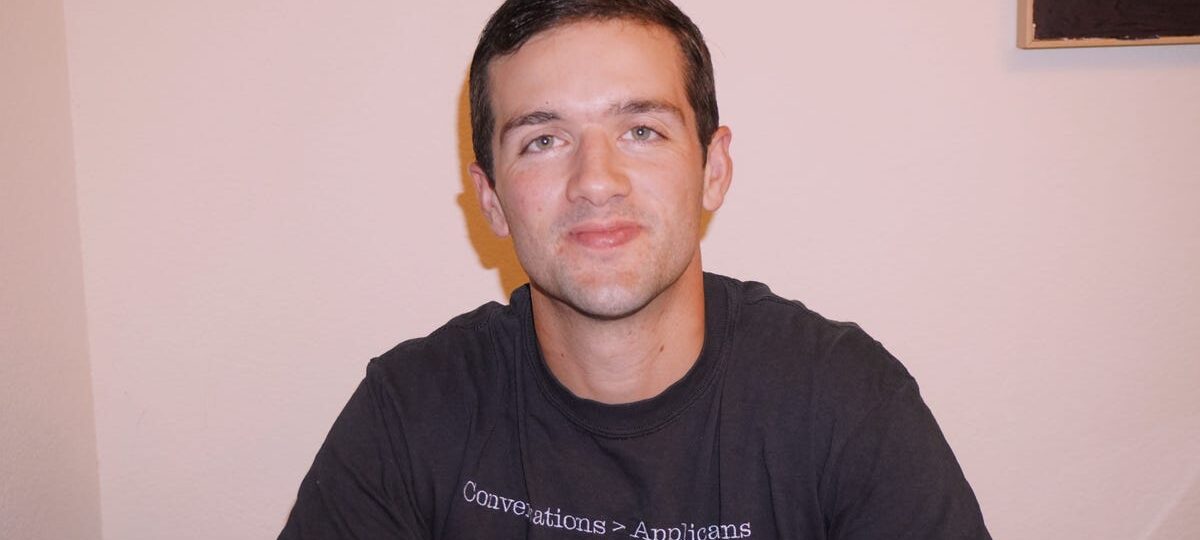
This as-told-to essay is based on a conversation with Dominic Imwalle, the founder of DxConsulting, which focuses on one-on-one career coaching with professionals seeking $100K+ roles.
Imwalle also runs a newsletter called “Conversations > Applications,” which discusses how to create purposeful conversations for job opportunities.
Imwalle was formerly a senior consultant at Deloitte.
I work with mid-career professionals, and there are two questions I encourage every job seeker to ask.
A lot of people who are five to 15 years into their careers feel stuck, lost, or trapped in what I call the application loop.
They’re sending applications into a black hole and hoping something sticks.
That’s why I’m constantly talking about having real conversations instead of just submitting applications.
One thing I believe strongly is that the questions you ask at the end of an interview can completely change the outcome.
Even if you feel like you stumbled during the interview, you still have an opportunity to leave a strong impression.
Most candidates either ask generic questions about culture or, worse, they don’t ask anything at all.
These are the two questions that could set you apart and help you decide whether the company is the right fit.
This sounds simple, but asking about the next step in the recruitment process is one of the most useful questions you can ask.
Ideally, some of this information has already been covered by a recruiter.
Even if it has, I encourage candidates to get more specific.
Ask when the company is hoping to make a decision.
Ask what business need is driving the hire.
Too many people leave an interview and spend days or weeks waiting for an update.
If you understand the timeline, you can take action instead of sitting around wondering what happens next.
If the interviewer doesn’t have all the answers, they can often give you useful context about where the process stands and what the team is trying to accomplish.
I love this question because it forces an honest conversation.
I’ll tell candidates to acknowledge that the company is probably talking to other people and then ask: What’s the biggest gap between the experience you’re seeing and what you actually need for this role?
It’s a valuable question because it gives you information you can use immediately.
It also helps reveal whether the company truly understands what it’s looking for.
If an interviewer struggles to answer, that’s sometimes a sign that the role hasn’t been clearly defined, and you get to decide if that structure is right for you.
When they do answer, you learn exactly what’s most important to them and where you stand.
Very few candidates zoom back out and ask employers what they really need.
Most people spend the entire interview talking about themselves.
This question shifts the conversation.
One thing I’m seeing over and over again in today’s market is that people are targeting a very small group of companies.
Candidates come to me and say they only want to work at companies like Google, Meta, OpenAI, Anthropic, Palantir, Stripe, or Snowflake.
Those are great companies, but they’re also incredibly competitive.
The reality is that many people don’t yet have the experience those organizations are looking for.
I encourage people to build a second-tier target list.
There are thousands of companies outside the biggest names where you can gain valuable experience and eventually position yourself for those opportunities later.
Sometimes I meet candidates who have submitted thousands of applications without a clear strategy.
Other times, I meet people who will only consider a handful of elite companies.
The best approach is usually somewhere in the middle.
Sometimes, I tell job seekers to open Google Maps and see what companies are already around them.
Practice your interview skills and ask the right questions, and you might find better opportunities — and a better quality of life — at companies that aren’t making headlines every day.
Discover more from NAIRAVOICE.COM.NG
Subscribe to get the latest posts sent to your email.