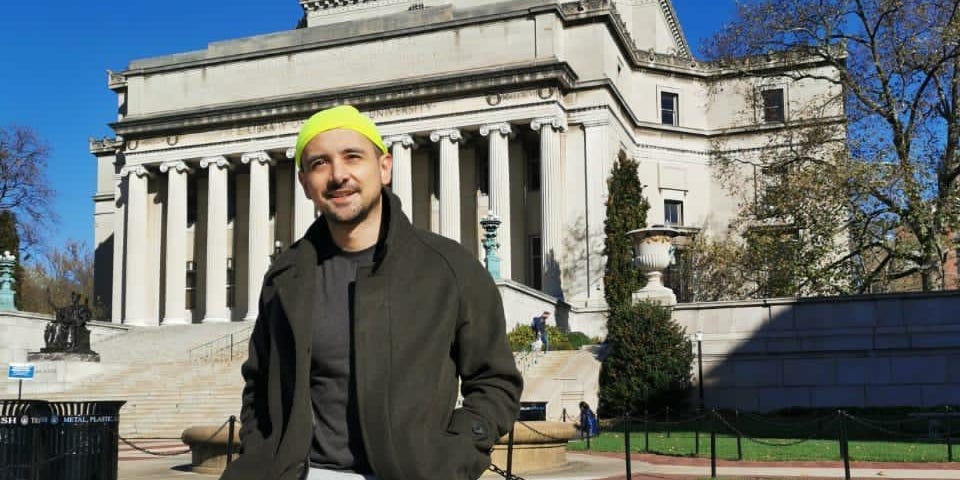
When I decided to pursue a master’s degree in the US, I was not simply looking for a good school.
I had built up an idea of what studying there could mean for my career and, if I am being honest, for my life.
I applied to several universities, but Columbia University and New York were the dream I had absorbed from years of movies and television while growing up in Mexico.
The other schools felt like alternatives until the University of Pennsylvania unexpectedly offered me a $40,000 scholarship and forced me to ask how much that dream was actually worth.
Until UPenn’s offer arrived, I had never really forced myself to interrogate why I wanted New York so badly.
Columbia had the prestige I was looking for, but it also came wrapped in a city I had romanticized for years.
I had treated those two things as one package and assumed they were worth paying for.
Philadelphia was not the city I had fantasized about, but UPenn was every bit the kind of elite institution I had wanted.
More importantly, the scholarship turned an abstract alternative into a serious option.
Suddenly, I could get the academic credibility I was chasing without taking on the same financial burden.
That mattered because I did not come from money.
I had saved, but I knew an American master’s degree meant much more than tuition: rent, insurance, flights, food, and a year away from full-time work.
For the first time, I had to separate what I actually needed for my career from what I simply wanted because I had fallen in love with the idea of New York.
In the end, I followed my instinct and chose Columbia.
The decision was not financially comfortable.
Once I sat down and compared the two options properly, I realized New York would require me to borrow money, while Penn’s scholarship would let me begin the degree from a much stronger financial position.
I knew I was choosing the more expensive path.
What tipped the balance was that I did not see New York as just the place where Columbia happened to be.
I saw the city itself as part of what I was paying for.
I wanted to study law there, but I also wanted to understand its legal market, meet people working in it, and experience the professional world I hoped to enter.
In many ways, that instinct proved right.
I built relationships there, eventually worked in New York, and had experiences outside the classroom that became central to what came next.
But New York also taught me something I had not expected: the life I had idealized was not necessarily the life I wanted forever.
I loved the city’s ambition and energy, but eventually realized its relentless hustle culture was not for me.
I later moved to London, changed jobs, and built a career that looks very different from what I imagined when I was choosing between UPenn and Columbia.
Studying law in the US exposed me to a more practical and participatory style of legal education and helped prepare me for an international career.
I am grateful for that experience, and I do not regret having gone.
But COVID made the financial side of my decision harder to ignore.
I had chosen the more expensive option partly because I wanted everything that came with being at Columbia and in New York.
Then the pandemic changed university life almost overnight.
Had I chosen UPenn, I would still have lived through those same disruptions, but I would have done so with a scholarship and more money left in my pocket.
Looking back, that difference feels much more significant than it did when I was making the decision.
Years later, I am still paying off two loans from my studies.
Columbia helped shape the life and career I have now, and I am grateful I chose it.
But every loan payment is also a reminder that UPenn offered me another route, one I will never know the outcome of.
Discover more from NAIRAVOICE.COM.NG
Subscribe to get the latest posts sent to your email.