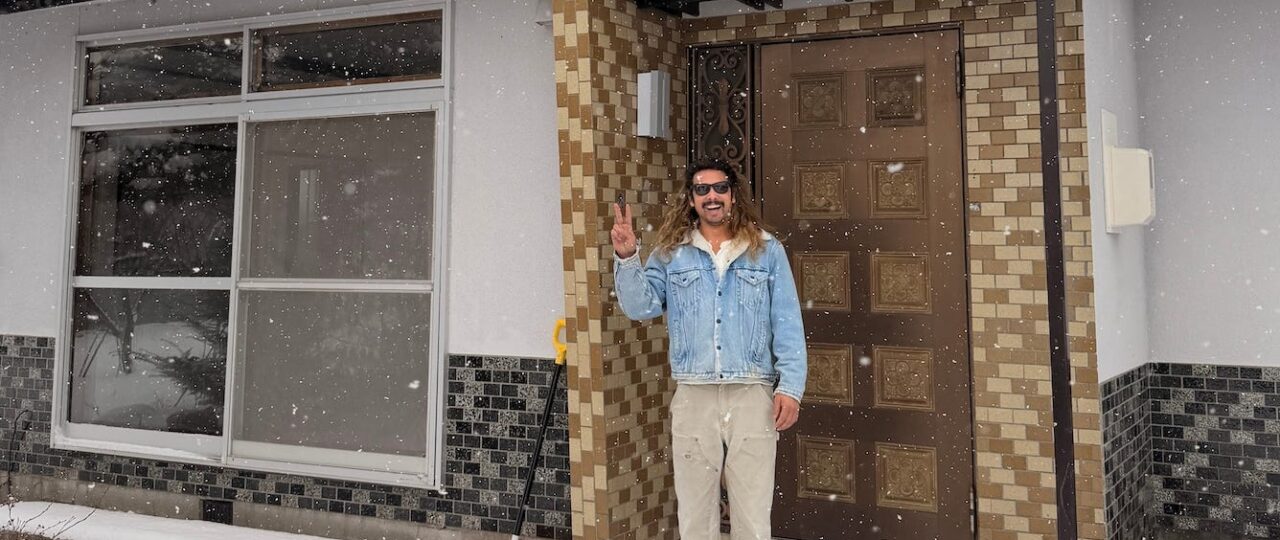

- Keito Swan traded California for the Japanese countryside and spent $115,000 on a home.
- He enjoys his space and the outdoors, and is in an area where conveniences are still accessible.
- Swan warns that the lifestyle — and costs — of a cheap house in rural Japan are not for everyone.
This as-told-to essay is based on a conversation with Keito Swan, 37, a professional gambler who moved from Modesto, California, to the countryside of Hokkaido, Japan, after buying a home. The following has been edited for length and clarity.
I was actually born in Japan — there’s a Navy base in Sasebo, Japan. My dad’s white, my mom’s Japanese.
I lived there until I was 7. Then, with my father being in the Navy, we moved around a bit. I lived most of my life in Seattle and then about seven years in California.
But I thought, “It’s cheap enough to just vacation. What’s the point of having the liability of homeownership there when I’m not going to be living there?” It didn’t really make sense to me at that time.
I was considering buying a place in Argentina, but Japan seemed like an easier route for me than anywhere else because I already had citizenship, spoke the language, and knew the culture. It made the most sense.
The cost of living and quality of life were definitely a huge aspect of moving there, because I can’t afford that quality of life in the US — and that’s as a single guy, no kids, no nothing, and making decent money.
I paid a premium to live in a well-connected area of the countryside — and it’s still cheaper than the US
About a year and a half ago, I spent $115,000 on the property. The house is pretty old and was super moldy and falling apart, so I spent another $65,000 on a full remodel. I hired a family friend who owns a construction company to handle everything, so I didn’t actually do any of it.
I live at the base of Japan’s biggest national park. There are probably six ski resorts within an hour of my house.
I live in what’s considered the countryside of Japan; I’m surrounded by rice fields. I’m in the mountains, and there’s a lot of agricultural work, but I live 15 minutes from an airport that flies directly to Tokyo. I’m 30 minutes from the second biggest city in Hokkaido.
It’s a very outdoorsy area — a lot of hiking and nature — but in the winters it’s incredibly brutal. It’s -30 Celsius, and we get meters and meters of snow. So it’s not for everyone, but if you’re a winter sports enthusiast like me, and an outdoors person, it’s as good as it gets.
I would argue that I have way more fun in Japan with my lifestyle than I do in the US in Modesto. Modesto’s the almond capital of the world. It’s agricultural, but I’m two hours from Yosemite, It’s two hours from Lake Tahoe, and it’s an hour and 40 minutes from San Francisco. So I’m more countryside in California than I am in Japan, I think.
When I was renting an apartment in Sausalito, just outside San Francisco, I was paying $3,200 a month, and I was renting the in-law suite of someone’s house. Granted, I had an ocean view, but still. That’s triple my monthly expenses for everything, not just housing, in Japan.
Utilities are pretty comparable, if not cheaper, but in the wintertime, my utilities triple because I have the gas heater and I’m using more electricity. That’s where my expenses go up quite a bit. But even then it’s very manageable.
I spend about $60 a month on electricity, $35 a month on property taxes, and $30 a month for health insurance — and that covers your dental and vision as well.
I go to my local bar to eat a lot, and it’s not just bar food that’s deep-fried; they’re actually making things from scratch. My dinners are usually 1,200 Yen, which is about $8. And it’s all locally sourced food. My monthly costs in non-winter months are a little over $1,000.
Moving to Japan made sense for me, but it’s not for everyone
My lifestyle in Japan doesn’t change. I do all the same things I did in the US: I’m outdoors, I’m hiking, I’m in the national park, I’m snowboarding in the winter, and in the summer I’m doing some gardening or some yard work.
I think that was one of the things I was really cognizant of, making sure my lifestyle would be good.
I was intelligent enough to look into all those other factors, and I had my checklist of needs and wants, so I based where I bought on that. The reason I love my town is because I have everything; I have a hardware store, I have three convenience stores, I have restaurants, I have a bar. And if I don’t have it, it’s just 30 minutes away. There are a lot of places in the countryside of Japan that don’t have that.
Spending $180,000 on a home versus what people are seeing on social media about how cheap houses are in Japan, it seems like a lot of money.
I get a lot of accusations that I’m just trying to gatekeep by saying this, but it’s a terrible financial investment. Let’s say you spend $50,000 on a house and it’s going to need repairs. You’re probably going to spend another $50,000 on repairs.
If you would have put that $100,000 into the stock market and collected your returns on that hassle-free and just rented an Airbnb for three months a year in Japan instead, you would be so much further ahead without having the burden of homeownership.
Japanese craftsmanship is very good, but houses aren’t seen as investments; the land underneath is seen as the investment. But that also factors economically: is it a popular enough area where that land value is going to hold?
I live in an area where land values are rapidly increasing, but, again, I did the homework.
If I didn’t have the resources, speak the language, or have the citizenship to be able to stay here, I would never have done it. I’m a huge proponent of people taking a big risk to move somewhere they can find their version of the American dream. But Japan’s just not that country.
Read the original article on Business Insider
Discover more from NAIRAVOICE.COM.NG
Subscribe to get the latest posts sent to your email.