By Victor Ahiuma-Young
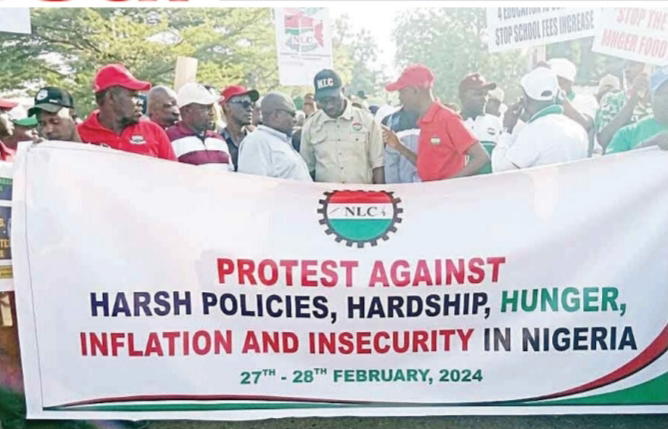
In an apparent response to growing public concern and outcry over the high cost of living and the worsening economic hardship confronting Nigerians, the Federal Government recently announced a 90-day relief plan aimed at providing succour to workers and the wider population. However, rather than inspire confidence, the initiative has come under intense scrutiny from the Nigeria Labour Congress, NLC, which questions its transparency, effectiveness and capacity to address the underlying causes of the crisis.
The labour centre has described the intervention as a “confession, not a solution,” arguing that temporary palliatives cannot replace concrete measures to tackle rising living costs, declining purchasing power and widespread impoverishment.
The NLC also demanded the disclosure of the details of the plan, alongside concrete action on wage awards, petroleum prices, tax relief and the review of the national minimum wage, arguing that Nigerians need practical solutions rather than another set of promises.
In this interview with Vanguard, NLC Assistant General Secretary, Chris Onyeka, explains the labour movement’s reservations about the plan, outlines its demands for urgent economic relief and challenges the Federal Government to move beyond promises and implement sustainable solutions to the hardship facing Nigerian workers and the masses.
Onyeka said: “Our response to the federal government’s so-called 90-day plan to ease the cost of living is unambiguous. This plan is not a remedy; it is a confession. It is the government’s tacit admission, finally dragged out of it by the sheer weight of popular suffering, that its policies of the past nearly four years have afflicted the Nigerian people rather than improved their lives.
“For years, the government denied that its reforms were producing pain. Various Ministers told us there was no suffering while other official spokespeople insisted the economy was on the right track. Now, with the announcement of a 90-day cost-of-living plan, the government has conceded the obvious; something is deeply wrong, and it was caused by the very policies it once defended.
“But a confession is not a cure and, a plan cobbled together in panic is not a plan for the people. It is perceptibly playing politics with the genuine cries of Nigerian workers and masses.
‘We haven’t seen the plan’
“The truth is that we have not seen the Plan neither have any citizen It claims to help. We know that the most basic demand of any democratic governance is transparency. Yet nobody; not us in the NLC, not civil society, not the Nigerian workers and masses facing the crisis of survival daily; has seen this 90-day plan or knows what it contains. Any genuine plan to reduce the suffering of Nigerian workers would be a welcome development. But it is our responsibility, as the organised voice of workers, to demand that the government put this plan on the table for all of us to see.
“Have we not been here before? Just a few weeks ago, the federal government came up with a 30-day selected fuel discount that was clearly a panic measure that amounted to nothing. It did not work in any way to assuage the sufferings of the people as it was tokenism dressed up as policy.
“We would have loved to have been hopeful but we regrettably have no reason to believe the 90-day plan is anything more than a repeat performance; another promise on paper designed to hoodwink Nigerian workers and masses, just like the schemes and promises that came before it.
“In generating this plan, Government should be bold to tell Nigerians who it Consulted? That is the question the Government may not be able to answer. We must also ask; which stakeholders did the government consult before coming up with such a plan? Did it consult the trade union movement; the organised representatives of Nigerian workers? Did it consult the civil society organisations that represent the people it governs?
“There is no workable solution that can proceed from a government whose policy measures of the last nearly four years have only caused humongous hardship among the citizenry. Effective and sustainable solutions can only be founded when government learns to engage the people in creative conversations. It is not when you sit down in the corridors of power and hand down schemes to the people, instead of allowing them to conceive, design and implement the projects and policies directed toward solving their own socioeconomic problems.
“This top-down, elitist approach; the politics of imposition; is precisely why the policies fail. The people are treated as objects of policy rather than subjects of their own liberation. The 90 days are questionable days, designed once again to hoodwink Nigerian workers and masses for political gains.
A palliative, not a solution
“And we must ask the obvious question: even if whatever measures involved in the 90-day plan work, what happens to the people and workers after 90 days? A 90-day palliative is not a structural solution. It is a bandage on a wound that requires surgery.
“The timing of this plan is deeply suspect; it reeks of political motivation, coming as it does ahead of the 2027 general elections cycle that begins in January 2027. This is not economic policy; it is electoral calculation dressed in the language of relief.
“When we are therefore asked whether it does assuage our anger as NLC, we are compelled to retort that this is a question that misses the point. It is not right to talk about “NLC’s anger” because it never was. It is rather right to talk about the sufferings of Nigerian workers and masses so, the better question is: does this plan address the worries of the Nigerian people? It clearly does not as there are no signs on the ground since the pronouncement of the plans to demonstrate any serious implementation.
“The NLC was never asking for tokenistic measures. We were asking for concrete actions that would ameliorate these sufferings. The situation clearly transcends feelings of anger; it is about the existential threats that confront every Nigerian daily as a result of the policies of government.
“The government’s plan does not address these threats to the lives of Nigerian workers because there is no concrete and workable action around the so-called plan. Anger is a luxury of the comfortable; what Nigerian workers face is survival, and the government is offering them theatre.
“Whether it meets our expectations deserves a very simple answer; No, because the basics are missing. The expectation of Nigerian workers and masses, as championed by the NLC, is that the yoke of hunger and impoverishment be lifted from off the shoulders of Nigerian workers and peoples. What we have received instead are just the usual promissory notes.
“Specifically, where is the wage award to keep Nigerian workers and masses surviving until the next national minimum wage is implemented? Where is the reduction in the prices of petroleum products that would ease the cost of transportation around the country, thus reducing food inflation and the prices of other basic commodities? These are not radical demands; they are the minimum conditions for survival. The plan does not in any way meet our expectations as workers and as a people.
“On whether it meets the demands of the NLC, it can be said that the Government decided to go fishing instead of embarking on providing clear-cut solutions. The so-called plan does not address the issue of kick-starting the process for a statutory review of the national minimum wage.
“It does not speak to the demands of Joint Health Workers Union of Nigeria, JOHESU and Joint Public Service Negotiating Council, JPSNC. “It does not speak to tax relief for Nigerian workers and masses, which would help put more money in the pockets of Nigerian workers. Government is therefore fishing and not seriously interested in solving the problems raised by the NLC.
“This is governance by gesture; a politics of appearance rather than substance, in which announcements substitute for action and the suffering of the masses becomes background noise to the business of power.
“Asking about stopping a planned strike truly shows a deep misunderstanding of our struggle. The NLC did not say that it was going to embark on strike. It stated that it will take remedial actions if its demands were not met. However, the responses of government thus far are not the kind that brings comfort to the workers and masses.
“Whether they are enough to stop workers and masses from embarking on actions that will compel government to act reasonably remains to be seen. Discussions at the level of the Federal Ministry of Labour with other officials; without enough mandates from other ministries; have only gone to show that the government is not paying serious attention to the cries of Nigerian workers and masses. If this continues, nobody can guarantee how Nigerian workers and masses will react in due course.
Change economic policies
“The larger truth is that we unfortunately operate a system that produces suffering by design because of our insistence on adhering hook, line and sinker to neo-liberal prescriptions. The NLC’s response to the 90-day plan must be understood in its broader context.
“The government’s policies of the last nearly four years; the removal of fuel subsidies without corresponding relief, the floating of the Naira, the assault on real wages; have not been accidental errors. They are the predictable outcomes of a neo-liberal policy framework that prioritises fiscal consolidation and the demands of international creditors over the lives and dignity of Nigerian workers.
“The 90-day plan is an attempt to manage the political consequences of this framework without changing the framework itself. It is crisis management for the ruling class, not liberation for the working class.
“The NLC’s position is not ‘anger.’ It is a clear-eyed demand for a different path; one in which the people are not passive recipients of elite-designed schemes but active participants in the design and implementation of the policies that govern their lives. That is what creative conversation means ”
That is what sustainable solutions require.
Until the government abandons its top-down, ‘impositionary’ approach and sits with the organised representatives of the people to build a genuine programme of relief and reconstruction, the 90-day plan will remain what it appears to be; another questionable promise, another political manoeuvre, another missed opportunity to lift the yoke of hunger and impoverishment from the shoulders of Nigerian workers and masses.
“The government has admitted its policies have afflicted the people. Now it must do more than announce a 90-day reprieve. It must change the policies. And it must do so with the people, not to them. Having shown humility by ceasing the denial of the existence of massive hunger and suffering, NLC expects the government to seek for the cocreation of policies and paths that would address these consequences now, short term and long term
Discover more from NAIRAVOICE.COM.NG
Subscribe to get the latest posts sent to your email.