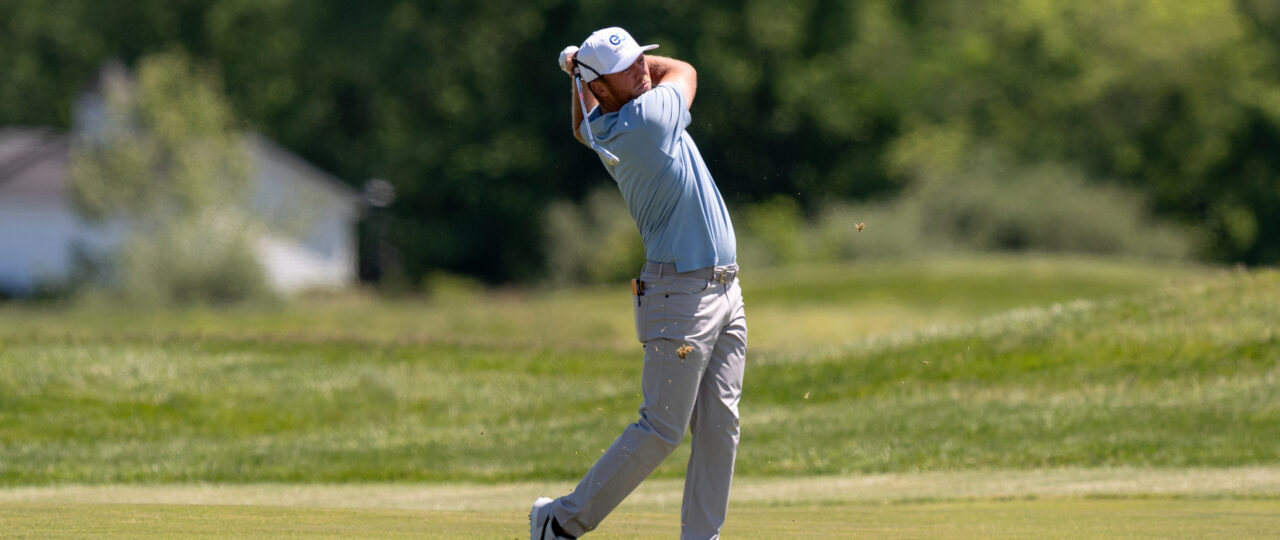

Most avid golfers track their swing speed, yet many ignore the single metric that changes distance the most. Attack angle determines whether the club moves up or down at the moment of impact. This number dictates launch height and spin rates more than almost any other factor in the game. According to MyGolfSpy, a positive angle means the club moves upward, while a negative angle indicates a downward strike. The ideal number differs completely between the driver and irons, a fact that often confuses players who try to hit every club the same way.
Understanding this distinction allows a golfer to maximize carry distance without increasing swing speed. MyGolfSpy reports that inconsistent attack angles can cause high-handicap players to see over 30 yards of carry variation. The same golfer with the same speed can hit shots 12 yards apart just by changing the angle of attack. This gap exists because the club path interacts with the ball differently depending on whether it is teed up or sitting on the turf.
The Driver Requires an Upward Strike
With the driver, the goal is to hit the ball on an upward strike. Golfers should tee the ball high and position it toward the front of the stance to facilitate this motion. MyGolfSpy explains that hitting up helps in two specific ways: it launches the ball higher and reduces spin. High launch combined with low spin creates the optimal conditions for maximum distance. Data provided by GOLFJOY and cited by MyGolfSpy shows a clear difference when comparing a -5 degree angle to a +5 degree angle.
When a golfer swings at 80 mph, hitting down on the ball produces a lower trajectory with excessive spin that kills distance. Conversely, hitting up with a +5 degree angle optimizes the launch conditions. Reports note that the same swing speed yields vastly different results based solely on this vertical club path. Players who try to hit down on the driver are fighting the physics of the club design.
Irons Demand a Slight Downward Angle
Irons work in the opposite direction compared to the driver. The ball sits on the ground, so the club must strike the ball first and then the turf. This sequence ensures clean contact and proper spin to hold the green. MyGolfSpy states that the sweet spot for a 7-iron is roughly 2 to 5 degrees downward. Striking the ball with too little or too much downward angle costs significant distance. An 80 mph swing with a -4 degree angle produces a launch of 18 degrees, which represents the middle option that wins for most players.
Deviating from this range leads to poor contact. If the angle is too flat, the club may catch the turf before the ball. If the angle is too steep, the player might thin the shot or lose energy transfer. The data shows that the middle option within the 2 to 5 degree range consistently delivers the best results for carry and control. Golfers who understand this specific number can stop guessing and start setting their swings for the correct impact conditions.
Why Consistency Matters More Than Speed
Swing speed gets the most attention, but consistency in attack angle often separates the scratch golfer from the high handicapper. This variation occurs even when the golfer and swing speed remain identical. Inconsistent attack angle alone can cause high-handicap golfers to experience over 30 yards of carry variation, the source emphasizes.
Fixing this number provides immediate feedback on the range. A player can adjust their setup or swing path to match the ideal angle for each club. The driver needs an upward path, while the 7-iron needs a downward path.
Discover more from NAIRAVOICE.COM.NG
Subscribe to get the latest posts sent to your email.