
In spring of 1975, Washington coach George Allen hatched a plan to keep his NFL team in the headlines in the dead of the offseason.
Allen spread word that he was interested in signing professional wrestling behemoth Andre the Giant and developing him into a specialist at swatting field goals and extra points out of the air.
Washington quarterback Joe Theismann recalls being asked to pose for publicity photos beside Andre at a press luncheon organized by the team that July. The most famous photo features the 7-foot, more-than-400-pound wrestling icon effortlessly cradling Theisman like a toddler. Said Theismann with a laugh, “I’ve never been around another human being that large in my life.”
The way Theismann remembers it, Allen’s pursuit of Andre was more marketing ploy than serious courtship. There was never a tryout, Theismann said, nor a contract offer. Andre’s drawing power barnstorming the country as professional wrestling’s ultimate attraction brought him far more money than he ever could have earned in those days from playing NFL football.
“George Allen was the ultimate promoter,” Theismann told Yahoo Sports. “Back in the 1970s, you didn’t have football 24-7-365 like you do now. When the season ended, there was a time when there was a lull, but George always wanted to find creative ways to keep the Washington Redskins’ name front of mind.”
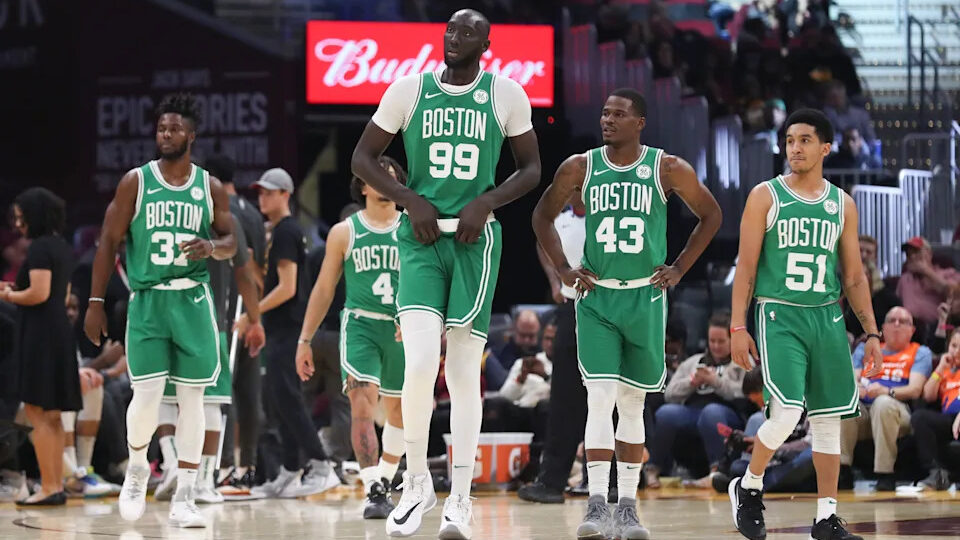
An idea that started as a harebrained publicity stunt half a century ago has since resurfaced as a radically unconventional strategic proposal. A former NFL assistant coach and director of football analytics posted to social media earlier this week encouraging teams to give 7-foot-7 former NBA center Tacko Fall a tryout as a field goal block specialist.
The notion of deploying someone like Fall in this role first struck Ryan Paganetti nine years ago when he was part of Doug Pederson’s Philadelphia Eagles coaching staff. A fellow coach in a special teams meeting emphasized the potential for interior rushers to block a field goal if they’re able to generate two yards of push and get their hands up. That made Paganetti wonder how much more disruptive that interior rush could be if it cleared space for a long-armed, bouncy-legged 7-footer with a basketball background.
Since NFL rules prohibit defenders from lining up directly over the long snapper on field-goal or extra-point attempts, Paganetti proposes putting two interior defensive lineman on one guard and tasking them with driving him backward as far as possible. Then Fall or another similarly gigantic human would rush into the lane they’ve created, extend his arms and attempt to time his jump to meet the kick.
The concept was zany enough that Paganetti didn’t dare mention it as a 27-year-old Eagles assistant linebackers coach just a few years out of Dartmouth. As the economics major turned football analytics savant says now, “You can’t walk into the head coach’s or GM’s office and suggest something that would sound bats— crazy. Then they just laugh at you and you have no credibility for the rest of your career.”
What Paganetti wisely did instead was bide his time while waiting for technology to come along that enabled him to quantify his idea. Gradually, he became more comfortable pitching colleagues on the notion of 7-footers as special teams weapons.
Trusted friends across the industry were receptive. One special teams coordinator who worked with Paganetti was not.
“I will literally freak the f— out if you bring that up to [the head coach or general manager],” Paganetti recalls the special teams coordinator telling him. “I don’t want to have to worry about coaching that s—.”
Now in his first year working as an independent football analytics and strategy consultant after previous stints with the Eagles, Jaguars and Raiders, Paganetti decided the timing was right to go public with his idea.
“Could the tallest player in NBA Combine history change the outcome of a Super Bowl?” Paganetti wrote to begin a 593-word X post on Tuesday evening.
That post now has more than one million views.
“If you want to be innovative, you have to be willing to think outside the box,” Paganetti said, “and you have to be willing to be laughed at.”

At 7-foot-7, Tacko Fall stands out even in a tall crowd.
The tallest NFL player ever deployed as a field-goal block weapon seldom rushed the kicker from the line of scrimmage.
In 1969, Kansas City Chiefs coach Hank Stram would position 6-foot-10 rookie tight end Morris Stroud under the goal posts and have him try to time his leap to deflect the ball as it approached the crossbar.
The NFL quickly intervened and banned Stroud’s goaltending tactic before the former Clark Atlanta University basketball player blocked a single NFL kick. The rulebook now bans players from leaping up to bat away a kick as it passes over the crossbar and grants permission to the referee to award three points for that “palpably unfair act.”
The best current demonstration that height can be an advantage when blocking field goals in the NFL is Calais Campbell, the long, nimble 6-foot-8, 307-pound defensive end who has swatted 10 kicks out of the air since 2009. Campbell has earned the freedom from special teams coordinators to dictate where he lines up on any field-goal block try because of his unique blend of reach, strength and innate sense for where the path of the ball might be.
Campbell’s height is an outlier among pass-rush specialists because of his unique ability to maximize the advantages of his extraordinary length while still moving explosively and getting low enough not to sacrifice leverage. Most athletes 6-8 or taller would be fighting against physics because their center of gravity is so much higher than the average 6-4, 310-pound offensive lineman.
Those issues help explain why no NFL team has experimented with a 7-footer as a field goal blocker before. That player would almost certainly have to be a specialist who could not be counted on to contribute in other ways.
It’s Paganetti’s contention that a 7-foot-7 giant like Fall would be worth rostering if he could be developed into a special teams weapon. Roughly one in four NFL games are decided by three points or fewer. A team significantly increasing its field-goal block rate from the standard 1.9% could be worth an extra victory or two. Then there’s the potential intimidation factor, which could also reduce accuracy and prove meaningful.
“It’s definitely worth the last spot on a 53-man roster if a guy can do this at a high rate,” Paganetti said. “Honestly, it’s probably worth like the 30th roster spot.”
What combination of height, reach and vertical jump would a 7 footer need to strike fear into NFL kickers? The best way to quantify that comes from a sports technology company founded in Denmark by golf-enthusiast brothers Klaus Eldrup-Jørgensen and Morten Eldrup-Jørgensen, along with radar engineer Fredrik Tuxen.
Harnessing Tuxen’s expertise in using Doppler radar to track bullets and missiles, the founders of TrackMan created a reliable way to reconstruct the trajectory, velocity and movement of a golf ball. Then TrackMan began applying its precision tracking system to other sports. The Chicago Bears became the first NFL team to use TrackMan in 2019 when evaluating kickers to replace Cody Parkey. Now, special teams coaches from all 32 NFL teams receive TrackMan data reports on kickers and punters at events like the NFL Scouting Combine.
The average ball height on NFL field goal attempts after seven yards is just shy of 12 feet, according to Simon Mathiesen, head of TrackMan’s football operations. About 80% of NFL field goal attempts are 11-13 feet off the ground after seven yards, Mathiesen said. Seven yards is the relevant data point in Mathiesen’s eyes because NFL kickers tend to kick from eight yards behind the line of scrimmage and field-goal defenses typically generate one yard of push.
At the 2019 NBA Draft combine, Fall stood 7-7 in shoes with a standing reach of 10 feet, 2 ½ inches. Throw in a reported 26.5-inch vertical leap, admittedly without a helmet and football gear to weigh him down, and Fall would clear the 12-foot mark with ease.
“Theoretically I think it’s worth exploring,” said Mathiesen, a former All-American kicker at Division II Northwest Missouri State. “If I were a GM, I think I’d look for the most athletic 7-footer I can find and test him out in the preseason. Is that more valuable in a preseason game than a sixth-string receiver? I certainly think so.”
Paganetti gently pushes back against the TrackMan estimate that the field-goal block unit only typically generates one yard of push. He argues that the interior rush often pushes the offensive line back two yards — and that such a push should happen more often if the defenders driving the guard backward don’t have to worry about jumping or getting their hands up.
NFL player tracking data has the ability to measure how far backward a guard is typically driven on a double-team rush, but Paganetti has not found time to study that yet. If he’s right that the push is often two yards instead of just one, that would mean that the ball is crossing that spot about 10 feet off the ground instead of nearly 12.
“I feel very good saying that 12 feet is way too high,” Paganetti said. “I don’t think there’s actually been a single block where any player was 12 feet high. I’m not even sure there’s been a single block where any player was 11 feet high. The rush is getting more movement than that.”

The Florida Gators football team actually tried out 7-foot-9 Olivier Rioux, but it did not work out.
In July 2025, someone actually dabbled with Paganetti’s concept before he had the chance.
University of Florida special teams coach Joe Houston received permission to have 7-foot-9 men’s basketball walk-on Olivier Rioux participate in practice and attempt to block some kicks from Gators kicker Hunter Smith.
The experiment didn’t last long. Houston eventually scrapped it, reportedly because Rioux’s vertical was just 11 inches and even with his extra-long reach, the former world’s tallest teenager was unable to block any kicks.
“They were a little disappointed,” Florida men’s basketball coach Todd Golden told the Associated Press.
By then, so many of Paganetti’s friends knew about his obsession with this idea that he received a half dozen texts containing links to articles about this experiment. Paganetti loved to see Florida giving the concept a try, but he said he wishes he could talk to Houston or former Florida head coach Billy Napier about some of the nuances that went unreported.
“It’s unclear if they basically just messed around with him standing at the line of scrimmage, or if they actually had more of a plan,” Paganetti said.
Yahoo Sports also sought further clarity from Napier and Houston, both of whom have since left Florida and moved on to other jobs. Houston is the best person to speak with, Napier said via a James Madison football spokesperson. An LSU football spokesperson did not return multiple messages seeking comment from Houston.
To Paganetti, finding the right 7 footer is as important as having a savvy scheme. He argues NFL teams would need to target someone with the ball skills and coordination to be able to time their jump and the girth and toughness to be able to withstand a hit. The 7 footer can’t be so athletic that he’s NBA-caliber yet also can’t be such a plodding stiff that he can’t make explosive movements.
In other words, Tacko Fall. The 7-foot-7 center last appeared in an NBA regular-season game as a member of the Cleveland Cavaliers on December 30, 2021. He has since played professional basketball in China, where he has twice led the league in blocked shots. Fall received an invitation to training camp with the Philadelphia 76ers but is a long shot to make the roster.
It’s unclear if Fall would have any interest in donning a football helmet and shoulder pads. Even if he did, some in football circles are unconvinced that his presence would prove disruptive for field-goal kicking operations.
“If NFL teams decided to start signing former 7-foot-plus basketball players specially to block field goals, I don’t believe it would significantly change the percentage of blocked kicks,” said retired former NFL kicker Nick Novak, now a private kicking coach and showcase host in the San Diego area.
Height over the line of scrimmage was always a major point of emphasis for Novak during his playing days when preparing for teams with proven field goal block specialists. Special teams coaches would position him as close as five yards from the crossbar, forcing him to either clear it or risk the ball ricocheting back at him. Nowadays, Novak’s pupils use TrackMan to measure the trajectory of their kicks.
“A great operation combined with great blocking from the field goal protection team prevents penetration up the middle and pressure off the edge,” Novak said. “You don’t want a kicker changing his normal ball or trajectory because there happens to be a 7-footer on the other side.”
Count former NFL special teams coach Gary Zauner among those who are skeptical that any team will ever roster a 7-footer as a field goal block specialist. Zauner questioned if such a player would get a hand on enough kicks to prove worthy of taking up a roster spot. The former Vikings, Ravens and Cardinals special teams coach also pointed out that an astute team could kick from nine yards behind the line of scrimmage instead of eight if it sought to lessen the threat of an on-rushing 7-footer.
“Devin Hester caused me to lose sleep,” Zauner said. “I don’t think this would cause me to lose any sleep.”
Theismann isn’t as quick to dismiss Paganetti’s idea as Zauner is. For decades, the former Washington quarterback has wondered what sort of impact Andre the Giant might have made if Allen were serious about pursuing him, if it wasn’t just a publicity stunt. Now, Theismann wonders if Victor Wembanyama’s presence on a field-goal block unit would be as terrifying for kickers as him lurking near the rim is for opposing guards attacking off the dribble.
“I would love to see it happen just because of my curiosity,” Theismann said. “Certainly people would be talking about it.”
Discover more from NAIRAVOICE.COM.NG
Subscribe to get the latest posts sent to your email.