Amanda M. Castro is a Network TV writer at Collider and a New York–based journalist whose work has appeared in Newsweek, where she is an Associate Editor, and The U.S. Sun, where she previously served as a Senior Consumer Reporter.
She specializes in network television coverage, delivering sharp, thoughtful analysis of long-running procedural hits and ambitious new dramas across broadcast TV. At Collider, Amanda explores character arcs, storytelling trends, and the cultural impact of network series that keep audiences tuning in week after week.
Born and raised in Puerto Rico, Amanda is bilingual and holds a degree in Communication, Film, and Media Studies from the University of New Haven.
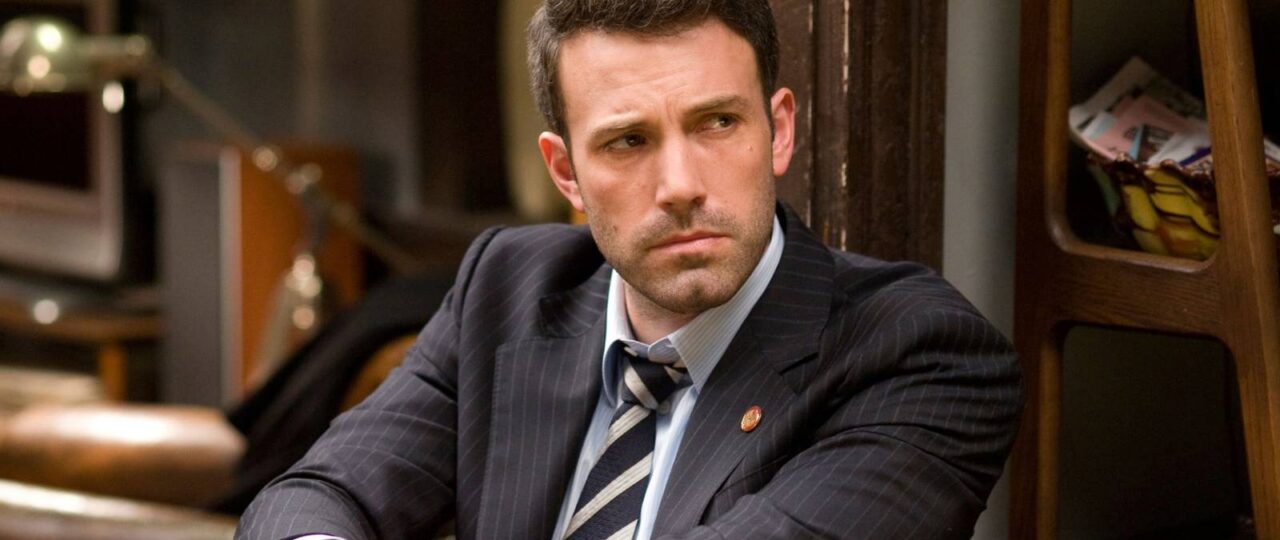
Ben Affleck is having quite the moment on Netflix. His latest thriller, Animals, has held the No. 1 spot on the streamer’s global English-language movie chart for four consecutive weeks, pulling in another 4.7 million views and 8.4 million hours watched between October 26 and November 1, 2026. But long before his latest streaming success, Affleck tried his hand at something completely different: creating one of network television’s strangest mystery series.
In 2002, Affleck and his producing partner Sean Bailey co-created Push, Nevada, a surreal mystery about a mild-mannered IRS agent who stumbles into a desert town filled with corruption, cryptic clues, and slow-dancing strangers. It sounded like Twin Peaks meets The X-Files — until ABC added one wild twist: Viewers could win a million dollars by solving the mystery themselves. The result was a show too ambitious, too strange, and too ahead of its time to survive more than seven episodes.
Inside ‘Push, Nevada,’ Ben Affleck’s Surreal Mystery Series
Push, Nevada followed Jim Prufrock (Derek Cecil), an accountant who receives a mysterious fax suggesting embezzlement at the Versailles Casino. When he heads to Push — a nowhere town drenched in neon and paranoia — he discovers that its residents haven’t filed a tax return since 1985 and that an ominous company, Watermark LLC, seems to control everything from the police to the local dive bar. Oddballs populated the noir-ish mystery: Scarlett Chorvat’s Mary, a “Slo-dancer” warning Prufrock to get out while he still can; Jon Polito‘s corrupt casino boss; and Armand Assante‘s slick criminal known only as “Mr. Smooth.”
Four Netflix characters, four completely different ways of showing up
for somebody. This is the one who fits how you actually do friendship, and what having them in your
life would be like.
You do not do friendship at half volume, and neither does he.
What you want is somebody who says yes to the plan before you have finished describing the
plan.
- Dustin is the friend the entire show runs on: loyal past the point of sense,
enthusiastic about everything, and incapable of leaving anybody behind. - You have the same instinct. Your friendships are loud, specific and slightly ridiculous,
and they last for decades because of it. - He is also the one person who would take your strangest interest completely seriously,
which is far rarer than it sounds. - You would have a group chat. It would never once be quiet.
You are the friend who makes things happen, and so is she.
Together you would be mildly exhausting to everyone around you and completely delighted with
yourselves.
- Emily treats an ordinary Tuesday as something that could be turned into an occasion,
which is either the best or the worst quality in a friend depending on your energy
levels. - You share her refusal to sit still. Neither of you has ever accepted a night in when
something was happening somewhere else. - She is far more loyal than people give her credit for. She defends her friends loudly,
publicly, and occasionally before checking the facts. - She would post the photo without asking. You would forgive her, because it is a very
good photo.
You have no patience for pleasant lies, and she has no ability to
tell them. What looks like coldness from the outside is the most reliable friendship on this
list.
- Wednesday never says a kind thing she does not mean, which makes the rare ones count for
an enormous amount. - You would rather be told the truth than be made comfortable. She is constitutionally
incapable of offering you anything else. - Underneath all of it she is ferociously protective. She simply refuses to make a
performance out of caring. - Do not expect a birthday message. Do expect her to ruin anyone who wrongs you.
You look after whoever is having the worst day. So does he. It is
the least strategic way to move through the world and the best possible quality in a friend.
- Gi-hun is not the strongest player in Squid Game, or the cleverest. He is the one who
keeps choosing to protect somebody else, over and over, at genuine cost to himself. - You have the same instinct. You notice who is struggling and you stay with them, long
after anybody would blame you for leaving. - He is a flawed friend, and that is part of why it lands. He lets people down, then comes
back and tries again, which is more than most manage. - He would give you his last chance and never once mention that he had done it.
It looked incredible, with cinematography by Jim Denault, known for Boys Don’t Cry, and a moody palette of reds, golds, and shadows. Critics compared its tone and aesthetic directly to David Lynch‘s Twin Peaks — from the quirky characters to the eerie score and slightly stilted dialogue. But while Lynch’s small-town surrealism invited obsession, Push, Nevada asked for something even stranger: participation.
How ‘Push, Nevada’ Became TV’s Strangest Experiment in Audience Participation
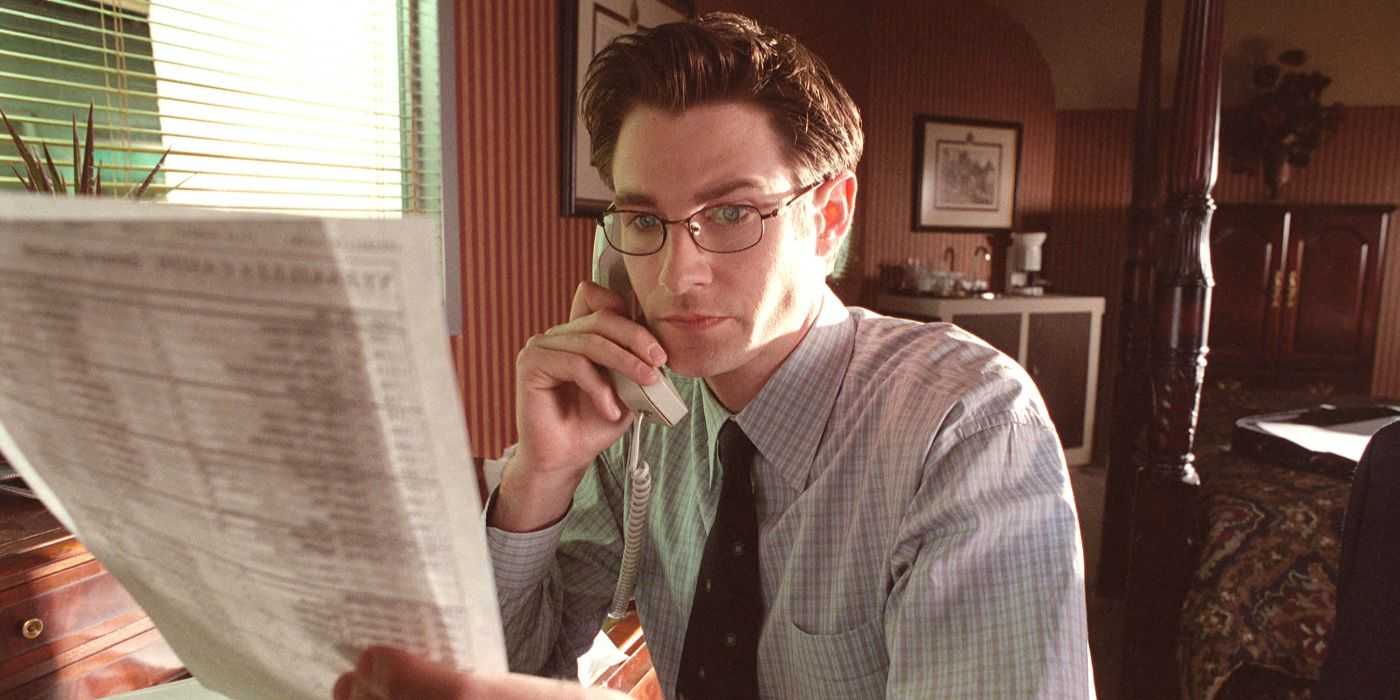 Image via ABC / Courtesy: Everett Collection
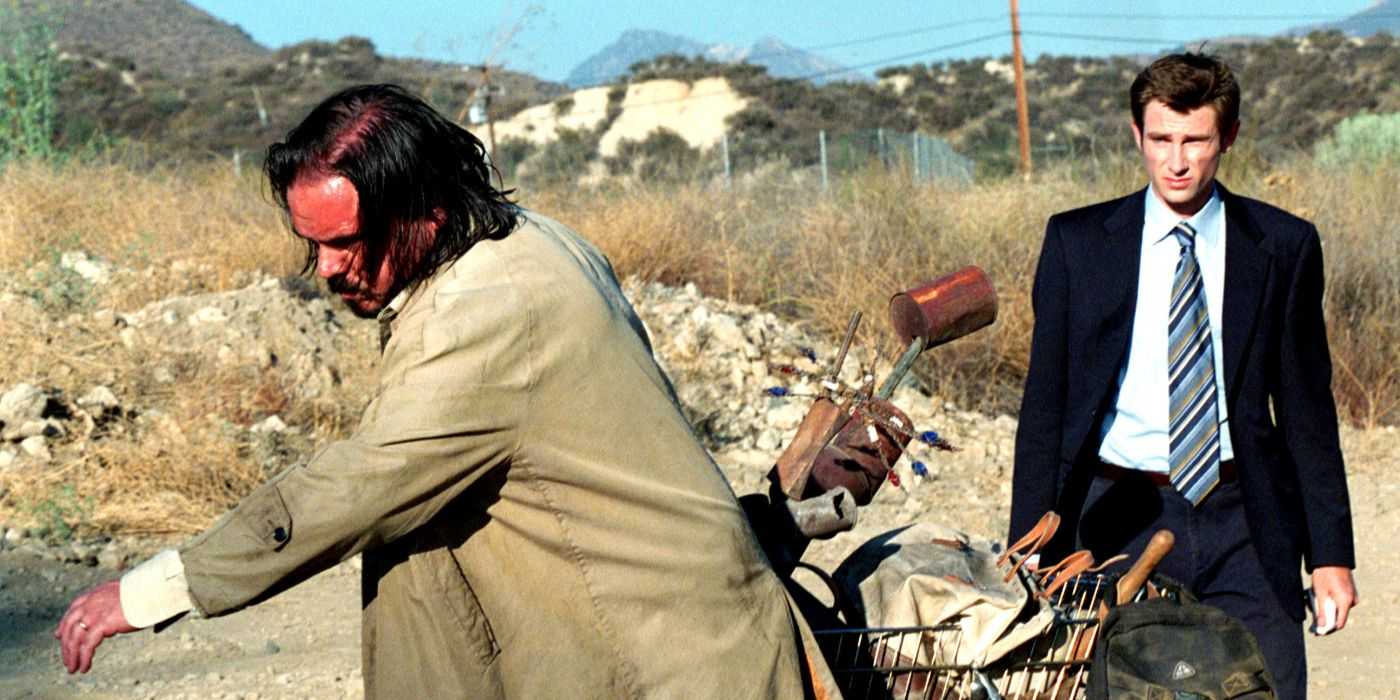 Image via ABC / Courtesy: Everett Collection
Each episode contained hidden clues — web addresses, code words, even on-screen numbers — leading viewers closer to a real-life prize of $1,045,000. Fans could follow the story across fake websites, emails, and even physical mailers in what producers dubbed “the three-ball theory” of engagement: viewers could wade in, swim, or dive deep. The experiment made Push, Nevada one of the earliest examples of transmedia storytelling on network TV.
Unfortunately, it also made it unwatchable for casual audiences. The mystery was dense, the tone self-serious, and the clues often so obvious (highlighted in red boxes during reruns) that the whole thing felt like homework. Competing against CSI and Will & Grace, Push, Nevada was canceled after seven episodes — though ABC still had to finish the contest legally. The winner, New Jersey native Mark Nakamoto, solved the final puzzle and claimed the million-dollar prize, but the show itself vanished into cult TV history.
Today, Push, Nevada feels like a bizarre artifact from the early 2000s — part prestige mystery, part ARG, part marketing stunt. However, despite its flaws, it accurately predicted how audiences would one day crave deeper, more interactive storytelling through shows, websites, and games.
Push, Nevada
-
<

Derek Cecil
James A. Prufrock
-
<
Scarlett Chorvat
Mary Sloman
-
<
Melora Walters
Grace
-
<
Josh Todd
Jeb

Discover more from NAIRAVOICE.COM.NG
Subscribe to get the latest posts sent to your email.