

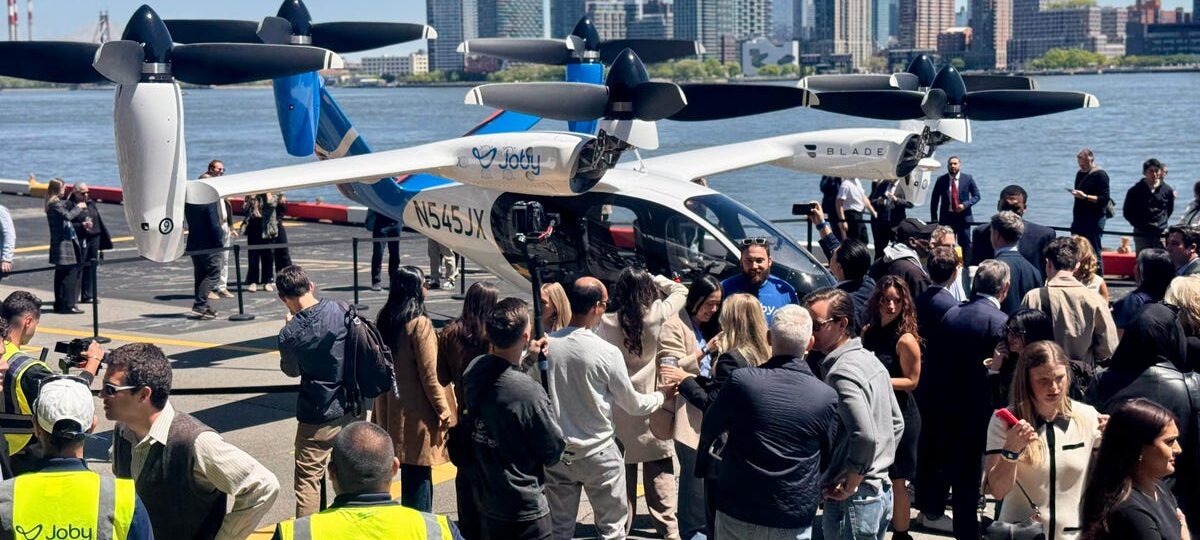
Three US aerospace startups are in a high-stakes race to bring the “Jetsons'” dream of flying cars to life — and each has a different vision of what that future looks like.
Aerospace companies Joby Aviation, Archer Aviation, and Beta Technologies have spent the past few years showcasing their flying taxi prototypes at industry events around the world.
They’re pitching them as an environmentally cleaner, cheaper alternative to helicopters.
I’ve seen all three — either on static display or in flight.
I’ve gotten a glimpse of how these vertical takeoff and landing aircraft, or eVTOLs, could be used on a regular commute or skip traffic to the airport.
The wide-winged, trunky aircraft are quieter than fuel-powered planes and helicopters, and they fly surprisingly smoothly.
Imagine a web of low-altitude air taxi corridors connecting airports, neighboring towns, conferences, and events like the Olympics.
Still, none have been certified by aviation authorities, so they’ll not be regularly carrying passengers just yet.
Joby and Archer aim to launch commercial service as soon as this year; Beta’s timeline is several years out.
They’re all actively participating in a US Department of Transportation program that would aim to integrate electric air taxis into the national airspace system as quickly as possible.
And each is demonstrating a markedly different approach, with distinct aircraft designs, certification strategies, and business models.
Each is publicly traded in the US: Joby had a recent market capitalization of around $9 billion; Archer and Beta are each around $4 billion.
The companies are facing tough sledding so far this year: Their stocks are down between 30% and 40% since January.
Wall Street analysts have said investors are shifting their focus away from technological milestones toward proof of certification and commercialization.
In other words, they want these things to get off the ground.
Air taxis indeed still face myriad hurdles, including securing those regulatory approvals, raising capital, building out infrastructure, and convincing the public to embrace a new type of aircraft.
Affordable fares and vast infrastructure changes are likely to be needed to achieve even a modest future of traveling around a city for errands or work.
Here’s a closer look at how Joby, Archer, and Beta’s futuristic flying taxis compare — and what potential commuters might expect if these aircraft reach commercial service.
Discover more from NAIRAVOICE.COM.NG
Subscribe to get the latest posts sent to your email.