
FIFA likes to present itself as the guardian of football’s integrity. Yet the governing body’s handling of Folarin Balogun’s World Cup suspension has exposed the organisation to accusations of exactly the opposite.
The latest intervention from Norway FA president Lise Klaveness is most welcome, one that her peers around the world should echo. At a time when most football authorities appear content to stay silent, Norway is preparing to formally challenge a sequence of events that raises serious questions about FIFA’s independence, transparency and commitment to its own rules.
A Dangerous Precedent
The controversy centres on Balogun’s red card for the United States in the Round of 32. Under normal circumstances, the consequences would have been straightforward. A suspension would follow, the disciplinary process would take its course, and the tournament would move on.
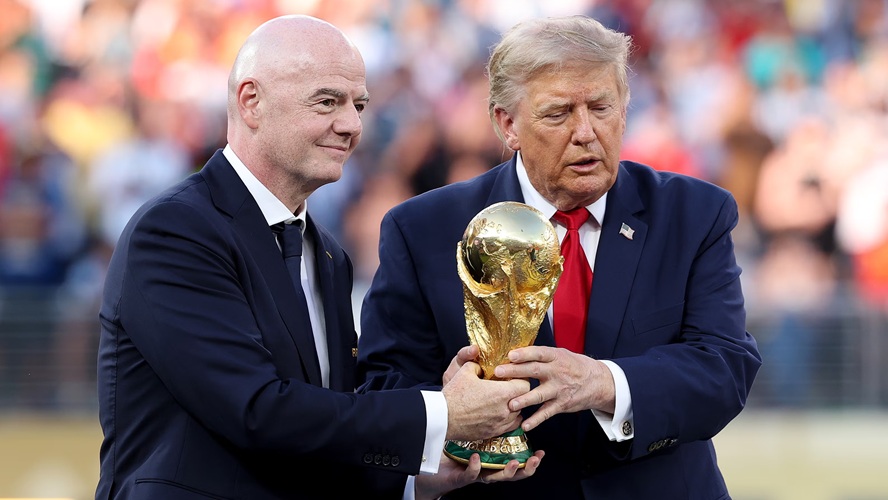
Instead, FIFA suspended the ban after a phone call between US President Donald Trump and FIFA president Gianni Infantino. Trump later publicly praised the decision, describing it as a “great” one.
If football’s disciplinary system can be altered following intervention from one of the world’s most powerful political leaders, then what exactly are the rules worth?
That is the question Klaveness is effectively asking, as revealed in an interview with The Times.
Her criticism cuts to the heart of the issue. Rules are only meaningful when they are applied consistently. The moment exceptions are created for the influential and politically powerful, the credibility of the entire system begins to crumble.
FIFA Cannot Pretend This Didn’t Happen
Klaveness has also challenged FIFA’s response, accusing the organisation of trying to move on without providing proper explanations.
The governing body has yet to convincingly explain why a standard sporting punishment suddenly became subject to extraordinary intervention. Reports that the decision was made by disciplinary committee chairman Mohammad al-Kamali without consultation from other committee members only deepen concerns about the process.
FIFA’s refusal to fully confront the controversy risks creating the impression that accountability applies everywhere except at the very top of the organisation.
The idea that this can simply be brushed aside is increasingly unrealistic.
Players, coaches and supporters all witnessed what happened. They are entitled to ask whether the same treatment would have been afforded to a less politically connected nation.
What’s more, even Balogun himself has admitted the controversy was a burden he didn’t need. Had it not been for Trump’s meddling and FIFA’s blunder, his teammates would’ve at least had the chance of exiting the tournament with dignity. That chance was stripped away from them.
The Trump Peace Prize Makes Everything Worse
What makes the situation even more damaging for FIFA is that it does not exist in isolation.
Norway’s complaint is expected to be linked to its earlier objection over FIFA awarding Trump a newly created Peace Prize. That award was already viewed by critics as an uncomfortable blending of politics and football.
Combined with the Balogun affair, it paints a picture that FIFA will struggle to shake off.
An organisation that insists on political neutrality cannot simultaneously appear eager to reward political figures while allowing itself to become entangled in political interventions.
At best, it creates confusion. At worst, it reeks of favouritism.
Norway Deserves Credit for Speaking Out
Whether one agrees with every position Klaveness takes, her willingness to challenge FIFA deserves recognition.
Too often, football’s governing bodies avoid confrontation with powerful figures. National associations frequently complain in private while remaining silent in public. Norway has chosen a different path.
By pushing for a formal ethics investigation, the NFF is forcing FIFA to address a controversy that many would prefer to ignore.
If FIFA genuinely believes its disciplinary process was handled correctly, it should welcome scrutiny and transparency. If it does not, then the concerns raised by Norway become even harder to dismiss.
A Test of FIFA’s Integrity
The Balogun case is ultimately about much, much more than one player’s suspension. It is about whether football’s rules apply equally to everyone. It is about the integrity of the world’s football governing body, and about the integrity of the sport itself.
No sport can claim to be governed fairly if disciplinary decisions are vulnerable to political pressure, nor can FIFA talk about neutrality while handing out awards to serving political leaders and then benefiting from their intervention.
Klaveness is right about one thing: this is not an issue that can simply be swept under the carpet.
How FIFA responds now may tell us far more about the state of football governance than the original red card ever could. But nobody should be surprised if they choose not to respond at all and try to put pressure on their critics in seemingly unrelated ways – that would be in accordance with their under-the-carpet policies.
Bundesliga News
Diomande, Vinícius and the Transfer Domino Effect That Could Define the Summer
Editorials
July 26th: Sunday’s MLS Accumulator – 13/1 Special, Betting Tips & Analysis
Editorials
CF Montreal vs Inter Miami Bet Builder Tips – 8/1 MLS Special, Analysis & Predictions
Editorials
Small Islands, Big Dreams: Cape Verde’s 2026 World Cup Will Be Remembered
Editorials
Argentina’s Post-Final Meltdown Cannot Be Excused — FIFA Must Act Decisively
Editorials
July 21st: Tuesday’s Champions League Accumulator – 4/1 Special, Betting Tips & Analysis
We use cookies to ensure you get the best experience on our website. By using our website you agree to our use of cookies in accordance with our Privacy Policy.
Discover more from NAIRAVOICE.COM.NG
Subscribe to get the latest posts sent to your email.