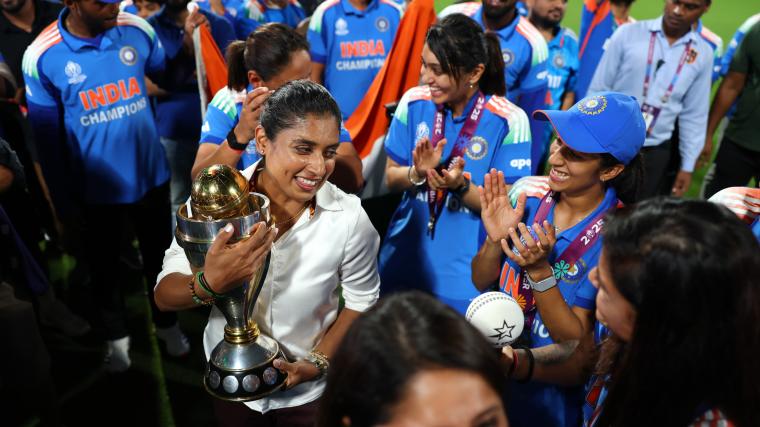

English women’s cricketers allege ICC unfairly favours Indian teams after unusual Womens World Cup 2026 semi-final schedule originally appeared on Cricket News.
Add Cricket News as a Preferred Source by clicking here.
KEY TAKEAWAYS:
- English cricketers Kate Cross and Alex Hartley accused the ICC of unfairly favouring India at the World Cup.
- A tournament rule guarantees India the first semifinal slot on June 30 if they qualify.
- The pair argued that the scheduling is driven by India’s broadcasting value and is unfair to rivals.
English women’s cricketers allege ICC unfairly favours Indian teams
A row over fairness has erupted at the Women’s T20 World Cup, with two England cricketers aiming for the game’s governing body. Kate Cross and Alex Hartley have publicly accused the ICC of bending its tournament scheduling to suit India, sparking a fierce debate.
At the centre of the controversy is the World Cup’s playing conditions. Under the rules, should India reach the last four, they are guaranteed to feature in the first semi-final on June 30, a Tuesday slot widely seen as commercially prime for Indian audiences and broadcasters.
According to 16.10.2 rule of the Women’s World Cup 2026 Semi-finals and final, “The team that finishes first in Group A will play the team that finishes second in Group B in a semi-final. The team that finishes first in Group B will play the team that finishes second in Group A in a semi-final. Should India qualify for a semi-final, they will play in the first semi-final on 30 June. If India do not qualify for a semi-final, then the semi-final schedule will be as follows: 30 June – A1 v B2.”
That guarantee is what prompted the pair to speak out. “Can we talk about the fact that, if India qualifies for the semifinals, they’re guaranteed to play in the Tuesday semifinal because the ICC believes that’s the best slot for them from a broadcasting and time-zone perspective?” the criticism began.
MORE: IND vs AUS: Women’s T20 WC semi-final qualification scenarios explained
A pattern across the game
The flashpoint arrived during the group stage of the showpiece event in England. India, drawn in a tough Group A alongside Australia, headed into their final fixture needing a result to secure a semi-final berth, with the scheduling quirk hanging over their campaign throughout.
For the pair, the issue extends far beyond a single tournament. “This happens in men’s cricket, women’s cricket, and World Cups. Everything is planned around when India will play,” they argued, framing the scheduling as a deep-rooted habit rather than a one-off decision.
The language grew stronger as the point was pressed home. “It’s absolutely ridiculous. I don’t understand how a governing body can go into a tournament and prioritise one team like that,” came the verdict, a blunt assessment of how the world body operates.
Money at the heart of it
The criticism carries weight given its source. Kate Cross is a current England seamer involved in the tournament, while Alex Hartley is a World Cup-winning former spinner turned outspoken broadcaster, giving their joint intervention a notable mix of insider authority and media reach.
Crucially, the pair acknowledged exactly why the ICC behaves this way. “I know exactly why they’re doing it because India generates the most viewership and revenue, but I still think it’s unfair,” they conceded, accepting the commercial logic while rejecting it on grounds of sporting fairness.
🚨🤯 Shocking: Kate Cross and Alex Hartley believes that the ICC is showing favoritism toward the BCCI
“Can we talk about the fact that, if India qualify for the semifinals, they’re guaranteed to play in the Tuesday semifinal because the ICC believes that’s the best slot for… pic.twitter.com/i5wt0Ah6K3
— Indian Cricket Ministry (@Tejashyyyyyy) June 28, 2026
There is little dispute about the underlying economics. India’s vast and passionate fan base drives the overwhelming majority of cricket’s global broadcast revenue, and tailoring marquee fixtures to suit Indian prime time is a practice common across the sport, defended by many as simple commercial sense.
MORE: How Australia’s Women built a legacy, not just a cricket team
A debate set to continue
Defenders of the approach point out that no major sport ignores its biggest market. Football, tennis, and others routinely schedule around peak audiences and favourable time zones, and supporters of the ICC argue that maximising India’s reach ultimately funds the women’s game and helps grow it worldwide.
The ICC has not been accused of altering results, only of scheduling around its biggest commercial draw. Whether that amounts to genuine unfairness or simply pragmatic reality will continue to divide opinion, but Cross and Hartley have ensured the question is now firmly out in the open.
For all the latest cricket news, opinion, and commentary and to share your voice, head to our Facebook, Instagram, and X (Twitter) pages.
Discover more from NAIRAVOICE.COM.NG
Subscribe to get the latest posts sent to your email.