Last month, the NCAA Division I Cabinet unanimously approved an age-based, five-year eligibility model that’s set to replace an existing model that’s allowed four seasons of competition over five years with no age restrictions.
The rule change is slated to go into effect for all prospects initially enrolling full-time in college in fall 2027 or later. For incoming 2026 class members and current student-athletes with eligibility remaining, Division I schools will apply whichever eligibility model is most beneficial for each individual.
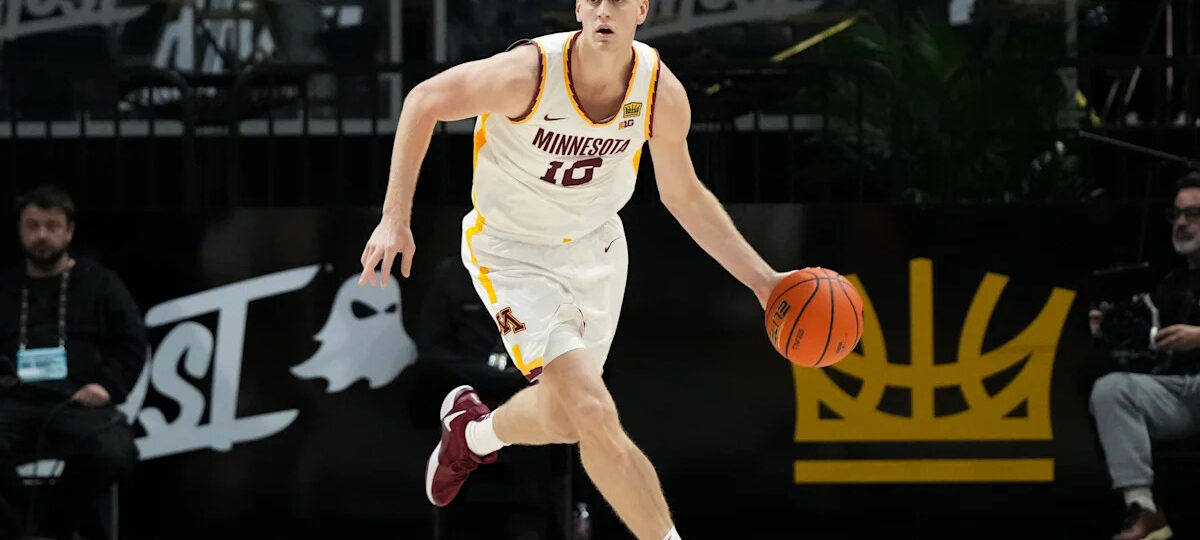
But student-athletes who exhausted their eligibility during the 2025-26 academic year will have no additional eligibility, an exclusion that’s unsurprisingly resulted in legal action. A group of 11 D-I athletes — headlined by standout men’s college basketball player Minnesota guard Cade Tyson — is challenging the new eligibility model in federal court. More specifically, in the U.S. District Court for the District of Colorado, they’ve filed a class action lawsuit against the NCAA in hopes of securing a fifth season of eligibility.
“These athletes aren’t asking for special treatment,” said Rob Shelquist, a partner at Cuneo Gilbert Flannery & LaDuca, LLP, in a statement. “They’re asking to not be singled out and excluded from the NCAA’s eligibility framework. The NCAA updated the rules but refused to apply them only to the very group that was most immediately affected.
“If the NCAA has determined that five years of eligibility is the fair rule for college athletes, then athletes who would still be eligible but for completing four years of eligibility should not be deprived of the same educational, athletic and NIL opportunities.”
“These athletes aren’t asking for special treatment,” said Rob Shelquist, a partner at Cuneo Gilbert Flannery & LaDuca, LLP, in a statement. “They’re asking to not be singled out and excluded from the NCAA’s eligibility framework. The NCAA updated the rules but refused to apply them only to the very group that was most immediately affected.
“If the NCAA has determined that five years of eligibility is the fair rule for college athletes, then athletes who would still be eligible but for completing four years of eligibility should not be deprived of the same educational, athletic and NIL opportunities.”
If the NCAA, most recently beleaguered because of a cascade of court proceedings over eligibility disputes in recent years, loses this suit, the ripple effect on the world of college athletics could be seismic. Not only would the 11 plaintiffs benefit but so would thousands of others in their same situation.
The college football landscape, especially, could be put in a blender. With the 2026 season right around the corner, programs could benefit from a flurry of last-second additions with veteran players suddenly eligible and transferring in for one last hurrah.
Again, that is if those players receive a ruling in their favor. The complaint seeks declaratory and injunctive relief, damages and class-wide remedies.
The plaintiffs are Tyson, Brock Wisne (Northern Colorado men’s basketball), Anthony Johnson (Arizona State men’s basketball), Louie Jordan (Radford men’s basketball), Jefferson De La Cruz Monegro (Cal State Fullerton men’s basketball), Isaiah Jones (South Florida men’s basketball), Aidan Shaw (Boston College men’s basketball), Dimond Loosli (Penn State baseball), Jake Morell (Seattle University baseball), Aislin Malcolm (Robert Morris women’s basketball) and Abigail Jefferies (Long Island University women’s track and field).
Tyson, notably, averaged 19.6 points last season at Minnesota, the sixth most of any player in the Big Ten last season.
The NCAA has also been dealing with a bevy of state lawsuits in the wake of adopting the revised eligibility model. Even so, the D-I Cabinet released a statement on June 24 via X that reaffirmed its commitment to the model while acknowledging the lawsuits at hand, writing that “we do not intend to change course.”
“In April, while the Age-Based Eligibility Rule was still under consideration, the NCAA Division I Board of Directors, informed by the Division I Cabinet and by DI student-athlete leaders made clear that its intent was for any rule change to apply going forward, and not retroactively to student-athletes whose eligibility is or will be completed by the spring of 2026 to avoid the impact retroactive application would have on other student-athletes,” the statement read.
“The cabinet’s unanimous decision and the NCAA Division I Student-Athlete Advocacy Committee’s unanimous support for the change represents our considered judgment about what is best for college sports.
Enjoying this article? Support our work with a small crypto donation.“Student-athletes who will exhaust their eligibility this year have received the full period of eligibility permitted by NCAA bylaws and the life-changing benefits college sports provides. Giving those student-athletes another season would destabilize rosters just ahead of the coming season by disrupting settled expectations of countless student-athletes regarding their expected roster spots and playing time next year, including incoming freshmen who are eager to participate in the life-changing experience of college athletics.”
“In April, while the Age-Based Eligibility Rule was still under consideration, the NCAA Division I Board of Directors, informed by the Division I Cabinet and by DI student-athlete leaders made clear that its intent was for any rule change to apply going forward, and not retroactively to student-athletes whose eligibility is or will be completed by the spring of 2026 to avoid the impact retroactive application would have on other student-athletes,” the statement read.
“The cabinet’s unanimous decision and the NCAA Division I Student-Athlete Advocacy Committee’s unanimous support for the change represents our considered judgment about what is best for college sports.
“Student-athletes who will exhaust their eligibility this year have received the full period of eligibility permitted by NCAA bylaws and the life-changing benefits college sports provides. Giving those student-athletes another season would destabilize rosters just ahead of the coming season by disrupting settled expectations of countless student-athletes regarding their expected roster spots and playing time next year, including incoming freshmen who are eager to participate in the life-changing experience of college athletics.”
That said, last week, an Ohio judge granted a preliminary injunction for 24 men’s and women’s college basketball players who were suing the NCAA for extra eligibility as well. Judge Christopher Wagner, as reported by The Associated Press, determined that the new eligibility rules have adversely affected 2022 high school graduates in an arbitrary manner.
“Each plaintiff was harmed each time he or she competed in a basketball game against a fifth or sixth-year player without being offered the same opportunity to compete in a fifth season themselves,” attorney Ryan Downton wrote in a filing, per the AP.
What Downton was referring to is the fact that over the past few years, waivers have been frequently granted to college athletes, including a blanket COVID-19 waiver that extended the careers of athletes amid the pandemic. While that waiver in particular came in good faith, it marked the beginning of an era of older college athletes who, simultaneously, started to reap the benefits of NIL.
Since, more dubious waivers have been handed out to student-athletes looking to continue their college careers beyond the typical graduation timeline.
The NCAA is trying to draw a line in the sand. It’s modified model is designed to eliminate waivers and redshirts and to cap the age of college athletes. The age-based model will start student-athletes’ eligibility clocks when they first enroll in college full-time or at the beginning of the academic year following their 19th birthday, whichever takes place first.
There are exceptions. Student-athletes experiencing pregnancy, completing active-duty military service and going on official religious missions can delay or pause their eligibility under the age-based model.
But by and large, the NCAA’s aiming for a less nebulous and more court-proof eligibility system. It didn’t take long for it to be peppered with lawsuits, including a federal class action suit that could cause quite the domino effect.
Discover more from NAIRAVOICE.COM.NG
Subscribe to get the latest posts sent to your email.