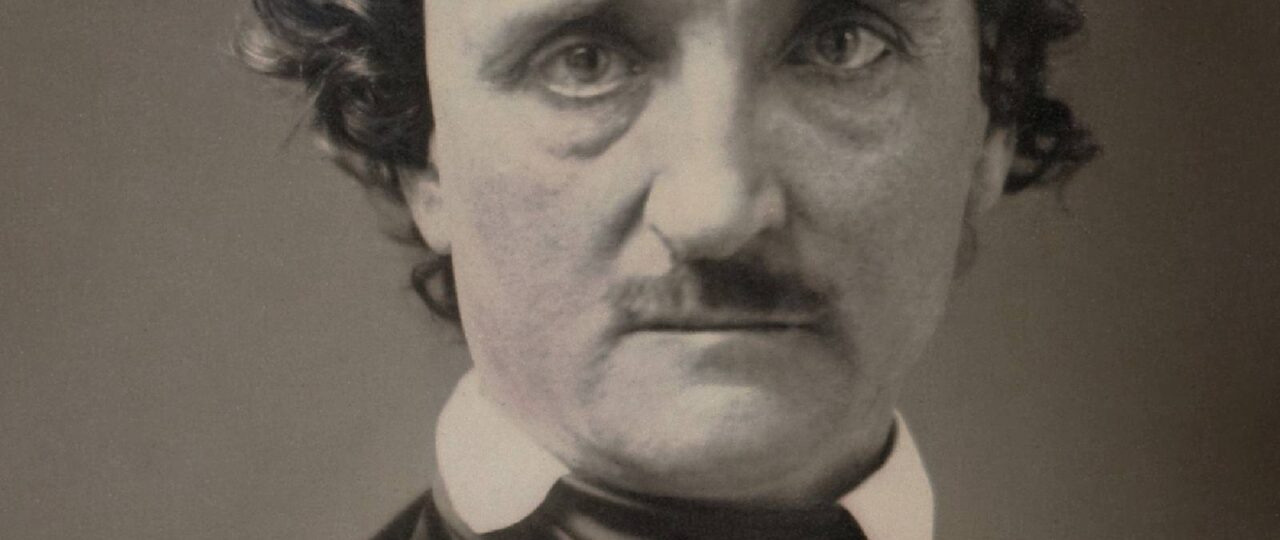
In 1841, Edgar Allan Poe published his very first mystery: The Murders in the Rue Morgue. The tale was a short story about a man who used his extremely analytical mind to solve a series of murders in Paris, and it was all narrated by the detective’s roommate. This may sound like a familiar detective story setup to us today, but at the time, no one had ever done it before.
The Murders in the Rue Morgue is widely considered the first detective story ever written, and it spawned an entire genre that continues to thrive to this day in the form of mysteries, thrillers, and everything in between. This first whodunit gave rise to classic detectives like Hercule Poirot and Sherlock Holmes. Eighty years later, Poe also sparked the creation of the detective mystery genre in Japan.
Poe And Ranpo Bring Crime-Solving To Japan
It Was Many And Many A Year Ago
Tarou Hirai was a Japanese writer who developed a love for Western mysteries and thrillers. Hirai’s fascination with the macabre and procedural began early on, and he even tried to translate some Sherlock Holmes when he was in college. But the real breakthrough moment came when he debuted his own literary work, starting with the iconic first story, published in 1923: The Two-Sen Copper Coin.
The story recounts the adventures of two roommates who discover a hollow coin that contains a secret message. The two decode the secret and set out to find hidden loot… only to discover it might not have been worth the trouble after all.
Don’t get me wrong, Japan did have mysteries before Hirai’s work, but it had been incorporated into other genres as part of adventures and horror. Crime stories were also meant to teach morals, not just be enjoyed for the satisfaction of figuring out the solution. Hirai was the first author to focus entirely on the logical aspect and the actual figuring out and solving of the crime. And he did it in such a way that incorporated elements of Japanese culture.
That first story brought to life the Japanese equivalent of Sherlock Holmes, Kogoro Akechi. Akechi would go on to have many adventures and solve many mysteries that tested his wits and mixed in elements of human nature and the unsettling, following in Poe’s footsteps. And to commemorate the influence that Edgar Allan Poe had on him, Hirai gave himself a pseudonym that was a play on the author’s name: Edogawa Ranpo. (Note, this is sometimes spelled Rampo, depending on the translation.)
Classic Japanese Detective Novels
Search For A Great Mystery Nevermore
Thanks to Hirai, aka Edogawa Ranpo, the Japanese detective novel genre remains extremely popular in Japan. It provides a close look at the analytical part of mystery solving, while also fitting beautifully within the unique culture of Japan. Japanese murder mysteries are a great way to enjoy a different side of the genre, where the traditions and day-to-day life of Japan are intertwined with the crime-solving procedural.
Dive into the world of Japanese detective novels with these excellent, beloved picks:
- Japanese Tales of Mystery & Imagination by Edogawa Ranpo (1956): Start with a collection of Ranpo’s best short stories, including one of his most famous (and most Poe-like) tales about a human chair. (Available for purchase at this link.)
- The Honjin Murders by Seishi Yokomizo (1946): On the night of an important village wedding, a murder takes place, followed by a scream, creepy music, and a bloody samurai sword thrust into the snow outside. Amateur detective Kosuke Kindaichi is on the case! (Available for purchase at this link.)
- The Tokyo Zodiac Murders by Soji Shimada (1981): In 1936, an eccentric artist is found dead with seven women, all of which he had planned to kill. After his death, all seven are killed off anyway. Fifty years later, an illustrator and astrologer join forces to finally solve the mystery of the Tokyo Zodiac Murders. (Available for purchase at this link.)
- The Decagon House Murders by Yukito Ayatsuji (1987): A club of amateur sleuths arrives on an isolated island for a retreat. When one of their members turns up dead, they have to put their detecting skills to the test, or risk becoming the next victim. (Available for purchase at this link.)
- The Aosawa Murders by Riku Onda (2004): The tragic death of 17 people from cyanide poisoning shapes a community until the truth finally comes out a decade later. (Available for purchase at this link.)
- The Devotion of Suspect X by Keigo Higashino (2005): A locked-room murder about a woman whose horrible ex-husband ends up dead after a confrontation, her next-door neighbor who helps to clean up the mess, and the legendary Detective Gelileo who solves the case. (Available for purchase at this link.)
Edogawa Ranpo was the father of the mystery genre in Japan, much like Edgar Allan Poe was in the West. So as you enjoy these novels, be sure to spare a moment to remember both classics!
Discover more from NAIRAVOICE.COM.NG
Subscribe to get the latest posts sent to your email.