
It’s the end of another week here at BCB After Dark: the coolest spot for night owls, early risers, new parents and Cubs fans abroad. Come on in and sit with us for a while. We’re always happy to see a friendly face. There’s no cover charge. We can check your coat. The hostess will seat you now. Bring your own beverage.
BCB After Dark is the place for you to talk baseball, music, movies, or anything else you need to get off your chest, as long as it is within the rules of the site. The late-nighters are encouraged to get the party started, but everyone else is invited to join in as you wake up the next morning and into the afternoon.
Last night I asked you which free agent reliever would you prefer the Cubs sign: Adrián Morejón or David Bednar? Obviously both would be good and a lot of you said that in the comments. However, the idea that the Cubs would give not one but two major free agent deals to relief pitchers strains my credulity, at least. And it should be noted that relievers are unpredictable, even the good ones.
In any case, the vote wasn’t even close. Seventy percent of you went with Morejón.
Here’s the part with the movies and the music. You’re welcome to join us. Or not. It’s a free country.
Tonight we’re featuring the great jazz guitarist Grant Green from his 1970 album Green is Beautiful. He’s doing a song you’ve probably heard before: “A Day in the Life.”
There’s a big debate on film social media about the 2001 film Josie and the Pussycats, written and directed by Harry Elfont and Deborah Kaplan. The film was a huge box office and critical bomb when it was released. Roger Ebert gave it 1/2 star (out of four). Elvis Mitchell wrote of it: “few people other than future airline passengers should be subjected to such misery.” The film made about $14 million off of a budget over twice that.
Since then, the film has become a kind of cult classic. A lot of millennials who saw the film as teenagers (probably on cable or rental, since few of them saw it in theaters) grew up and became film critics. They started a re-appraisal of the film, arguing that the critics back in 2001 just didn’t get it. The film is currently running on the Criterion Channel, which is supposed to be a place for a higher quality of film than your normal streaming service. So I decided to give the film a chance to find out which one was right.
Turns out, neither one is. The critics back in 2001 were unfairly harsh on Josie and the Pussycats, but it’s not exactly a masterpiece either. There are some solid parts to it, but it’s also a satire with the subtlety of a sledgehammer. The music is surprisingly good but the plot is pretty hackneyed and predictable. The humor is very hit and miss.
I’m going to admit that I’m not the target audience for Josie and the Pussycats, but in another sense, I am. I am of the age to be someone who watched the original cartoon as a child. The cartoon was a spinoff of The Archie Show and also a version of one of the many Scooby-Doo clones that animators decided that kids in the seventies never got tired of. I can’t say I was a big Josie and the Pussycats fan at the time, but I did watch it and I do remember it. But the real target audience for this film were those tween and teen girls of 2001. So take whatever I write in that light.
Let’s start with the positives of Josie and the Pussycats. First off, the villains are played by Parker Posey and Alan Cummings and that’s a big plus in my book. Their performances are rather over-the-top (because everything in the film is over-the-top), but you can tell that both of them are having fun. The Pussycats—Josie (Rachel Leigh Cook), Val (Rosario Dawson) and Melody (Tara Reid)—are OK. At least they have some chemistry with each other. Most of the humor comes from the sweet-but-dumb Melody, which, as I remember, matches up with the cartoon. I’m happy to say they don’t go overboard with it. They break the fourth wall a few times, most notably when Josie asks non-band member Alexandra (Missi Pyle), as they’re flying to a recording session, “Why are you even here?” and she responds “Because I’m in the comic.” The film generally doesn’t overwhelm us with dumb blonde and wall breaking jokes, so that’s good.
The music, on the other hand, is quite good for the pop-punk genre that was having a moment in the early-aughts. I found it incongruous that we’re introduced to The Pussycats ripping through a well-produced number at the beginning of the film, only for the camera to pan back to show they’re playing at a bowling alley and no one is paying attention to them. You can like or dislike pop-punk, but it’s undeniable that The Pussycats were a top-rate example of it. The bowlers would be paying attention to them. Their classmates would definitely not be mocking them for being bad like they do in the film. The one thing that did sell about the film in 2001 was the soundtrack, which I suppose kept the film from being a total financial disaster.
(Obviously, Cook, Dawson and Reid don’t actually play their own instruments and Cook’s lead vocals as Josie are replaced by Kay Hanley of the band Letters to Cleo. But Cook, Dawson and Reid do sing backup harmony on the songs.)
All the references to pop-punk, the clothes, MTV, Behind the Music and cellphones the size of bricks were a real time warp. I don’t remember 2001 being that different than today. I guess I’m just old.
What goes wrong with Josie and the Pussycats is that it’s supposed to be a satire of consumerism, product placements and the music industry. The whole plot of the film is that Posey and Cummings are putting subliminal messages in pop songs to control teenagers and make them buy whatever they tell them to purchase. But the whole thing comes at you like a mack truck down a narrow tunnel. There are an absurd number of product placements throughout the film, and several critics back in 2001 made the point of the hypocrisy of all the product placements in a film that’s decrying manipulative advertising. I guess the producers claim that they got no money for any of the dozens of products shown in the film and that it was all done for the purposes of satire. If we take them at their word for that, they certainly didn’t make that clear in the film. The contemporary critics definitely didn’t get it. Elfont and Kaplan didn’t have any problem breaking the fourth-wall at other times, I don’t see why they couldn’t have told us that none of these were paid placements in the script. Not that that would have helped much, but maybe I wouldn’t have rolled my eyes as often at the brand placements.
That’s the real problem with the film. It’s all too much. Good satire should cut with a scalpel, not a sledgehammer. The point that advertisers use pop culture to influence consumers was made very quickly in the film. Then that same point is made again and again and again.
The other thing is that the film is satirizing is the cliché rock star story that anyone who saw Behind the Music back in the day was familiar with. The problem is that it’s very tricky to differentiate a satire of a cliché from just being a cliché, and Josie and the Pussycats doesn’t really succeed in threading that needle. The plot of the film is pretty hackneyed and there’s no doubt we’re going to get a happy ending.
So to summarize, the good things about Josie and the Pussycats is some pretty good pop-punk music, an appealing cast and a few good jokes. The bad things about it are a predictable plot and a point about consumerism and advertising that beats the dead horse so many times it becomes hamburger.
So Josie and the Pussycats is not a 1/2 star film. It’s better than that. But it’s also not a must watch for anyone other than the aging millennials who want to relive their youth. But if you’re a real pop-punk fan, give the soundtrack a spin.
Here’s the trailer for Josie and the Pussycats.
Welcome back to everyone who skips the music and movies.
With the end of the season here, a whole ton of Cubs players became free agents. I’ve been too busy watching Josie and the Pussycats on the Criterion Channel to count them all, but there’s a lot. So tonight’s question is other than Seiya Suzuki, which Cubs free agent would you like to most see return to the team in 2027?
For the purposes of tonight, we’re going to assume there is a 2027 season. We’re also assuming that Suzuki is your number one choice, since he’s the only one with a qualifying offer. He has also been a fan favorite over the past five years. But which of the non-Seiya free agents would you most like to see return?
Now the limitations of our polling software in “The Feed” is going to limit how many options I can give you. I’ve picked six candidates, which is all they’ll let me do these days. But if there is someone else you’d rather the Cubs re-sign, tell us in the comments.
My options are:
Ian Happ
I don’t think I need to tell you much about Ian Happ, the longest-tenured Cub. Happ certainly has his issues with left-handers and strikeouts, but he’s a team leader, he gets on-base, had decent power and is a pretty good defensive outfielder.
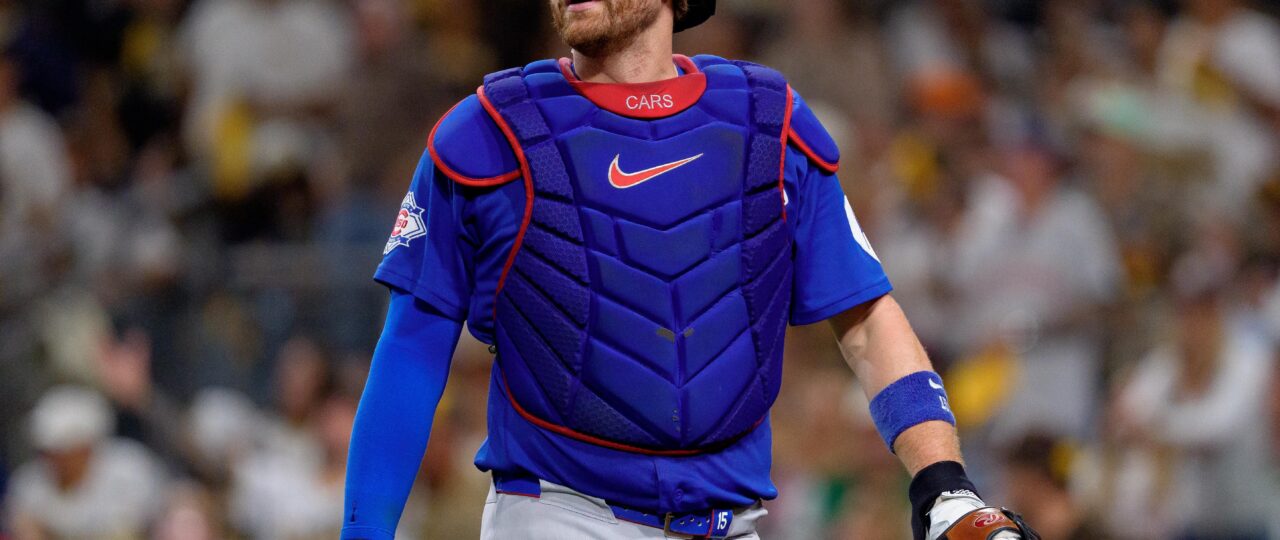
Carson Kelly
Kelly had a good two years as the Cubs starting catcher, although his power did fall off a bit this past season. Still, good catchers are hard to find and Kelly is probably better than average.
Michael Conforto
The Cubs signed Michael Conforto to a minor-league this past winter and a lot of people didn’t expect him to even make the team out of Spring Training, including yours truly. But Conforto had his highest OPS+ since 2020 last year and proved to be a very quality fourth outfielder with some pop in his bat. If you don’t want to re-sign Happ, maybe Conforto could be a bridge until some of the minor league outfield prospects the Cubs have are ready.
Matthew Boyd
Boyd has also been a solid pitcher for the past two seasons with the Cubs, even making the All-Star team in 2025. He fell off a little this past year and at 36 next year, he could be in line for another drop-off. But the Cubs need starting pitching and Boyd had a solid 3.91 ERA last year.
Clay Holmes
Holmes was one of two pitchers on this list who came over to the Cubs in a trade. There was a lot of thought that his ground ball tendencies would play into the Cubs strengths and in August, at least, they did and Holmes was excellent. He was not good in September, however. But maybe a full season with the Cubs and a healthy season (he was injured most of the first half of the season after getting hit with a comebacker) would allow Holmes to thrive.
Kevin Gausman
Gausman was the other pitcher who came over in a trade at the deadline. He was kind of boom-or-bust in his starts after the trade, but he’s had a long career as a quality pitcher. He’s also been extrodinarily healthy over the last eight seasons or so, and the last thing the Cubs need is another injured pitcher.
I wish I could give you an “other” option for Shōta Imanaga, Tyrone Taylor or some other players, but they only let me give you six options and I wanted three hitters and three pitchers. But feel free to mention other players in the comments.
I guess I could have put in a “none of the above” option too if I had more room.
So which of these players do you most want to return?
Thank you for stopping by tonight. We’re so glad to see a friendly face. Get home safely. Call a ride if you need to. Don’t forget any personal items. Recycle any cans and bottles. Tip your waitstaff. And join us again next week for more BCB After Dark.
Discover more from NAIRAVOICE.COM.NG
Subscribe to get the latest posts sent to your email.