


 Getty Images
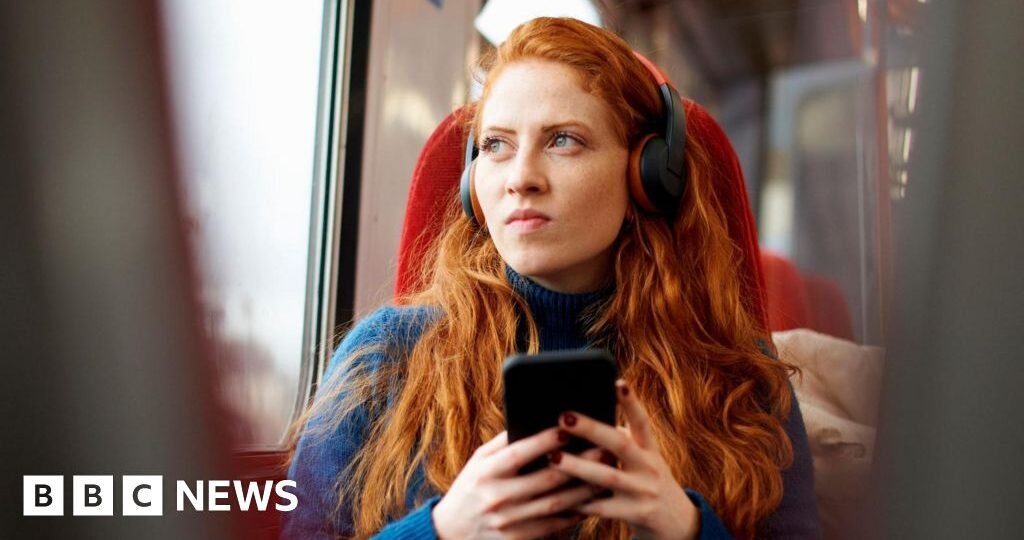
The phone signal on trains in Britain is not strong enough to scroll on social media or stream videos most of the time, the media regulator has said.
Ofcom said Vodafone met its standards for “good performance” only 17% of the time. EE was the best-performing network, but still only met those standards 42% of the time.
Mobile UK, which represents the major phone providers, said there were “unique structural and capacity challenges” to keeping good train signal.
Ofcom said mobile networks and local authorities needed to “step up” to provide more reliable services across the country.
It found some local authorities had rejected more than nine in 10 applications for new or upgraded infrastructure in the last five years.
Mobile UK, which represents EE, Virgin Media O2 and VodafoneThree, urged the government to “act now” with planning reform and investment.
It said taxpayers should fund some of the infrastructure needed for black spots, “as commercial rollout alone cannot bridge the gap on the rail network”.
Ofcom’s threshold of “good performance” was far lower than average 4G speeds – but mobile networks still failed to achieve them most of the time.
Three met the standards 21% of the time, and O2 hit them 20% of the time.
Ofcom said that “for too many people, stepping on board can mean going off grid”.
It said the main problems were weak signal from phone masts around train lines, and that some carriage types didn’t allow signals to get through.
It commissioned testing of phone signal quality on 24 sections of track in England, Scotland and Wales.
“Good signal” was measured as a download speed of five megabits per second, an upload speed of 1.5 megabits per second, and a response time of 50 milliseconds.
It said that was the minimum needed to make video calls, scroll social media or stream videos, but phone networks did not achieve it most of the time.
Train wi-fi performed well just 1% of the time, with train companies criticised for using outdated technology and throttling internet speeds too much.
In May, government sources told the BBC they would be boosting train wi-fi by allowing them to connect to low-earth satellites instead of just 4G and 5G networks.
The Department for Transport (DfT) says it plans to spend £57m on the project. Transport Secretary Heidi Alexander is expected to formally announce the plans this summer.
Mobile UK said it needed to balance “the need for major investment with Ofcom’s vital role in maintaining low costs for consumers”.
The Department for Science, Innovation and Technology has been contacted for comment.
Why Britain’s notoriously bad train wi-fi might soon be a thing of the past
Better WiFi for hundreds of trains under government plans
MP to hold debate on ‘shoddy’ mobile phone signal

Discover more from NAIRAVOICE.COM.NG
Subscribe to get the latest posts sent to your email.