
 AFP via Getty Images
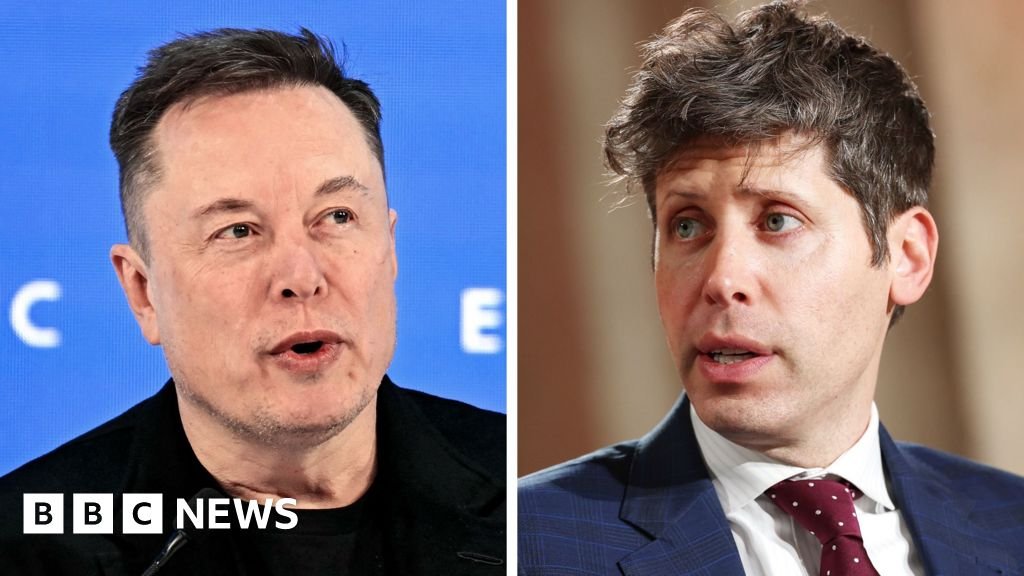
It is the legal showdown that has pitted two of the biggest names in tech, Elon Musk and Sam Altman, against each other.
At stake is the future of one of the world’s most valuable start-ups, ChatGPT-maker OpenAI, along with the reputations of Altman – the company’s boss – and Musk, the man he founded it with.
The central claim the jury has now retired to consider is Musk’s argument his former friend “stole a charity”, cheating him out of a fortune (albeit a tiny one, by Musk’s standards) along the way – something Altman strongly rejects.
But there’s been much more to the trial than that.
Over the past three weeks, myself and other reporters have been glued to our seats at the federal court in California as the evidence ranged from explosive text messages to revelations of free Teslas allegedly offered in exchange for power.
It has all been presided over by a no-nonsense judge who will take the jury’s decision under advisement, but ultimately decides which side prevails.
For those who have been unable to follow every twist and turn, here are five big things we learned from the court battle.
1. It was more than Altman v Musk
Elon Musk’s central claim in this lawsuit is that Altman lied to him about his commitment to OpenAI’s non-profit status.
But this trial has ended up being more than one very famous man’s word against another’s.
A parade of witnesses – many of them also very high-profile figures in the world of tech – took to the stand during the trial and said they had never heard of or seen evidence of any such commitment from Musk himself.
Witnesses included OpenAI co-founder Ilya Sutskever, former OpenAI board member, Tasha McCauley, and even Microsoft boss Satya Nadella – who insisted his company did extensive due diligence before investing billions into OpenAI.
Of course, Nadella has skin in the game. Microsoft is a co-defendant, accused by Musk of aiding and abetting in Altman’s alleged scheme.
Nevertheless, it was striking that this trial has not just been about Musk against Altman – there has been a barrage of voices contradicting the claims of the world’s richest man.
‘I thought he was going to hit me,’ OpenAI co-founder says of Musk
2. Altman’s character came under scrutiny
 Reuters
Being able to call on some high-powered support from the witness stand hasn’t stopped the questions about Altman’s trusthworthiness.
In the weeks leading up to the trial, Altman had been the subject of a blistering New Yorker magazine profile by investigative reporter Ronan Farrow.
Zoning in on his career and moments such as his dramatic ousting from OpenAI in 2023, the story portrayed Altman as a pathological liar.
Musk’s lawyer Steven Molo made the most of this.
“Are you completely trustworthy?” he asked Altman in his first question of cross examination.
Altman responded with: “I believe so.” Molo ran with it.
“You don’t know whether you’re completely trustworthy?” he queried.
While the OpenAI boss asked to amend his answer to “yes”, his character remained under a harsh spotlight throughout the trial.
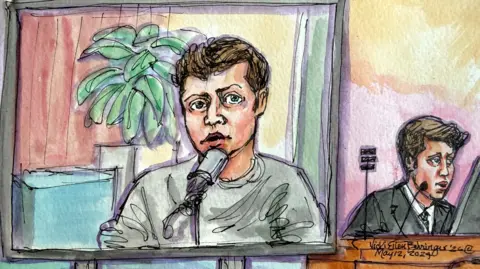
Jurors heard from former OpenAI board members and executives – some in person, others via videotaped sworn depositions – detailing first-hand experiences of Altman allegedly failing to be forthright.
They also learned of his extensive investments in private start-ups, some of which have brokered deals with OpenAI.
A power purchasing agreement with nuclear energy start-up Helion Energy was flagged as particularly worrisome, given the firm has yet to ever deliver any power.
Altman was, until recently, chairman of Helion’s board and holds a stake worth more than $1.5bn.
Musk accuses Altman of stealing a charity as courtroom battle begins
3. The no-nonsense judge didn’t allow time for lunch
Musk v Altman wasn’t just about the tech bros.
Other colourful characters who got their star turn turning this trial included Judge Gonzalez Rogers, who oversaw it.
She kept jurors, lawyers and media on a strict schedule, with only two twenty-minute breaks per day and no lunch time to ensure maximum alertness.
This judge had complete command of her courtroom and had no qualms about lambasting anyone who ran afoul of the rules.
That applied to observers who deigned to take photographs of the case’s famous players in the courthouse and lawyers who pushed their questions into territory the judge had previously made clear were off-limits.
When the court experienced audio issues early in the trial, she addressed it and then deadpanned: “What can I tell you? We are funded by the federal government.”
The drama of the trial, which could not be streamed in video, was also brought to life throughout by sketch artist Vicki Behringer, who painstakingly captured it in water-coloured splendour each day.
The no-nonsense judge calling the shots in Musk v Altman trial
4. Things at OpenAI got very personal
 Getty Images
Once upon a time, Musk was Altman’s hero.
The deterioration of that relationship was not the only highly personal situation the court focussed on.
Musk was generally confident, even combative, in his appearance as the first witness to take the stand.
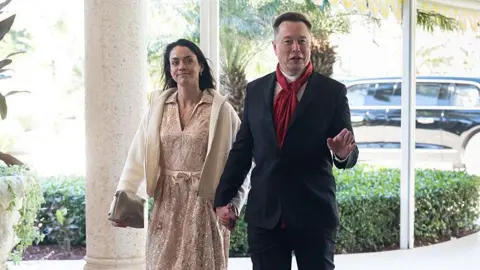
But he got noticeably flustered when asked about his relationship with Shivon Zilis.
“We live together and she’s the mother of four of my children,” he acknowledged.
He described Zilis, an executive at his firm Neuralink, as one of his senior advisors.
She told the court that while also member of the OpenAI board, the billionaire had offered her his sperm after noticing she had no children – not your everyday boardroom interaction.
The fact Musk was to be the father to her children was something she, later, did not reveal to OpenAI colleagues until a media report was imminent.
An intriguing witness, she was almost robotic-sounding in her answers on the stand.
Her demeanour seemed warmer over text, where her job as ‘Elon whisperer’ came across most clearly.
She left the board after Musk started xAI.
“When the father of your babies starts a competitive effort and will recruit out of OpenAI, there is nothing to be done,” Zilis wrote to a friend.
5. Free Teslas and frantic texts: how power really works in big tech
 Getty Images
For outsiders, Musk v Altman offered a crash course in how power is wielded in Silicon Valley.
Want to lowball your co-founders? Give them free Teslas! (That was Elon, allegedly.)
Looking to ensure loyalty? Pay your most important strategic partner on the side. (That was Sam, allegedly.)
Musk’s attorneys tried to diminish Altman before the jury, painting him as someone who tried to use a connection to Musk to bolster his own status.
Text messages divulged during the trial also put power struggles behind closed doors on full display.
These ranged from revealing Altman’s frenzied response to his abrupt sacking in 2023, asking a former colleague at one point – “still don’t want me?”
That same colleague in turn described how Altman was being replaced by Twitch boss Emmett Shear, or as she called him in her message “rando Twitch guy”.
The flippant-sounding messages – as well as seeing these larger-than-life personalities sipping lattes around the courthouse – could make them seem a little less important.
Yet they still control technology that impacts the lives of billions of people. And they are embroiled in a row worth billions of dollars.
It is now over to the jury – and ultimately Judge Gonzalez Rogers – to decide what happens next.
Musk accuses OpenAI lawyer of trying to ‘trick’ him in combative testimony
What is AI and how does it work?

Discover more from NAIRAVOICE.COM.NG
Subscribe to get the latest posts sent to your email.