
3Tips for you!
As Paris Saint-Germain and Arsenal prepare to meet in Budapest, the 2025–26 Champions League season already feels like one of transition and definition. It has been a campaign shaped by tactical evolution, emerging identities, and moments that shifted the balance of power across Europe.
Before the final determines its ultimate narrative, five moments stand out as emblematic of how this season unfolded.
1. PSG’s Chaotic Masterpiece Against Bayern Munich
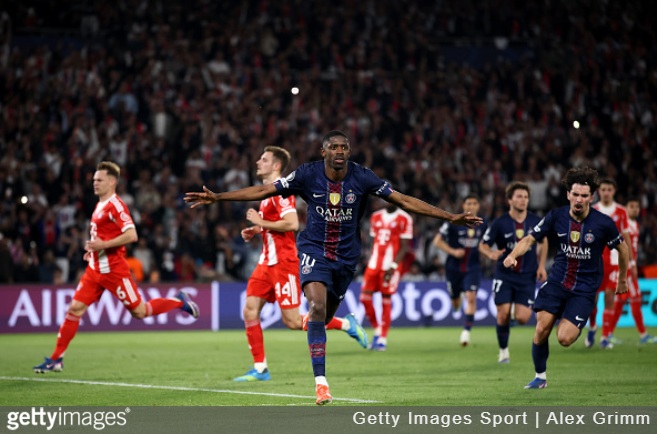
If one match must encapsulate the drama of this Champions League season, it is PSG’s 5–4 victory over Bayern Munich in the first leg of their semi-final in Paris.
The nine-goal spectacle was breathtaking not only for its intensity, but for what it revealed. PSG were at their most explosive—direct, fluid, and capable of overwhelming even one of Europe’s most structurally disciplined sides.
Yet beneath the chaos lay something more significant. In previous seasons, a match like this might have exposed their fragility. This time, it instead set the tone for what followed: PSG surviving the turbulence, then controlling the second leg in Munich with a measured 1–1 draw to advance 6–5 on aggregate.
This tie defined PSG’s evolution. They are still capable of chaos—but no longer dependent on it.
2. PSG’s Ruthless Statement Against Liverpool
While the semi-final captured attention, PSG’s quarter-final dismantling of Liverpool provided the clearest indication that they were serious contenders.
A 4–0 aggregate victory over one of Europe’s most formidable teams was not merely impressive—it was definitive. PSG did not simply progress; they controlled the tie from start to finish, combining attacking incision with defensive discipline.
For a team often defined by moments of brilliance, this was a performance built on structure. Liverpool, known for their intensity and pressing, were rendered largely ineffective, unable to disrupt PSG’s rhythm.
In retrospect, this was the moment when PSG ceased to be seen as entertaining challengers and became something more: the team to beat.
3. Arsenal’s Control Against Atletico Madrid
If PSG’s path has been defined by dynamism, Arsenal’s has been characterized by control—and nowhere was that clearer than in their semi-final against Atletico Madrid.
Over two legs, Arsenal advanced 2–1 on aggregate, a result that reflected not dominance in spectacle, but mastery in detail. The decisive second leg, a 1–0 victory, was a study in defensive organization and tactical discipline.
Atletico, themselves a team built on structure and resilience, found themselves constrained, unable to impose their game on a side equally comfortable in containment.
This tie confirmed what had been developing throughout the competition: Arsenal are not merely talented—they are systemically precise. In a tournament often decided by moments, they have built their success on minimizing them.
4. PSG’s Demolition of Chelsea in the Round of 16
Every Champions League run requires a moment that signals intent. For PSG, that moment came in the Round of 16, where they overwhelmed Chelsea across two legs.
The scoreline—an emphatic aggregate victory—told only part of the story. What mattered more was the manner of the performance. PSG combined rapid transitions, positional fluidity, and coordinated pressing to dismantle a side known for tactical organization.
It was, in many ways, a glimpse of their ceiling. The attacking interplay between players like Dembélé and Kvaratskhelia, supported by midfield control, created patterns that few teams could contain.
Importantly, this was not a one-off explosion. It set the standard for everything that followed.
5. Arsenal’s Relentless Consistency
While individual matches stand out, one of the defining “moments” of the season is less about a single game and more about a pattern: Arsenal’s sustained consistency.
Their progression through the knockout stages—navigating ties with Sporting CP and Atlético Madrid without losing control—has been built on a remarkable defensive foundation. Unlike PSG’s dramatic highs, Arsenal have advanced through accumulation: clean sheets, controlled performances, and the ability to dictate the tempo of matches.
In a competition often defined by volatility, Arsenal’s steadiness has been quietly extraordinary. It is a different kind of dominance—less visible, but no less effective.
Conclusion: A Final Defined by Contrasts
These five moments do more than recount a season—they define the nature of the final to come.
Paris Saint-Germain arrive shaped by intensity and adaptability, capable of producing moments of brilliance while increasingly able to control them. Arsenal arrive as a counterpoint: measured, disciplined, and structurally refined, a team that reduces chaos rather than embraces it.
The 2025–26 Champions League has built toward this contrast. One side thrives in transition, the other in control. One imposes through force, the other through precision.
And yet, both have earned their place through evolution.
When PSG and Arsenal meet in Budapest, they will not simply be contesting a trophy. They will be representing two interpretations of what success looks like in modern European football—interpretations forged across the moments that have defined this season.
ABOUT THE AUTHOR
Veselin Trajkovic
Vesko is a football writer that likes to observe the game for what it is, focusing on teams, players and their roles, formations, tactics, rather than stats. He follows the English Premier League closely, Liverpool FC in particular. His articles have been published on seven different football blogs.
WE RECOMMEND
Most Popular Posts
Discover more from NAIRAVOICE.COM.NG
Subscribe to get the latest posts sent to your email.