
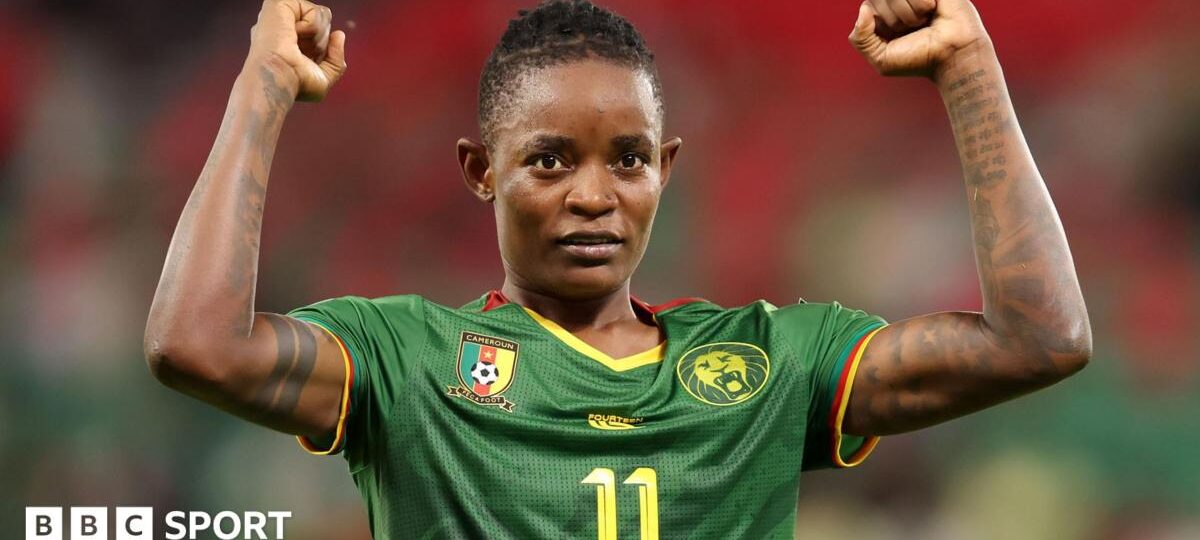
Cameroon cruised to a 3-0 victory over tournament debutants Malawi to claim their first ever Women’s Africa Cup of Nations (Wafcon) title.
Marie Ngah Manga’s close-range header put the Indomitable Lionesses ahead in the 20th minute and Naomi Eto doubled the lead with a stunning volley on the half hour mark in the Moroccan capital Rabat.
The Central Africans made it 3-0 in the third minute of first-half added time as Eto rounded Malawi goalkeeper Mercy Sikelo and put the ball on a plate for striker Ngah Manga to score her fifth goal at the finals.
Malawi, the lowest-ranked side at Wafcon 2026 at 153rd in the world, reached the final on the back of the attacking prowess of the Chawinga sisters Tabitha and Temwa.
However, the two Scorchers stars were well marshalled by the Cameroon defence, who ensured that the Southern Africans were unable to secure a fairy tale ending to their unexpected run at the tournament.
Ngah Manga missed a glorious chance to complete her hat-trick – and secure the golden boot outright – three minutes into the second half when she went past Sikelo but fired wide from six yards with the goal gaping.
The Scorchers had their best opening just after the hour mark as Cameroon keeper Michaely Bihina saved a low effort from Tabitha Chawinga before her younger sibling turned and fired the rebound wide.
Cameroon’s triumph is all the more remarkable given the Indomitable Lionesses missed the 2024 edition of Wafcon and failed to qualify for these finals, losing 3-1 on aggregate to Algeria in their second round tie.
However, the Central Africans advanced to the tournament on the strength of their world ranking after the Confederation of African Football (Caf) expanded the finals from 12 to 16 teams.
FIfa president Gianni Infantino was on hand to present the trophy alongside Caf counterpart Patrice Motsepe and Cameroon, who previously lost three Wafcon finals, also pick up $2m (£1.48m) in prize money as they become just the fourth side to win the title after Nigeria, Equatorial Guinea and South Africa.
Both sides will feature at the 2027 Women’s Fifa World Cup in Brazil alongside fellow Wafcon semi-finalists Algeria and Morocco.
“We are very happy,” Ngah Manga said on E4.
“We have been working so hard over all these years to get here. To finally be champions we are very proud.”

Naomi Eto had a hand in all three Cameroon goals in Rabat [EPA]
Both sides looked nervy in the opening stages, with the Southern Africans repeatedly trying to play in Temwa Chawinga with early balls forward – a tactic that worked well in their semi-final victory over Algeria.
The opener came after Sikelo misjudged an Eto cross from the right and Grace Mendoua’s header back across goal was tipped onto the bar by the Malawi keeper.
Ngah Manga was on hand to pounce on the rebound from two yards out and Cameroon, ranked 82 places above their opponents, never looked back.
The Indomitable Lionesses doubled their lead when Malawi failed to clear a corner and Eto pivoted before sending her first-time effort into the bottom right hand corner.
Sikelo was arguably at fault for the third as she decided to come off her line in an attempt to cut out Genevieve Ngo Mbeleck‘s through ball but Eto beat her there, got to the byline and crossed for Ngah Manga to head into an empty net from two yards.
Valentine Nguele only took charge as Cameroon coach in June but has built a well-drilled side which upset Nigeria 1-0 in the quarter-finals and then beat host nation Morocco on penalties in the last four.
Bihina was the star in both of those matches, pulling off nine saves against the Super Falcons and then keeping out an extra-time penalty and three more spot-kicks in the shootout against the North Africans.
The 22-year-old Benfica goalkeeper was rarely called upon in the final as Malawi’s challenge faded.
Cameroon came close to adding a fourth late on but an Eto strike from a narrow angle was well saved by Sikele before Mendoua’s headed a corner across goal and wide.
In injury time Indomitable Lionesses substitute Gabrielle Onguene tapped in but the 37-year-old was to be denied by the offside flag and booked for taking off her shirt in celebration.
Cameroon football federation president Samuel Eto’o celebrated each goal wildly in the stands at the Moulay Hassan Stadium and the Cameroon bench and officials ran onto the pitch on the final whistle to mark their first Wafcon crown after final defeats in 2004, 2014 and 2016 – which all came at the hands of Nigeria.
Maz Farookhi, BBC World Service reporter
This tournament was described to me ahead of the final as ‘the Women’s Africa Cup of Nations of our lifetime’, and rightly so.
Aside from host nation Morocco, no-one would have predicted such a last four line-up or the two sides who would ultimately contest the final.
Caf’s decision to expand the tournament to 16 nations has proved to be the right one, allowing teams away from the likes of Nigeria and South Africa to demonstrate their qualities and bridge the gap to the continent’s elite.
In the end, this young generation of Cameroon players had too much for Malawi – with Monique Ngock sparkling in midfield once again to prevent passes up to the Chawinga sisters that had been so effective in their run to the final.
Michaely Bihina’s shot-stopping has also been a tournament highlight, as the fairy tale for the team ranked 153rd in the world came to an abrupt end with some nervy defending.
But both sides have next year’s Women’s World Cup to prepare for alongside Morocco and Algeria, who will be making their debut alongside Malawi.
Farid Benstiti’s Fennecs have arguably made the most marked improvement since the last edition of Wafcon 13 months ago, and there is so much to look forward to from the four guaranteed African teams in Brazil next year.
Discover more from NAIRAVOICE.COM.NG
Subscribe to get the latest posts sent to your email.