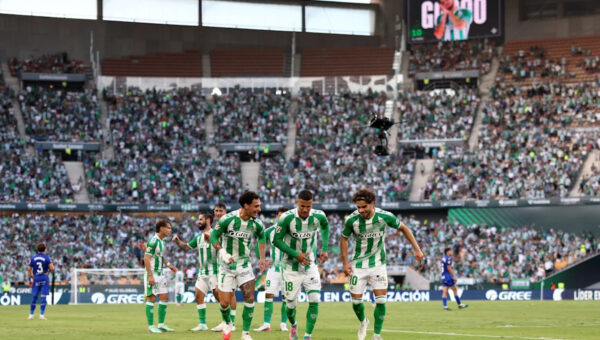


For 25 minutes on 13 June, Morocco made World Cup history during their 1-1 draw with Brazil – not one of their players on the pitch had been born in Morocco.
The 2026 Fifa Men’s World Cup has by far the highest proportion ever of players representing countries they were not born in – almost a quarter of all the participating players.
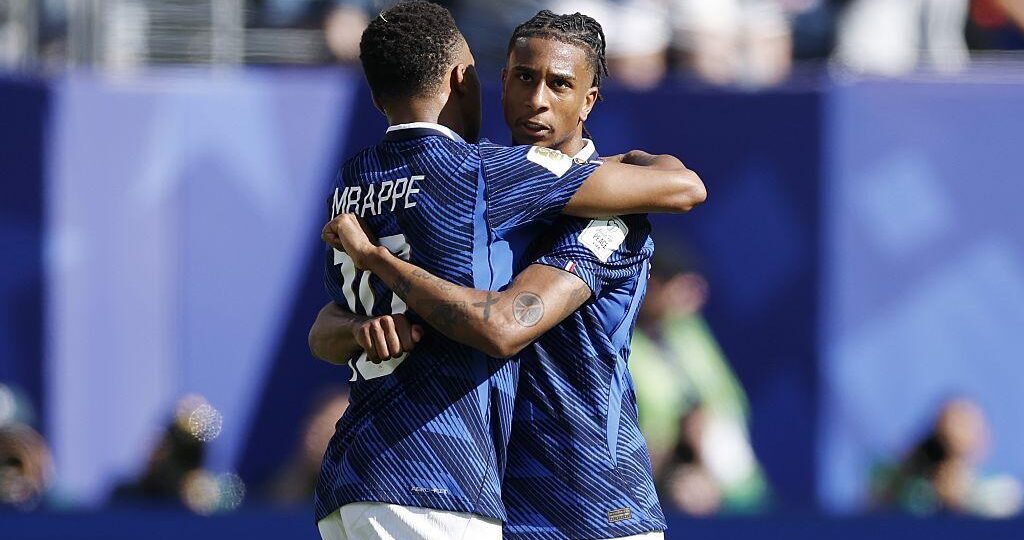
Already the tournament has seen a player score against his birth nation, when France-born Ibrahim Mbaye netted for Senegal in their 3-1 defeat to Les Bleus on 16 June.
This follows the awkward moment in 2022, when Switzerland attacker Breel Embolo, born in Cameroon, became the first player in the tournament’s more than 90-year history to score against his own birth nation.
Instead of leaping in triumph and delight, he briefly lifted his hands in an almost apologetic gesture.
“I knew that if I scored I wouldn’t celebrate the goal, out of respect. That didn’t mean to say I wasn’t happy about it, though,” Embolo told reporters at the time.

In the 2026 World Cup, only eight out of 48 teams do not have a player born abroad, according to official squad lists submitted to world football’s governing body Fifa.
World Cup debutants Curacao feature only a single player born on the Caribbean island as part of their 26-man squad. The country is part of the Kingdom of the Netherlands and most of its team are Netherlands-born.
Meanwhile Qatar has brought players from 10 nationalities, from Africans to Europeans and a South American.
A high-profile case is Michael Olise. Born and bred in London, the Bayern Munich winger has chosen to represent France, his mother’s birth country.
Among foreign-born players representing 2026 co-hosts the United States is Antonee Robinson, who was born in Milton Keynes in England but qualified for the US team through his father.
Such switches have created some family divisions, though.
Four sets of brothers are representing different teams: Desire and Guela Doue (France and Ivory Coast), Nico and Iñaki Williams (Spain and Ghana), Harry and John Souttar (Australia and Scotland) and half brothers Derrick Luckassen and Brian Brobbey (Ghana and Netherlands).
Before 2026, this had happened only twice – when half brothers Jerome and Kevin Prince Boateng played in two World Cups (2010 and 2014) representing Germany and Ghana. They faced each other on the pitch on both occasions.
Professor Gijsbert Oonk, a Dutch historian and expert in migration and identity studies at Erasmus University in the Netherlands, says the trend is a reflection of a changing world.
“Almost 4% of the world population lives in a country in which they were not born. This is even higher with high-skilled workers and elite athletes,” he explains. “It’s a reflection of migration patterns.”
A short(ish) history of flag-switching
The proportion of foreign-born players in World Cup teams has bounced up and down over the decades, until recently.
According to research from Oxford University’s Centre on Migration, Policy and Society (COMPAS), it stayed between 2% and 14% until the last two tournaments when it has surged, reaching 16.5% in Qatar in 2022.
The proportion rose to more than 23% in 2026 – with the total number of foreign-born players reaching 289 out of 1,248, as the number of competing teams rose from 32 to 48.
Fifa was created in 1904, but only established formal nationality rules in the 1960s. Until then, players could play for any country they chose to.
The most prominent example is Luis Monti. The Argentine midfielder represented his country in the 1930 World Cup, where the South Americans finished second. He then switched allegiance and joined Italy for the 1934 tournament, winning the trophy with them.
Monti remains the only person to have played in World Cup finals for two different nations.
In 1962, Fifa issued eligibility criteria, dictating that players must have citizenship of the country they wished to play for, and could no longer represent more than one nation over their career.
Exceptions were made only for players whose nationalities changed involuntarily, such as for athletes from the former USSR and Yugoslavia.
In one example, the late 80s and 90s saw more than a dozen UK-born footballers called up to represent the Republic of Ireland by manager Jack Charlton. They qualified through Irish relatives and made a big contribution to the success of that team.

Further changes came in 2004, when Fifa began allowing players to represent one country at youth level and switch to another at senior level.
However, it also stipulated that a player should have a “clear connection” to a country – either at least one parent or grandparent who was born in the country, or to have been resident for at least two years.
Since then, the residency requirement has increased to five years, while players are now allowed to switch nationality if they have played three or fewer senior international matches prior to the age of 21 for the side they are switching from.
Enter the Atlas Lions
These rule changes have been welcome news for so-called diaspora nations, where a significant portion of their eligible citizens are spread across the globe – like Morocco.
In the 2010s, in a push to improve the quality of its football, the country placed scouts in European countries with large Moroccan communities, such as France, the Netherlands and Belgium.
The resulting injection of talent from diaspora players was one the factors behind Moroccan football’s finest hour: becoming the first African nation to reach World Cup semi-finals, in Qatar in 2022.
Two of the three Morocco players who scored during the quarter-final penalty shoot out were not born in Morocco – Netherlands-born Hakim Ziyech, and Achraf Hakimi, who secured the victory over his own birth nation, Spain.
“This is a story of a country that has learned to treat its diaspora not as an afterthought, but as a crucial part of its national football system,” says Dr Myriam Cherti, a senior researcher at COMPAS.
Decision ‘from the heart’

Dr Cherti says footballers’ choices can be shaped by “professional, emotional and political considerations”, including family expectations or international opportunities they might not otherwise have had.
For example, Ibrahim Mbaye had played for France at all youth levels, but made the surprise announcement last year, aged 17, that he would play for Senegal, his mother’s birth country.
“I will never regret choosing to play for Senegal because it was a decision from the heart,” he told Senegalese broadcaster RTS at the time.
Others, such as former Real Madrid defender Pepe, opt to represent the country in which they have become naturalised.
According to Brazilian media citing his father, Pepe turned down an approach about representing Brazil in 2006 and instead chose Portugal, where he had been living and playing since 2001.
He ended up facing his birth country in a heated group stage match at the 2010 World Cup.
“I never regretted my decision to become Portuguese,” he said at a press conference at the time. “I see facing Brazil as any other game: I will always honour Portugal’s colours.”
Sometimes, recruitment can be unexpected. In 2018, Dublin-born Roberto Lopes, whose father is from Cape Verde, received a message from the country’s manager Rui Aguas via LinkedIn, enquiring whether he would be interested in playing for the national team.
Lopes, who plays for Irish side Shamrock Rovers, ignored the message for months thinking it was spam, before realising his mistake. “I felt so rude,” Lopes told BBC Sport.
The defender went on to become one of the heroes of Cape Verde’s goalless draw against European champions Spain on 15 June.
Divisive issue
So-called “flag-choosing” does not, however, come without controversy.
Sepp Blatter, Fifa president from 1998 to 2015, was critical during his tenure about the growing trend at the time of countries fast-tracking naturalisation for players – particularly Brazilians.
He warned in 2007 that a World Cup dominated by teams “full of Brazilian players” was a “real danger”.
Public judgement can also be harsh: Brazil-born Spain attacker Diego Costa was booed relentlessly by local crowds during his adopted country’s brief participation in the 2014 World Cup – played in Brazil – for choosing to represent the Europeans.
Prof Gijsbert Oonk, who teaches students of various nationalities, reports that the issue proves divisive every time it is raised in his lectures.
Some argue that fans “cannot identify with a country anymore” if its team relies on foreign-born players, he says. “But others take a human rights approach and say ‘let them be, it’s their job, their income’,” he adds.
For Dr Cherti, football cannot remain immune to societal shifts: “The national team is no longer only a reflection of population inside the border. It’s increasingly a reflection of migration, history and global mobility.”

Discover more from NAIRAVOICE.COM.NG
Subscribe to get the latest posts sent to your email.