

The next popular EV might come with a gas engine.
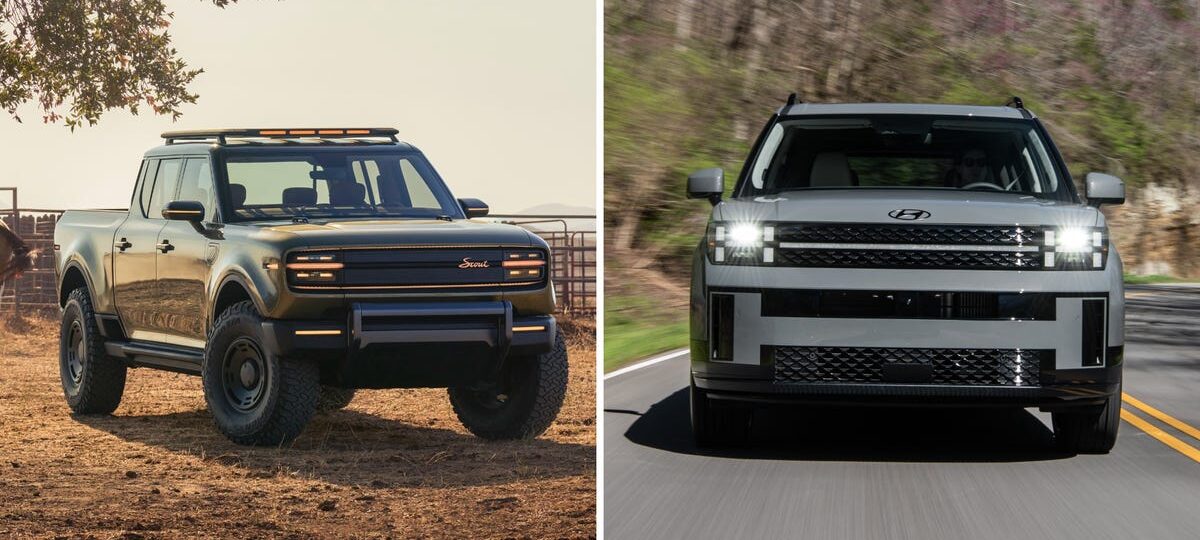
Several car brands, including Hyundai, Genesis, Ram, Jeep, Ford, and Volkswagen-backed Scout Motors, have announced plans to build extended-range electric vehicles, or EREVs, by the end of 2028.
After years of lower-than-expected EV adoption, and as gas prices remain elevated, auto executives believe buyers want the experience of electric driving without having to depend on America’s charging infrastructure for every long trip. “EREVs are really the next generation of this stepping stone powertrain,” Robby DeGraff, the manager of product and consumer insights at AutoPacific, told Business Insider. “These vehicles make a lot of sense for a lot of Americans.” An EREV has both a substantial battery and a gas engine.
Its wheels are propelled exclusively by electric motors.
The gas engine burns fuel to spin a generator, which produces electricity once the battery level falls.
On paper, the system combines the benefits of an EV and a gas vehicle.
Owners who charge regularly can handle most daily driving on electricity, then use gasoline for long trips or heavy towing — when an all-electric truck’s range can take a steep hit.
Most EREVs are expected to offer roughly 120 to 150 miles of electric-only driving, followed by several hundred additional miles with a full tank of gas.
The format makes particular sense in the kinds of vehicles Americans already love: big trucks and SUVs.
The fully plug-in EREVs announced so far are concentrated in those larger segments, where there is room for a substantial battery, an engine, and a fuel tank. “Given that Americans still have an irrational desire for oversized vehicles and we’ll likely continue to have elevated fuel prices for the foreseeable future, EREVs actually make a lot of sense and have the potential to do well,” Sam Abuelsamid, vice president of market research at Telemetry, told Business Insider.
Automakers have not settled on a single name for the technology.
Ram’s coming pickup is the clearest example.
The company calls its gas-generator, electric-drive truck the Ram 1500 REV.
Ram says the pickup, expected to reach dealerships in the first half of 2027, will produce 647 horsepower from electric motors, offer 145 miles of electric range, and travel up to 690 miles in total.
Its sister brand, Jeep, is preparing a related Grand Wagoneer SUV.
Hyundai, Ford, and Scout Motors are solidly in the EREV camp.
On its recent investor day, Hyundai announced that it will build a three-row Santa Fe EREV in Alabama.
It’s expected to launch in early 2027 with more than 600 miles of range.
The company’s luxury brand, Genesis, will also introduce a so-far unnamed EREV SUV.
Ford announced that its next-generation F-150 Lightning will get a gas generator after the all-electric version’s sales disappointed.
Finally, Scout Motors, the vintage truck brand that Volkswagen is reviving, is offering gas-generator options of its Traveler SUV and Terra pickup.
Nissan’s upcoming Rogue e-POWER hybrid points in the same direction.
It is not a plug-in, and Nissan does not call it an EREV.
But, like an EREV, its gas engine generates electricity while electric motors drive the wheels.
The promise of an EREV may sound familiar.
For years, car companies pitched plug-in hybrids, or PHEVs, as the best of both worlds: a battery with a plug for short trips and a gas engine for longer ones.
The Energy Information Administration reported that plug-in hybrids accounted for 1.4% of US vehicle sales in the second quarter of 2026, down from 1.9% a year earlier.
Stellantis announced a $26 billion write-down while discontinuing its PHEV lineup, and none of Detroit’s Big Three automakers still sells a traditional plug-in hybrid in the US.
A few PHEVs have found an audience.
Toyota has sold a healthy number of plug-in Priuses and RAV4s, while Mitsubishi’s Outlander Plug-In Hybrid has earned strong reviews.
DeGraff said he is getting 45 to 55 miles of estimated electric range from a 2026 Outlander PHEV he is currently testing.
But overall, the PHEV model has struggled at scale.
The vehicles are more expensive than comparable gas cars and traditional hybrids, and their fuel-saving promise depends on owners regularly plugging them in.
Studies have found that many do not.
Abuelsamid says EREVs could be a better bet for two main reasons: they’re mechanically simpler, and, unlike PHEVs, the performance won’t change as the car bounces between gas and electric power.
Or, EREVs could fall into the same pricing and consumer confusion traps.
The Ram 1500 REV, for example, is expected to reach dealerships with pricing between $60,000 and $100,000. “There are two massive threats to EREVs that have been damaging to today’s PHEVs: cost and education,” DeGraff added. “If you want a consumer to pay quite a bit more for this advanced powertrain, it is imperatively important they understand it.”
Discover more from NAIRAVOICE.COM.NG
Subscribe to get the latest posts sent to your email.