
Syracuse women’s basketball coach Felisha Legette-Jack implored the implementation of some form of the Protect College Sports Act of 2026, citing a “desperate” need to save college athletics, during comments Wednesday, June 10, on Capitol Hill.
“There’s no more stories. There’s no more culture [without the Protect Act],” Legette-Jack said. “Why? Because we are going to lose that if your bill doesn’t pass.
“We need you in a desperate way. Some of us are going to say bad things about (the bill) but they don’t really know what they don’t know. This sport that we played, all sports, basketball, swimming, tennis, it’s beautiful and it’s going to be watched and it’s going to be loved and it’s going to be adored. But right now, we’re coloring outside the lines so much.”
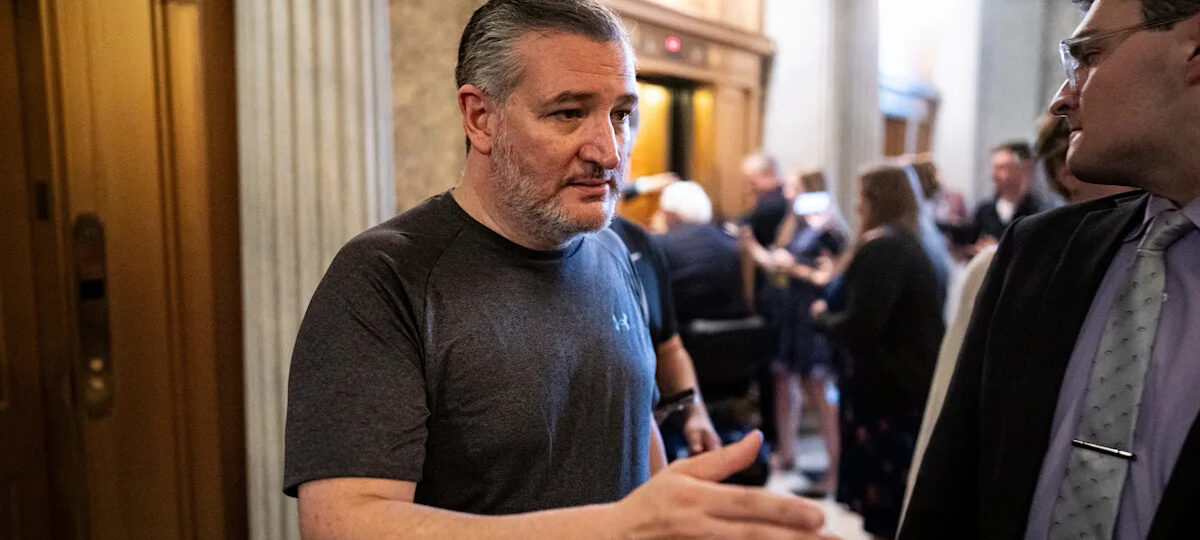
Legette-Jack was part of an open-forum discussion with Sens. Maria Cantwell (D-Wash.) and Ted Cruz (R-Texas), who presented the bill in late-May. Also appearing were Memphis football coach Charles Huff, Big South Conference commissioner Sherika A. Montgomery, Texas Southern President Vice Admiral James W. Crawford III, Middle Tennessee football coach Derek Mason and student-athletes Sara Bower (Akron, women’s soccer) and Gannon Flynn (Boston University men’s swimming).
“Failure’s not an option,” Cruz said in closing remarks. “We can’t fail at this because to see a half-million kids who have these opportunities (of collegiate sports), to see that go away would be an absolute tragedy.”
Previously spearheading community outreach programs at Marshall and Southern Mississippi, Huff, in his first year at Memphis, spoke to the potentially dire, real-world implications in his new home without congressional action.
“Let me say this: college athletics is one of the very few things left in our world that brings cultures together, brings race, creed, gender,” Huff said. “Whether it’s 100,000 people in the stadium or 100 people on the edge of the pool. We all come together. And I think a lot of people who have nothing to do with college athletics, their lives are going to change. That’s going to be no longer because we’re going to be in a system that is completely broken.
“The people that are going to get affected are not only the student-athletes and administrators inside the entity, but it’s going to be the people who work their tails off to buy a ticket to go see the Longhorns play. It’s going to be the people that grow up with their kids in our jerseys of our student-athletes. Because they don’t have a connection to Patrick Mahomes but they do know the starting quarterback at the University of Memphis. It’s going to be the St. Jude’s Hospitals and the City of Memphis when we take our team [to visit] those people dealing with things than what we’re talking about right now in life situations, they’re not going to have that. Because there may not be a University of Memphis because of the size.”
Prior to Huff’s final remarks from the panelists, Cruz directly asked Bower and Flynn what they saw as the future of NCAA sports without congressional action.
“In my opinion, I think the majority of us believe we’ll continue to have chaos and no regulations on issues and topics that are very important and causing issues in all sports, the female and the male side,” Bower said. “We believe the regulation and structure of the topics that this bill brings about creates the structure we need to continue to put our best food forward.
“Without this, we’re not going to be able to continue to advance the NCAA as well as all of athletics and each individual sport.”
Flynn cautioned against a future that wouldn’t be worth competitive endeavors.
“I think we will continue to see rules that the NCAA still has one by one get knocked down by the courts every time someone does something against the rules and then goes to the judge of their choice to rule in their favor,” he said. “I think if we continue down this route, we’re not going to have rules, there’s going to be no integrity left in the game(s) and without clear and enforceable and fair rules, then there’s no point in us even competing.”
The bill previously featured supporting testimony on Capitol Hill Wednesday, Jun e 3, from notable advocates including seven-time college football national championship-winning former coach Nick Saban, current Notre Dame Athletics Director Pete Bevacqua, who cautioned that capped spending on college rosters is dead, and Pac-12 Commissioner Teresa Gould.
As he advocated for the bill, Mason, who’s also previously served as a head coach in the SEC at Vanderbilt, delivered a grocery-store visual to drive home his point.
“The athletic experience is like a carton of milk: it has an expiration date,” Mason said. “So when that happens, we move into this next phase. College gave us these tools, the strength, the confidence, the ability to endure. It wasn’t just the education.
“When we talk about balance … we’re losing balance. I think restoring balance and giving student-athletes in all sports, men and women, the opportunity to grow and be better and grow their sports as well as sustain success is needed and necessary.”
Modifications and revisions are now being examined for the Protect College Sports Act, and if Cantwell and Cruz believe there’s enough support for potential passage, they can introduce it on the Senate floor for vote this summer.
The threshold for passage is 60 votes, with Cruz noting the hope for “much more than 60. We’re the only train leaving the station.”
Discover more from NAIRAVOICE.COM.NG
Subscribe to get the latest posts sent to your email.