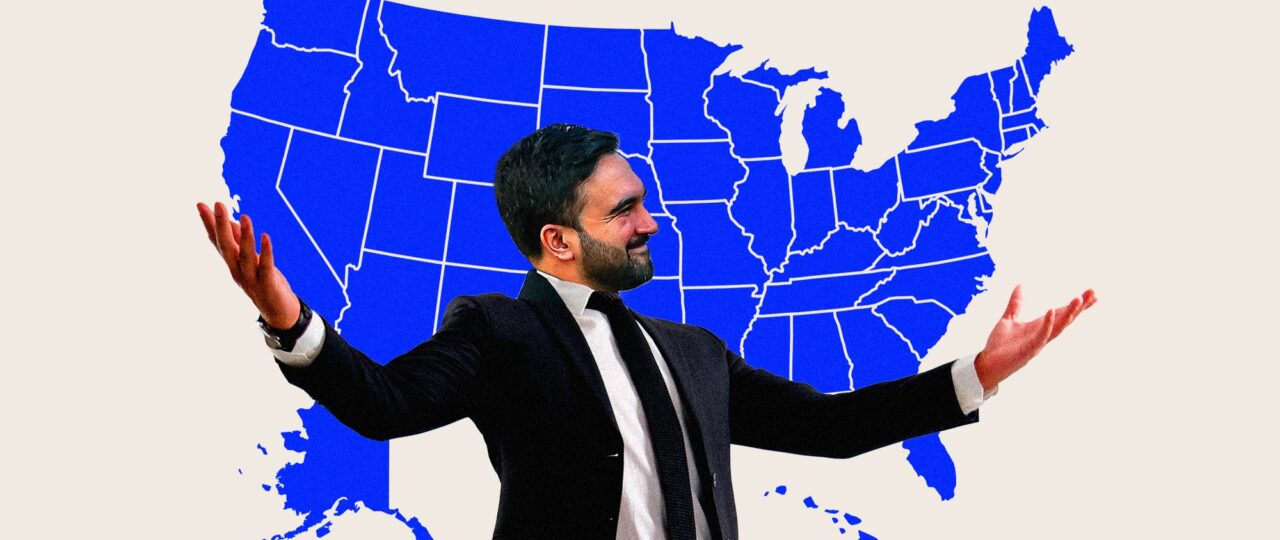

Zohran Mamdani wasn’t on the ballot on Tuesday, but the message behind his political rise was: Life has become untenably expensive, the people in charge seem deeply disconnected from it, and the government ought to do something to help.
In the wake of the 2026 midterms, Mamdani’s impact on American politics is impossible to ignore. People casting their ballots for James Talarico in Texas and Abdul El-Sayed in Michigan may not have been voting for a rent freeze or city-run grocery stores. They were, however, responding to the basic grievance that even the most basic costs are increasingly difficult to bear.
In politics, the economy giveth, and the economy taketh away. The 2024 election was a tough lesson for Democrats. Best case, voters didn’t trust them to steer the economy. Worst case, they blamed them for soaring prices. During his meteoric rise, Mamdani found a way to speak directly to people’s distress over this financial burden and convince them he had a plan to alleviate it.
Mamdani didn’t invent affordability politics or the idea that government can incrementally improve people’s lives, but in New York, he made it the organizing principle of his platform. He attached a set of simple, tangible policies to a larger, similarly simple contention — it shouldn’t be this hard to afford to live in a city, or a country, this rich. In a moment when Democrats were adrift, he showed them a direction to row in. And they did.
What turned this week’s blue wave into a blue tsunami was not a monolithic prescription from Democrats but a shared diagnosis. Americans are frustrated with the economy and anxious about their finances. Democrats made a disciplined case that the people running the show in Washington, DC, are making things worse.
In 2025, Mamdani’s proposed solutions were distinctly his own, but the broader formula has proven portable — name the pain in terms of something people can see on a bill or receipt, identify who’s responsible, and say what you’re going to do about it. In Michigan, El-Sayed employed a memorable Mamdani-esque tagline: “Money out of politics, money in your pocket, Medicare for All.” In Georgia, Governor-elect Keisha Lance Bottoms talked about cutting red tape to speed up housing development. Sherrod Brown highlighted data centers and utility bills in his Ohio Senate race. Scott Colom ran an ad on beef prices in Mississippi. In his victory speech in Texas, Talarico connected foreign policy to costs at home, calling for an end to “corrupt forever wars that are driving up prices.”
For the vast majority of voters, they are feeling squeezed, and they want to know that you give a shit about them.
Some winning Republicans ran with the affordability message, too — in Florida, Governor-elect Byron Donalds said he would trim state fees and pursue regulatory reforms to lower insurance premiums as governor.
“A lot of the candidates who ran and won, especially in the far-flung places we wouldn’t have expected, had a fantastic playbook of laser focus on costs,” says Lanae Erickson, senior vice president for social policy, education, and politics at Third Way, a center-left think tank.
Candidates repeatedly linked voters’ financial strain to an economic and political system they argued favors powerful interests over working people. They connected corruption to everyday costs and pointed directly to White House policies that affect people’s pocketbooks, such as tariffs and the war in Iran. Whereas in 2024, Republicans were able to make the case that Democrats were more invested in cultural flashpoints than people’s pocketbooks, this time around, it was the reverse.
“Why aren’t you talking about gas prices?” says Doug Thornell, the CEO of Democratic-aligned public relations and consulting firm SKDK. “For the vast majority of voters, they are feeling squeezed, and they want to know that you give a shit about them.”
Exit polls show that affordability was top of mind for voters on Tuesday. They think the nation’s economy is in poor condition and that the White House is exacerbating the situation. They ranked the economy and the state of democracy as the most important issues facing the country, both of which Democrats emphasized on the campaign trail and on the airwaves.
Rebecca Katz, the cofounder of the progressive political consultancy Fight Agency, who worked on Democratic campaigns in Texas and Michigan this cycle, says the party’s messaging connected because voters “know the system is rigged against them.”
Winning an election is hard. Meeting the expectations it creates may be harder. The Democratic coalition includes progressives and moderates, democratic socialists and Blue Dogs, all of whom agree that things are costly but have radically different ideas on how to address it.
“Democrats did not have a unified message on what they would do about affordability, and they didn’t actually even need one, because they’re the out party,” says Todd Belt, a professor of political management at George Washington University.
Mamdani’s program has offered a road map back to relevance for Democrats: Zero in on affordability, tout your victories big and small, and look like you’re having a good time doing it. He seems acutely aware of the challenge ahead not only for his own government in New York City but for the broader Democratic Party — voters don’t just want to be heard, they want to be helped.
“To me, it has to be change that is urgent, it has to be change that speaks to the crisis in working-class Americans’ lives,” he said in an interview on CNN on Wednesday. “And it has to be change that can be measured in the day-to-day lives of those same Americans, something that isn’t just an ideal or a value, but something that is also what they’re struggling to afford every day.”
Running on receipts also means being measured by receipts. Republicans are learning this lesson now. In 2024, Donald Trump crisscrossed the country saying he’d lower prices. In office, he’s done the opposite — gas prices have surged, and inflation is back on the rise.
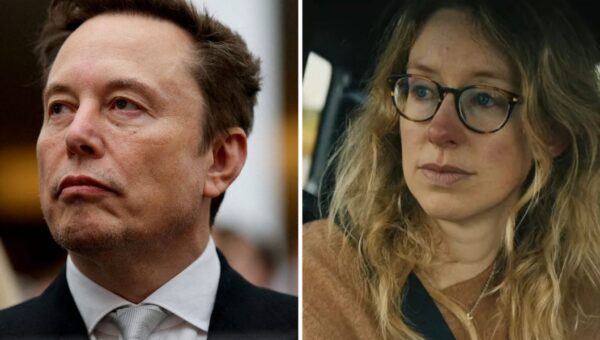
No amount of money from Elon Musk can change what voters see with their own eyes.
The honeymoon for Democrats taking power will be brief, and it will be defined by whether rent, eggs, and electric bills trend down or everyday costs become even harder to balance. Trump is still president, meaning legislation will be slow-going on the federal level. In state houses and local governments, Democrats will need to act fast. In New York, Mamdani has spent nearly a year navigating the bureaucratic deadlock and legal constraints that make it difficult to deliver the relief he promised. In some areas, he’s made progress — a rent freeze, a new free childcare program. In other cases, his impact has been limited — tax policy in New York City is set in Albany, not at City Hall.
The urgency is undeniable. If the 2024 elections suggested that voters will swiftly oust an incumbent party over prices, 2026 confirmed that they have little loyalty to the alternative. Americans haven’t signed up for an ideological revolution — they’re just desperate for some breathing room.
Read the original article on Business Insider
Discover more from NAIRAVOICE.COM.NG
Subscribe to get the latest posts sent to your email.