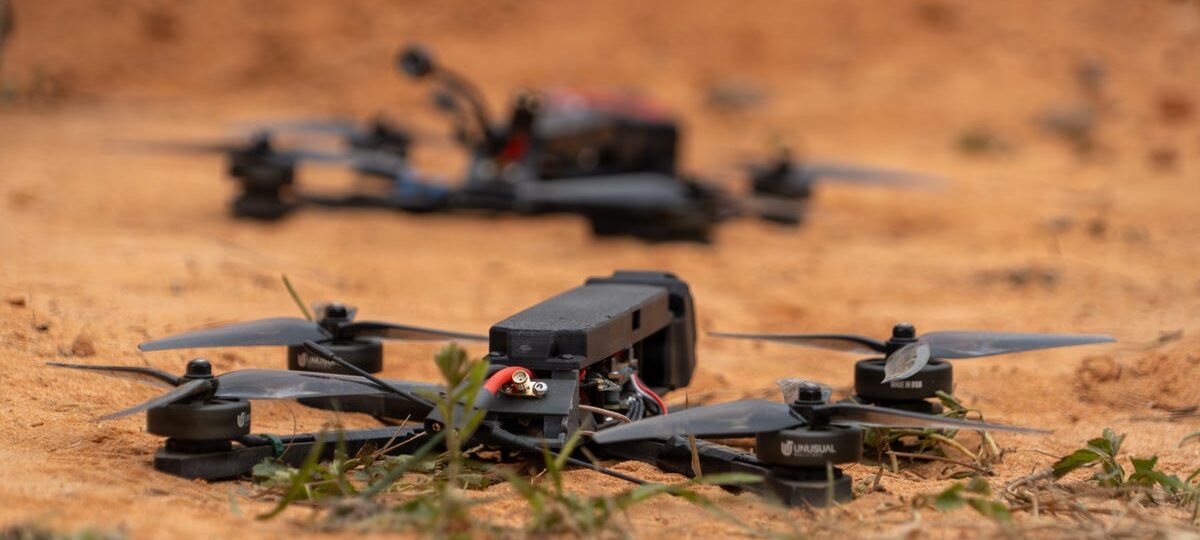
A US Army brigade from the 101st Airborne Division brought hundreds of one-way attack drones with them into a recent realistic combat exercise.
The brigade’s commander said over half of them were built by the soldiers themselves.
3D printing is becoming central to the Army’s drone push.
Drawing lessons from Ukraine, US forces are learning the value of quickly building and customizing drones for specific missions — and producing them in battlefield quantities.
During an April rotation at the Joint Readiness Training Center at Fort Polk, Louisiana, Army soldiers from the 3rd Mobile Brigade Combat Team flew hundreds of different types of drones, using them to gather intelligence, surveillance, and reconnaissance on the enemy team, take out electronic warfare sensors and jammers, and help execute dangerous missions like breaches.
Drones helped the unit extend its reach while keeping soldiers farther from the fight.
It bought a variety of drones for the exercise, but it also built many of its own.
Ryan Bell, combat commander of the 3rd Mobile Brigade Team, told reporters that out of 228 one-way attack drones used in the rotation, roughly 150 were produced by soldiers in the 101st Airborne Division.
At the division’s home base at Fort Campbell, Kentucky, soldiers manufacture drones a few hours at a time using parts from the Blue UAS [Uncrewed Aerial System] List, a marketplace of drones approved for use by the military and federal government. “It takes a soldier a couple of hours to build” a drone like the 101st’s A101 drone, Bell said, explaining that a soldier could build about two a day.
The colonel said “the longest piece of the process is the soldering and working the microchips.” The A101 is the 101st’s small, homegrown drone, costing about $750 to make.
The fuse, warhead, and airframe are all printed and built on-site. “A 19-year-old soldier, once trained, can assemble one in a couple of hours in an afternoon,” Bell said.
But the microchips are a different story.
Bell said that there’s a strong demand signal for industry because of the large number of drones soldiers need, especially as soldiers continue to innovate on different ways to use drones.
Militaries are increasingly relying on soldier-level innovation for drone solutions, particularly when it comes to the 3D printing element.
The concept has seen success in Ukraine, where troops have shown Western militaries that having 3D printing capabilities near the front line is essential for quickly producing low-cost systems and solutions that can be easily modified for specific missions or conditions.
US military officials have said that being able to print spare parts could be vital to maintaining momentum in a potential future fight if logistics lines are disrupted, as well as for adapting drones to enemy tactics or weaponry.
Bell pointed to a 3D-printed component the 101st developed to let drones drop hand grenades.
The design has since been shared with other troops so they can make it themselves.
Discover more from NAIRAVOICE.COM.NG
Subscribe to get the latest posts sent to your email.