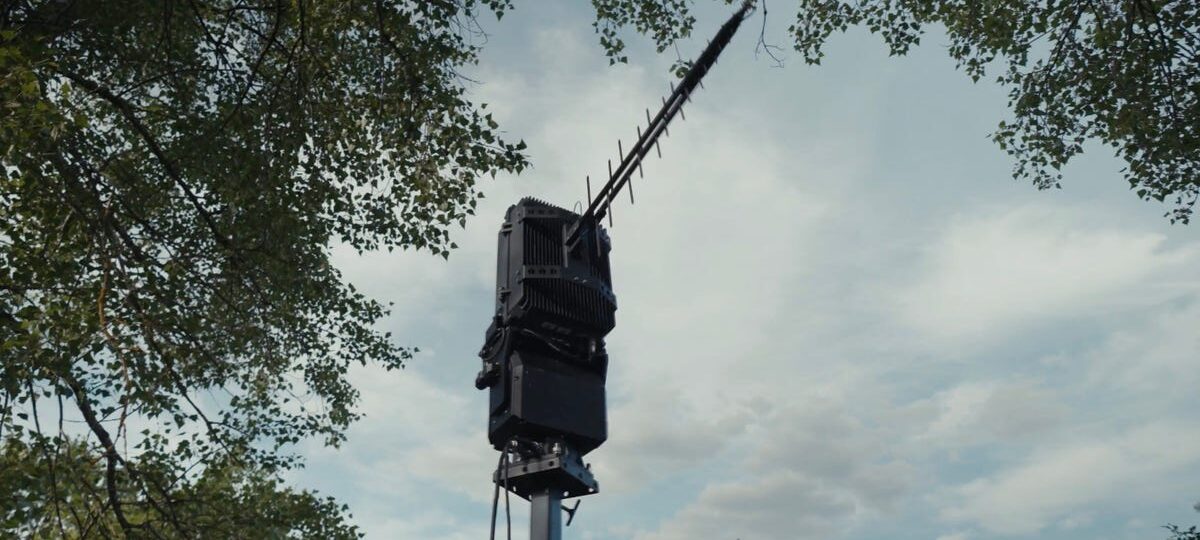
Demand for cheap electronic warfare solutions has surged in Ukraine as troops look for protection against the growing Russian drone threat, a company behind one device told Business Insider.
Officials with the Ukrainian company December1 said they’ve observed rising demand for their system, called Damba, over the past year from Kyiv’s government, police, armed forces, and national guard.
The increased interest coincides with a sharp uptick in Russian drone activity on the battlefield and deeper in Ukraine.
December1 was making roughly 400 Damba systems a month in July 2025.
That figure has since risen to roughly 1,000 and could reach 2,000, the CEO said.
They spoke on condition of anonymity to discuss sensitive industry developments. “We definitely see the increase in demand from military units and also the government,” as well as enterprises looking to protect critical infrastructure from Russian attacks, the CEO said in the company’s first interview since it emerged from stealth mode.
Damba is a jamming device that blasts out radio waves meant to disrupt a Russian drone’s frequency, severing its connection to the operator.
It is paired with third-party sensors and relies on an internet connection for 360-degree coverage of incoming drones.
Electronic warfare systems are critical on the battlefield to meet the growing drone threat.
Ukrainian soldiers and officials have described the area surrounding the front lines as a “kill zone” because any movement is easily spotted from above and engaged.
Illia Kabachynskyi, the director of international affairs at December1, said that Damba has a 50-kilometer range and works at a tactical level; it is designed to be effective against Russian first-person-view (FPV) drones along the front lines, among other threats.
December1 has sent more than 6,000 Damba units to the front since August 2024.
A single system costs the Ukrainian government $10,000 at a discounted price, putting it on the lower end of the cost curve for electronic warfare systems.
Kabachynskyi said the company has scaled up fivefold over the past 20 months as drone saturation has worsened in Ukraine.
Russia, he said, launches one of its armed fixed-wing Molniya strike drones “every minute,” underscoring the need for sufficient electronic warfare protection.
Beyond the front lines, Damba and other electronic warfare systems are being used regularly to defend against Russian strike and reconnaissance drones that can penetrate dozens or even hundreds of miles deep into Ukraine, providing targeting solutions for long-range Russian fires.
Military units recognize that electronic warfare is needed to protect themselves in combat, but it’s also key to defending critical infrastructure and private businesses that are vulnerable to strikes, Illia said. “That’s why we also see this increasing demand” for Damba, he said.
December1 plans to modify Damba to cover higher-frequency bands to keep pace with a similar tactical shift by Russia, the CEO said.
But the system still won’t be able to disable every type of drone.
For the first few years of the war, Russian FPV drones were mainly controlled via radio-frequency links, but many are now connected to operators by fiber-optic cables that are immune to jamming.
The CEO said electronic warfare remains essential even as Russia adopts more fiber-optic drones because Ukrainian jamming prevents Moscow from using cheaper radio-frequency links.
Electronic jamming remains the most “cost-effective solution,” they said.
Discover more from NAIRAVOICE.COM.NG
Subscribe to get the latest posts sent to your email.