
- A NATO drone maker is partnering with a Ukrainian firm to manufacture drone parts underground.
- ORQA says the partnership offers lessons in keeping factories running during wartime.
- Western companies often overlook Ukraine’s experience in manufacturing under attack, it says.
A NATO drone maker is teaming up with Ukraine’s defense industry and building drone parts underground. The company’s CEO said it’s seeking to learn lessons in wartime production that could prove critical for Western defense companies in a crisis.
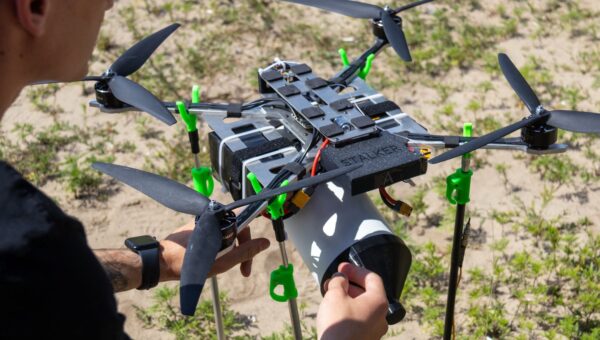
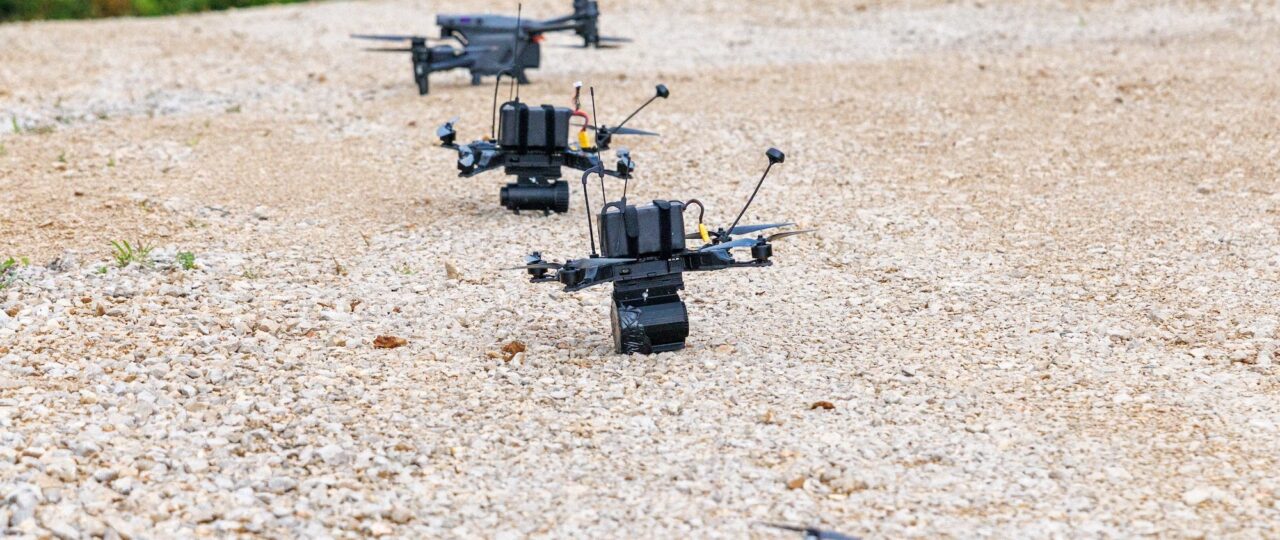
Croatian drone technology company ORQA and Ukrainian drone maker General Cherry are jointly developing and manufacturing interceptor drones, components, and other counter-drone systems in both countries. As part of the partnership, they are building an underground factory in Ukraine to make components.
Working amid Ukraine’s wartime risks teaches the company valuable lessons in manufacturing while under attack, ORQA CEO Srđan Kovačević told Business Insider. Producing components in Ukraine is also more efficient than making them in NATO and shipping them to the Ukrainian military, he said.
“They were also compelled to go underground, to go wide, to de-risk their assets in distribution,” he said. “So I think that’s the way forward for any critical capabilities.”
Ukrainian defense firms are splitting their manufacturing across multiple sites, frequently relocating, and moving some work underground to avoid being targeted by Russian attacks. It’s less efficient, but more resilient to attacks. Some Western officials and companies warn that it’s time for European industry to learn these practices amid concerns about Russian aggression.
“Distributed systems are much more resilient to any disruption than concentrated systems, centralized systems,” Kovačević said. “It’s simply about not having a single point of failure.”
Ukraine has “this immensely valuable lived experience of building and scaling under fire,” the ORQA CEO said, “that’s being often abstracted and neglected by Western companies.” That, however, is starting to change, he said.
Raivis Melnis, the defense minister of Latvia, told Business Insider that NATO companies work in a far more concentrated way than Ukrainian ones do, and “the question is whether we are ready to produce the systems in different locations, dispersed, and how we organize that.”
He wants Latvian and Ukrainian defense industries to work together in part so they can learn how Ukrainian companies maintain production during a war.
Davyd Aloian, the deputy secretary of Ukraine’s National Security and Defense Council, told Business Insider earlier this year that defense companies within parts of NATO should “definitely” start breaking up their production more.
Some defense industry figures have voiced similar concerns about the state of production in the West. Karmo Saar, the head of sales for Estonian drone maker Krattworks, told Business Insider that in a war with Russia, if European companies don’t disperse more, “I think we’re going to be punished.”
Dispersing production is not without trade-offs, though. Achi, CEO of the Ukrainian-Estonian defense technology company and ground robot maker Ark Robotics, told Business Insider that such defensive steps are “necessary,” but “not ideal.” Operations would be easier with everything in one place.
Choosing Ukraine despite the danger
But Kovačević, whose company makes drones as well as drone technology, including controllers, receivers, goggles, video equipment, and flight simulators, said that building in Ukraine comes with upsides.
The company, which supplies 24 NATO allies, could have done all of its work with General Cherry in Croatia, but instead, they are spreading their joint work across both countries.
Kovačević said building components in Europe and then importing them into Ukraine is “more inefficient than actually doing it in Ukraine.” It’s also more expensive, and Ukraine has shown its ability to produce in large volumes.
Localizing the supply chain also means that all parties can “exchange information more efficiently,” including about what’s happening and what’s needed on the battlefield.
He said he understands why some Ukrainian companies are building gear on NATO soil, but he sees value in partnering with General Cherry in Ukraine. He said the Ukrainian company, one of the country’s largest drone makers, has “a high operational excellence in running their own manufacturing operations in a safe manner, even under constant threat.”
The partnership also offers lessons beyond manufacturing. He said that while the West “has a very deep technology expertise,” it lacks “this lived experience of taking that technology and applying it to the operational reality of the 21st-century warfare.”
The goal is to both supply Ukraine and to equip NATO with weapons shaped by Ukraine’s battlefield experience and expertise. In Croatia, the partners are establishing a joint serial-production facility for co-developed interceptor drones and other counter-drone systems destined for NATO, while in Ukraine, they intend to create drone components, including electronics and communications systems, which General Cherry says it will supply to “all our partners in Ukraine,” not just use itself.
Ukraine is already able to make the drones that the partnership will produce in Croatia, but “what they lack is the capacity to build components that go into those systems,” Kovačević said, explaining the focus of the Ukrainian facility. He said the project won’t disrupt Ukraine’s existing supply chains. One of ORQA’s priorities is to reduce reliance on Chinese products, and it wants to help Ukraine’s industry do the same.
“Now,” he said, “it’s time to merge the two and emerge better off on both sides of this partnership.”
Read the original article on Business Insider
Discover more from NAIRAVOICE.COM.NG
Subscribe to get the latest posts sent to your email.