Feel free to connect with him or check out his work. He’s everywhere — Upwork, YouTube, Spotify, SoundCloud, Collider, LinkedIn, Instagram.
A lot of the books on this list were probably assigned to you at some point, which is a good reason to avoid them. School has a way of making a great story feel like homework, and I’ll admit I rolled my eyes at a couple of these before I actually sat down and read them. Then I got to the end and wished I’d done it sooner.
What they share is that none of them lose steam. Some are short, some are enormous, and a couple are more than two hundred years old, but you never reach a chapter where you start counting the pages left. Here are some of the most iconic books I’d pick up on a quiet weekend which I think everybody should read at least once.
8
‘Frankenstein’ — Mary Shelley
<<img src="https://static0.colliderimages.com/wordpress/wp-content/uploads/2026/10/frankenstein-mary-shelley-penguin-random-house.jpg?q=70&fit=crop&w=825&dpr=1" />
Image via Penguin Random House</figure>
Mary Shelley was only eighteen when she came up with the idea for Frankenstein during a rainy summer in 1816 at a villa near Lake Geneva. She was stuck inside with her future husband, Percy Shelley, and Lord Byron, and the group decided to see who could write the scariest ghost story. The weather was so bad that year, after a volcano erupted in Indonesia, that nobody could go out, which gave her plenty of time to think. She finished the novel at twenty and published it anonymously in 1818.
Victor Frankenstein, the young scientist who builds a living creature out of dead body parts, is arguably the real villain of the story, even though most people call the monster Frankenstein. The creature never gets a name, and he teaches himself to speak by secretly listening to a family through a hole in a cottage wall. Shelley tells it through letters from a sea captain in the Arctic, which makes everything feel like a confession. It’s much sadder than you’d expect, and the creature is hard not to feel sorry for.
7
‘The Great Gatsby’ — F. Scott Fitzgerald
<<img src="https://static0.colliderimages.com/wordpress/wp-content/uploads/2026/11/the-great-gatsby-book-cover-1925-1.avif?q=70&fit=crop&w=825&dpr=1" />
Image via Scribner</figure>
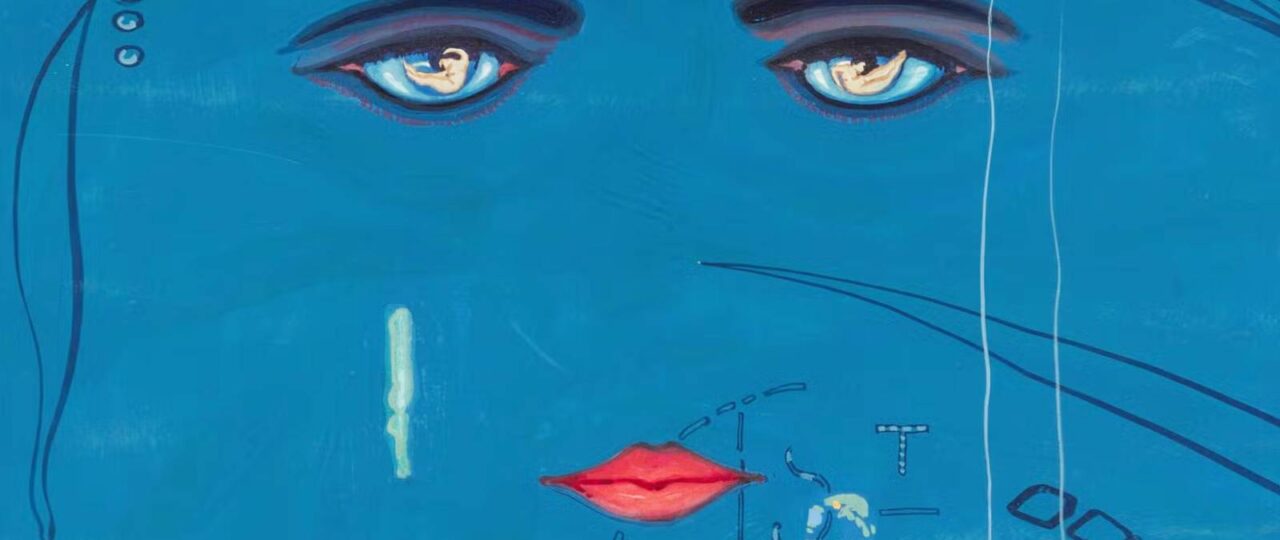
Scott Fitzgerald first wanted to call The Great Gatsby “Trimalchio in West Egg,” which is a mouthful, and he only gave it up close to publication. Nick Carraway, a young Midwesterner who moves to Long Island in the summer of 1922, tells the story of his mysterious neighbor, Jay Gatsby, a millionaire who throws huge parties every weekend hoping that Daisy Buchanan, the woman he loves, will walk through the gates. The book is short, around 180 pages, and every sentence is carefully chosen.
It barely sold when it came out in 1925, and Fitzgerald died in 1940 thinking it had been a failure. What changed things was World War II, when roughly 150,000 copies were handed out to American soldiers overseas, and a whole new generation of readers fell for it. The green light at the end of Daisy’s dock and the giant eyes on a faded billboard are probably the most analyzed images in American fiction. It ends quietly, and it hurts.
6
‘Jane Eyre’ — Charlotte Brontë
<<img src="https://static0.colliderimages.com/wordpress/wp-content/uploads/2026/02/jane-eyre-book0.jpg?q=70&fit=crop&w=825&dpr=1" />
Image via Bloosmbury Publishing</figure>
Charlotte Brontë published Jane Eyre in 1847 under the name Currer Bell, because she worried that critics wouldn’t take a woman writer seriously. Jane is an orphan who gets sent to a harsh boarding school, grows up determined to be treated as an equal, and takes a job as a governess at Thornfield Hall, where she falls for the moody owner, Mr. Rochester. The school, Lowood, is based on a real place, Cowan Bridge, where two of Brontë’s older sisters caught illnesses and died.
Jane tells her own story, and she often speaks straight to the reader, which makes you feel like she’s confiding in you. Strange laughter in the night and a locked room on the third floor hint at a secret that takes a long time to come out, and when it does, the story takes a turn nobody saw coming. Jane’s refusal to give up her self-respect for love is why the book is contemporary. Jean Rhys later wrote Wide Sargasso Sea to tell the story of the woman in the attic.
5
‘Pride and Prejudice’ — Jane Austen
<<img src="https://static0.colliderimages.com/wordpress/wp-content/uploads/2026/07/pride-1.jpg?q=70&fit=crop&w=825&dpr=1" />
Image via T. Egerton/Whitehall</figure>
Jane Austen wrote the first version of Pride and Prejudice in her early twenties under the title First Impressions, and her father tried to sell it to a London publisher in 1797, who turned it down without even reading it. Years later she rewrote it, and it came out in 1813 with “by the author of Sense and Sensibility” on the cover instead of her name. Elizabeth Bennet, the clever second daughter of a family with five girls and no son to inherit the estate, meets the proud Mr. Darcy at a dance and decides she can’t stand him.
Austen sold the rights for just £110, a small sum even then, and the publisher made a good profit from it. She called Elizabeth “as delightful a creature as ever appeared in print,” and it’s hard to disagree. Mr. Collins’s marriage proposal is one of the funniest scenes in English fiction, and the slow shift in how Elizabeth sees Darcy is what keeps you reading. Everybody jokes about it being a romance, but it’s really a sharp comedy about money, class, and first impressions.
4
‘The Hobbit’ — J. R. R. Tolkien
<<img src="https://static0.colliderimages.com/wordpress/wp-content/uploads/2026/02/the-hobbit-book0.jpg?q=70&fit=crop&w=825&dpr=1" />
Image via HarperCollins</figure>
J.R.R. Tolkien was a professor grading exam papers when he found a blank page and scribbled a single sentence about a hobbit living in a hole in the ground. He didn’t know what a hobbit was yet, but he kept going, telling the story to his kids at bedtime, and The Hobbit came out in 1937. Bilbo Baggins, a comfortable homebody, gets talked into joining thirteen dwarves and the wizard Gandalf on a trek to take back a mountain from the dragon Smaug.
Tolkien’s publisher let his ten-year-old son, Rayner Unwin, read the manuscript and give his opinion, and the boy’s short report helped get it printed. The chapter where Bilbo plays a game of riddles with Gollum in a dark cave is one of the best pieces of writing in fantasy, and Tolkien later rewrote it so the magic ring would feel more dangerous in The Lord of the Rings. He drew the maps and illustrations himself. It’s funny, warm, and quick, and it never feels like it’s trying too hard.
3
‘One Hundred Years of Solitude’ — Gabriel García Márquez
<<img src="https://static0.colliderimages.com/wordpress/wp-content/uploads/2026/06/one-hundred-years-of-solitude-book0.jpg?q=70&fit=crop&w=825&dpr=1" />
Image via Harper Perennial Modern Classics</figure>
Gabriel García Márquez spent about eighteen months in Mexico City writing One Hundred Years of Solitude, while his wife, Mercedes, kept the family afloat and reportedly pawned their appliances to pay for the postage to send the manuscript to a publisher. The novel follows seven generations of the Buendía family in the made-up town of Macondo, which is based on Aracataca, the Colombian village where he grew up. The first print run of 8,000 copies sold out in a week.
Strange things happen in the book as if they were completely normal. A girl floats into the sky while folding sheets, yellow butterflies follow a man everywhere he goes, and it rains for almost five years straight. García Márquez said the style came from his grandmother, who told impossible stories in a flat, matter-of-fact voice. He won the Nobel Prize in 1982, and the book has sold tens of millions of copies. It’s dizzying, funny, and sad in equal amounts.
2
‘1984’ — George Orwell
<<img src="https://static0.colliderimages.com/wordpress/wp-content/uploads/2026/09/george-orwell-1984-penguin-books.jpg?q=70&fit=crop&w=825&dpr=1" />
Image via Penguin Books</figure>
George Orwell wrote 1984 on a remote Scottish island, Jura, while he was seriously ill with tuberculosis, and it came out in June 1949, only about seven months before he died. Winston Smith, a quiet clerk at the Ministry of Truth, spends his days rewriting old newspaper articles so they match whatever the government wants people to believe. When he starts a secret relationship with a colleague named Julia, he knows that even thinking against the Party is a crime.
Room 101, where prisoners face their worst fear, was reportedly named after a boring BBC conference room where Orwell sat through meetings during the war. The Ministry of Truth was modeled partly on the Senate House in London, where the wartime Ministry of Information worked. Words like Big Brother, doublethink, and Newspeak have become part of everyday language. It’s one of the few books where the ending leaves you cold, and you finish it feeling like you’ve seen how easily the truth can disappear.
1
‘To Kill a Mockingbird’ — Harper Lee
<<img src="https://static0.colliderimages.com/wordpress/wp-content/uploads/2026/11/to-kill-a-mockingbird-book-cover-1960-1.avif?q=70&fit=crop&w=825&dpr=1" />
Image via J. B. Lippincott & Co.</figure>
Harper Lee published To Kill a Mockingbird in 1960, and for fifty-five years it was the only novel she let anyone read. Scout Finch, a six-year-old tomboy in Maycomb, Alabama, tells the story of the summer when her father, Atticus, a lawyer, defends a Black man named Tom Robinson, who is falsely accused of assaulting a white woman. Scout and her brother Jem spend the same summer trying to figure out their reclusive neighbor, Boo Radley.
Dill, the imaginative boy who visits every summer, is based on Lee’s childhood friend Truman Capote. Friends gave her a year’s pay one Christmas so she could quit her job as an airline clerk and write, and her editor had her rewrite the book several times. It won the Pulitzer Prize in 1961. Atticus’s quiet courage in the courtroom has made him one of the most loved fathers in literature, and the book’s mix of humor, childhood, and injustice is why it keeps topping lists of the greatest American novels.
Four of the largest communities on the planet, and four completely
different reasons to belong to one. Here is yours, what it would give you, and the argument you
would be having within a week.
You belong to the fandom that is really about comfort. Hogwarts
works on people because it is a place rather than a plot, and the pull is not the wizard war
so much as the corridors, the food, the weather and the sense that somebody is expecting
you.
- You are drawn to belonging, which is why this fandom sorted itself into houses within
about five minutes and has never stopped. - This is the most social of the four, and the one most likely to know which type every
single person in your life would be. - The books are built to be reread rather than analysed, and rereading is exactly what you
do with things you love. - The new HBO series is bringing the whole thing back one book at a time, which means the
arguments are about to start all over again.
You belong to the deepest fandom on this list, the one where
somebody has always read further than you and is quietly delighted to say so. Middle-earth
rewards patience more than any other world in popular culture.
- You like the sense that the story you are reading is only the visible part of something
enormous, which is precisely how Tolkien built it. - This fandom takes adaptation seriously to a degree that other fandoms find slightly
alarming, and it has good reasons for that. - Your favourite thing about the books is probably the bit that is not action at all,
which is the walking, the songs and the long goodbyes. - Nobody here thinks heroism belongs to the powerful, and the whole story exists to make
that argument.
You belong to the loudest and largest tent of the four, the one
where three generations are all watching the same thing and none of them agree about any of
it. That disagreement is not a flaw in this fandom, it is the main activity.
- You want something you can share with absolutely everybody, from a six year old to a
grandparent, and this is the only one on the list that really does that. - Nobody argues like Star Wars fans argue, and the argument has been running since roughly
1980 with no sign of resolution. - The pull here is sensory before it is narrative, since it is the sound design, the score
and the look of a used and dented galaxy. - You would be first in the queue, in costume, with strong opinions and a genuinely good
time.
You belong to the thinking fandom, the one that turns up for the
argument rather than the explosion. Trek has always been a series of ethical problems in
space, and the people who love it love being asked what they would have done.
- You are an optimist in a way that is currently unfashionable, and this is the only major
franchise still willing to say the future might be better. - The best episodes are the ones where nobody fires anything, which is a sentence that
makes perfect sense to this fandom and to nobody else. - Starfleet Academy brought the franchise back to a classroom in 2026, which is
appropriate, because Trek has always been a bit of a seminar. - You would want the conversation afterwards more than the episode itself, and here you
will always find somebody willing to have it.
Discover more from NAIRAVOICE.COM.NG
Subscribe to get the latest posts sent to your email.