Faith Roswell is a Senior Writer on Screen Rant’s Classic TV team. Since earning her degree in Creative Writing over a decade ago, Faith has written articles on film and TV from a variety of different angles. Faith now combines her knowledge of psychology with her love of monster movies to give more insight into what makes the best ones.
You may have read her Screen Rant lists and features covering horror, sci-fi, and fantasy, or read her Amazon Top 10 book, “Movie Monsters of the Deep.”
Faith has had an extensive career as a writer, appearing on BBC live radio, researching true crime for Rotten Mango podcast, and writing for publications including Mental Floss, Atlas Obscura, and The Daily Jaws before beginning here at Screen Rant.
While some iconic movies have changed the way we look at film, even the most perfect TV miniseries have been surprisingly overlooked, despite having a major impact on the television industry. Longevity used to be a mark of success for a TV series, but miniseries showcase entirely different storytelling skills, with subtext and character development taking place within a shorter amount of time, yet often having even more of an impact than the best long-running shows. The 20th century took some of the greatest leaps forward, with series that remain masterpieces even today.
Many of the greatest miniseries of the 20th century made waves when they first aired, challenging their viewers’ perception of historical events and confronting them with uncomfortable but necessary lessons that opened doors for later shows covering the same subjects. Others have explored ambitious new approaches to storytelling, proving that genres like sci-fi and period dramas can attract enormous audiences, providing the blueprint for prestige genre TV shows that are masterclasses in storytelling, like Game of Thrones and The Expanse. These miniseries have not only stood the test of time, but claimed a well-deserved place in TV history.
I, Claudius (1976)
<<img src="https://static0.srcdn.com/wordpress/wp-content/uploads/2026/11/untitled-design-78.jpg?q=49&fit=crop&w=825&dpr=2" />
</figure>
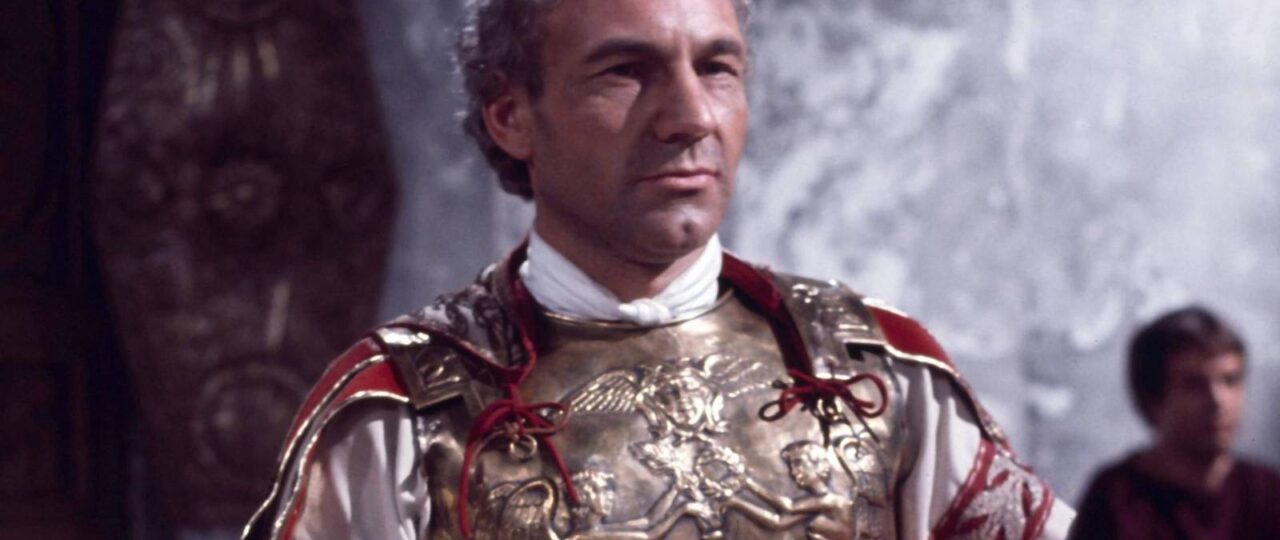
The BBC production of I, Claudius adapts Robert Graves’ 1934 historical novel of the same name, which tells the story of the Roman Empire through the eyes of Claudius, who must come to terms with his impending assassination. The series starred a mix of veteran actors and relatively new faces, but 50 years later, it is clear that I, Claudius has one of the most talented casts of all time. Derek Jacobi (Gladiator) stars as Claudius, with the show also featuring John Hurt (Alien,) and Patrick Stewart (Star Trek) among other award-winning stage and screen actors.
Rather than presenting ancient Rome as a subject from history book, I, Claudius‘ characters were deeply flawed and all the more fascinating for it. The series covered a classical subject in a way that made it as compelling as a modern soap opera, relying on the excellent performances of the actors within surprisingly simple sets, rather than pushing boundaries with visual effects. This set the groundwork for shows like The Sopranos, House of Cards, and even Game of Thrones, which was praised as much for its acting as its high-budget aesthetic.
Roots (1977)
<<img src="https://static0.srcdn.com/wordpress/wp-content/uploads/2026/11/untitled-design-79.jpg?q=49&fit=crop&w=825&dpr=2" />
Image via MovieStillsDB</figure>
Roots is undisputedly one of the most important TV series of all time, being devastating but historically essential, and following several generations of a Black American family, beginning with the enslaved Kunta Kinte. Amid significant tension and ongoing fights for civil rights, TV series rarely told stories about the most disturbing chapters of American history, yet Roots was impossible to ignore, and many of the performances remain unmatched today. The series stars John Amos, LeVar Burton, and Maya Angelou, among many other talented actors.
Roots was nominated for 37 Primetime Emmy Awards, winning nine of them.
Before the series aired, Black actors and characters were largely reduced to stereotypes at best and caricatures at worst, but Roots proved that a hard-hitting story with a mostly Black cast could attract immense critical acclaim and resonate with audiences of all kinds. The series sparked conversation and forced viewers to confront history, with the final episode attracting over 100 million viewers, and the series reaching an estimated 130-140 million viewers overall, more than half of the US population in 1977, giving it the largest viewership in US TV history.
Holocaust (1978)
<<img src="https://static0.srcdn.com/wordpress/wp-content/uploads/2026/11/mv5by2m3mguwyjytnmjjms00odi1lwi3nzytn2exody1ytvjmdi5xkeyxkfqcgc-_v1_.jpg?q=49&fit=crop&w=825&dpr=2" />
</figure>
The term “The Holocaust” is so well-known and so evocative that it would be difficult to find a teenager or adult who does not understand its meaning today. However, this was not always the case, and while the term was used by historians in the wake of the Second World War, it was brought into wide public knowledge by the 1978 miniseries, Holocaust, starring Meryl Streep and James Woods. Few war miniseries are perfect from start to finish, and Holocaust was criticized by some survivors. That said, its impact on television and history cannot be understated.
The four-part series was compelling and harrowing throughout, focusing on the individual impact of Hitler’s genocide, but it also inspired public discourse on its release in West Germany. The Emmy Award-winning series provided the framework for other TV shows that would go on to address disturbing subjects, from Chernobyl to A Small Light, and brought the darkest chapters of human history to mainstream attention, encouraging viewers to confront them.
Shōgun (1980)
<<img src="https://static0.srcdn.com/wordpress/wp-content/uploads/2026/11/untitled-design-80.jpg?q=49&fit=crop&w=825&dpr=2" />
Image via MovieStillsDB</figure>
Squid Game is often credited for popularizing international TV shows on streaming services like Netflix. However, before the age of streaming, Shōgun did the same on network TV. The show was the first American production to be filmed entirely in Japan, and explored the country’s culture while featuring extensive dialogue scenes that took place in Japanese. The modern remake places more focus on characters like Lord Toranaga, but even with the original series featuring Pilot-Major John Blackthorne as the main character, the sympathetic centering of another country was almost unheard-of.
Shōgun set a new standard for television by releasing a daily feature-length episode for five days, maintaining the quality of a movie while including boundary-pushing violence and sexual references that were extremely rare for the time. Being made before anime and Japanese cinema were widely known, the culture was new to many Shōgun‘s viewers, resulting in a wave of new interest in Japanese culture and the samurai genre. Shōgun is still considered one of the best miniseries of all time, with the reboot confirmed for two more seasons.
The Thorn Birds (1983)
<<img src="https://static0.srcdn.com/wordpress/wp-content/uploads/2026/11/the-thorn-birds.jpg?q=49&fit=crop&w=825&dpr=2" />
© Warner Bros. Television / Courtesy: Everett Collection</figure>
In terms of viewership numbers, The Thorn Birds came second only to Roots at the time it aired, reaching an estimated high of 135 million viewers. Based on Colleen McCullough’s bestselling novel of the same name, the four-part miniseries followed the Cleary family as they emigrate from New Zealand to Australia to run a ranch, where one daughter, Meggie, falls in love with Ralph, a priest. The classic miniseries has aged terribly because of the nature of the relationship, which involves a teenage girl and a man in a position of power, but the show’s impact was significant.
The series takes place over decades, which is a difficult timeline to bring to television while remaining compelling, yet the show managed it. Before The Thorn Birds, sweeping epic series were generally reserved for subjects like history and war, but the series proved that romance could be just as much of a draw. The show acted as a forerunner to boundary-pushing miniseries like Lady Chatterley’s Lover, Tipping The Velvet, and even Bridgerton, with forbidden love being just as popular a subject today, though with characters who are consenting adults.
V (1983)
<<img src="https://static0.srcdn.com/wordpress/wp-content/uploads/2026/11/untitled-design-81.jpg?q=49&fit=crop&w=825&dpr=2" />
</figure>
Sci-fi has often been used as an allegory to address real-world issues, with Star Trek being one of the first series to do so, but few TV shows have been as clear with their message as the groundbreaking V. Friendly aliens arrive on Earth, but despite appearing benign, they are reptilian invaders intent on conquering the world and its people. V‘s Visitors represent the rise of Nazism, using propaganda to spread their message, while persecuting scientists as a scapegoat. The 2009 reboot was made into a full series, but the original two-part sci-fi miniseries can be binged in a day.
The parallels with 1930s Germany and current fascist campaigns are unmistakable, with the Visitors using recognizable imagery and language that dehumanized groups of people, making V an uncomfortable but educational show to watch, with the outdated CGI adding to its uncanny effect. By the 1980s, sci-fi was a popular genre, but its potential for reflecting real-world dangers had not been fully realized. V is a sci-fi series that many still copy today, including in Andor, Colony, and Falling Skies.
Lonesome Dove (1989)
<<img src="https://static0.srcdn.com/wordpress/wp-content/uploads/2026/09/untitled-design-21.jpg?q=49&fit=crop&w=825&dpr=2" />
By <a href="https://www.moviestillsdb.com/users/zs93" rel="nofollow">zs93</a> MovieStillsDB.com</figure>
Taylor Sheridan might be widely credited with reviving the Western genre with his neo-Western epic Yellowstone, but the 1989 miniseries Lonesome Dove revitalized the struggling genre decades earlier in a different way. The four-part miniseries included many of the tropes people associate with the Western genre, including ranching, frontier justice, and outlaws. However, rather than giving sheriffs similar arcs to superheroes as many classic Westerns did, Lonesome Dove brought a gritty realism to the screen, with characters that were not guaranteed a happy ending.
Lonesome Dove is one of the few 1980s miniseries better than any modern TV show, so the upcoming modern reboot has a lot to live up to. It is a testament to the original series’ success and impact on television that it is still hailed as one of the greatest Western TV shows of all time, winning seven Emmy Awards out of 19 nominations, and influencing many of today’s Westerns, including Yellowstone.
Discover more from NAIRAVOICE.COM.NG
Subscribe to get the latest posts sent to your email.