Some movies feel like beginnings, others like endings. The titles on this list marked the end of some kind of era, whether that was a storytelling approach, a filmmaking style, a genre’s popularity, a particular audience taste, or a period in a filmmaker’s career. In a few cases, these films symbolized a change already underway; in others, they directly caused it.
The picks below are all epic movies, but they span a range of styles and periods, covering different thematic concerns and using multiple styles and storytelling approaches. From superhero finales to character-driven dramas, gangster deconstructions to uber-ambitious Westerns, these epics exemplify their genre while bringing to a close a distinct cinematic era.
‘Red Beard’ (1965)
<<img src="https://static0.colliderimages.com/wordpress/wp-content/uploads/2024/12/red-beard-1965-toshiro-mifune.jpg?q=49&fit=crop&w=825&dpr=2" />
Image via Toho</figure>
“There’s nothing solemn about a man’s death.” Red Beard marked the end of one of the greatest creative partnerships in film history. Akira Kurosawa had worked repeatedly with star Toshiro Mifune since Drunken Angel in 1948, and their collaborations gave us masterpieces like Rashomon, Seven Samurai, Throne of Blood, and Yojimbo. Their final movie together was this immense three-hour drama, in which Mifune plays Dr. Kyojō Niide, nicknamed Red Beard, who oversees a clinic serving poor patients in 19th-century Japan.
Rather than being action-packed, Red Beard is an existentialist, humanist story about social injustice, anchored by complex, dynamic performances. On top of being a swan song for the Kurosawa-Mifune partnership, the movie was also the director’s last black-and-white project. After it, he would pivot to highly stylized, vibrant color palettes that defined the last portion of his now-immortal oeuvre. In this regard, Red Beard is the culmination of Kurosawa’s mastery of monochrome compositions.
‘Once Upon a Time in Hollywood’ (2019)
<<img src="https://static0.colliderimages.com/wordpress/wp-content/uploads/2026/02/mcdonup_ec187-1.jpg?q=49&fit=crop&w=825&dpr=2" />
Image via Sony Pictures Releasing</figure>
“I’m as real as a donut.” Once Upon a Time in Hollywood is Quentin Tarantino‘s melancholy love letter to a version of the movie industry that was already disappearing in 1969. Leonardo DiCaprio plays Rick Dalton, the fading star of a television Western who fears that his career is slipping away, while Brad Pitt is his longtime stunt double and friend Cliff Booth. Elsewhere, rising star Sharon Tate (Margot Robbie) enjoys a life filled with possibilities that the audience knows history is threatening to cut tragically short.
In literal terms, though, Once Upon a Time in Hollywood was part of the last wave of original, mega-budget star vehicles, a last gasp for the big, non-franchise theatrical release that had once been such a powerful force in the industry. It arrived just before COVID would totally upend the film landscape and accelerate the shift toward streaming. In short, Once Upon a Time in Hollywood feels like one of the final old-school blockbusters about one of the last truly romanticized decades in entertainment.
‘Once Upon a Time in America’ (1984)
<<img src="https://static0.colliderimages.com/wordpress/wp-content/uploads/2026/02/once-upon-a-time-in-america-1984-1-1-1.jpg?q=70&fit=crop&w=825&dpr=1" />
Image via Warner Bros. Pictures</figure>
“I’ve been going to bed early.” By the time Sergio Leone made Once Upon a Time in America, the kind of enormous, intensely personal epic it represented was already becoming increasingly unusual. The director had helped redefine the Western back in the ’60s, but his final film moved away from the American frontier and into the world of Jewish gangsters in New York, although it did retain his fascination with myth, violence, memory, and the passage of time.
At the center of it is David “Noodles” Aaronson (Robert De Niro), who reflects on his youth, criminal career, friendships, betrayals, and relationship with Deborah (Elizabeth McGovern). All these plots make for a deconstruction of classic gangster cinema, but it (alongside another movie we’ll discuss further down) also serves as a tombstone for the New Hollywood blank-check auteur filmmaking. It was around this time that studios would mostly claw back control from directors, and movie storytelling would become a lot more formulaic.
‘Avengers: Endgame’ (2019)
<<img src="https://static0.colliderimages.com/wordpress/wp-content/uploads/2026/02/avengers_-endgame-2019-2.jpg?q=49&fit=crop&w=825&dpr=2" />
Image via Marvel Studios</figure>
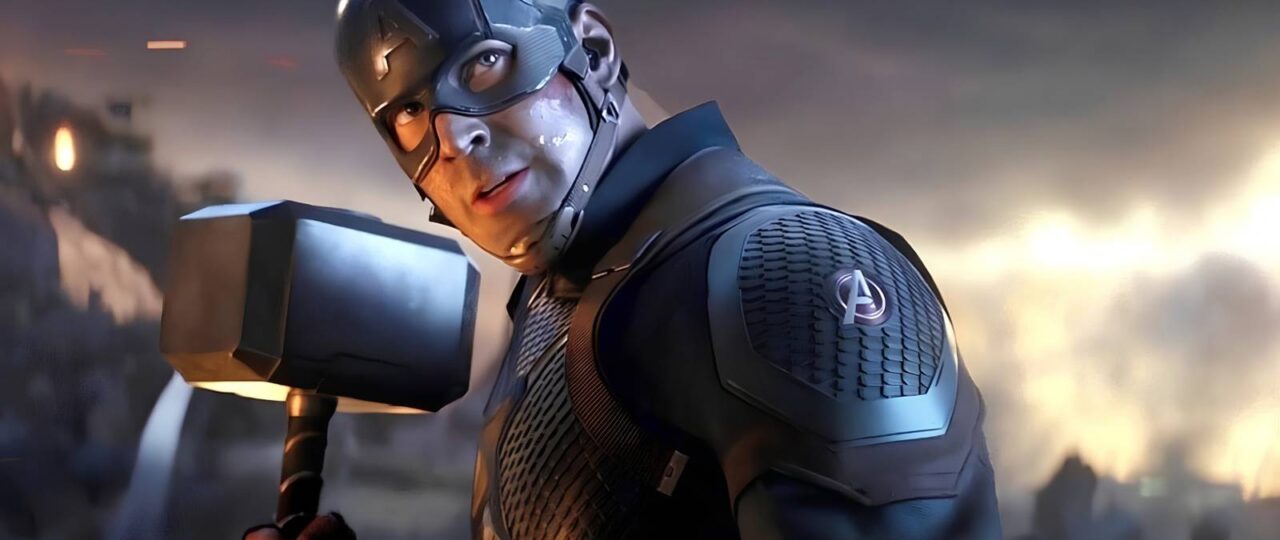
“Part of the journey is the end.” This movie represented the zenith of the superhero era that all but defined the 2010s. Avengers: Endgame was the culmination of more than a decade of interconnected Marvel movies, serving up a ton of payoff for years of fan loyalty. It begins with the surviving Avengers struggling to live with their failure to stop Thanos (Josh Brolin). When an unexpected opportunity emerges to undo the devastation, they embark on one last, suitably grand mission.
Bringing this era to a graceful close was a challenging task, to say the least, but Endgame nailed it. Somehow, its time-traveling middle section revisits key moments from earlier movies, making this a kind of greatest hits collection for the entire MCU up to that point. Then an enormous, awesome final battle brings seemingly everyone together in one of the most explosive and cathartic sequences of the last decade. All this makes Endgame one of the last true monoculture events, a moment where pretty much everyone was wowed by the same movie at the same time.
Four people, four completely different ideas of what it means to have
somebody in your corner. Here is who picked up, what they would ask of you, and what you would get
back.
You want the friend who does not leave. Steve is the one who
turns up at the door without being asked, who remembers what you said you were worried
about, and who has never once made you audition for his attention.
- His entire character is built on a single sentence, which is that he will not abandon
somebody just because it has become expensive to keep them. - He is far funnier than people give him credit for, and the joke is almost always at his
own expense rather than yours. - The friendship comes with a cost, since being close to Steve means being dragged into
fights that were never yours and being glad about it later. - You would get a friend who tells you the hard thing to your face and then defends you to
everybody else in the room.
You want the friend who is genuinely exhausting and completely
worth it. Tony will forget your birthday, then build you something at four in the morning
that you did not know you needed, and hand it over as though it were nothing.
- He is bad at saying the warm thing out loud, so he says it in hardware instead, which is
why everybody around him ends up with upgraded everything. - Being his friend means putting up with the disappearing, the deflecting and the jokes
that arrive about ninety seconds too early. - What you get in return is somebody who will spend an unreasonable amount of money and
effort on a problem the moment it becomes yours. - He is the loudest person in the room and the one most likely to be quietly panicking
about all of you.
You want the friend who replies in four seconds and apologises
for it. Peter is earnest in a way that is almost unfashionable, and he will take on far more
than he can carry rather than admit that he is struggling.
- He is the only one on this list who needs looking after as much as he looks after you,
and that balance is exactly what makes it a real friendship. - Nobody in the MCU is better at the small stuff, from remembering the thing you were
nervous about to showing up with food you did not ask for. - Spider-Man: Brand New Day arrived in July 2026 and put him back where he works best,
which is broke, local and carrying the weight on his own. - You would get a friend who is sincerely, embarrassingly happy for you when something
goes right, with no edge to it at all.
You want the friend who insults your shoes, fixes your phone and
then quietly rearranges your entire life for the better. Shuri does not do soft reassurance,
and that is the reason you would believe her when she says you are fine.
- She is the smartest person in almost any room she walks into and treats that as a reason
to tease you rather than a reason to lecture you. - The teasing is the affection. When Shuri stops making fun of you, something has gone
seriously wrong and you should probably ask her about it. - Her story is the one on this list that goes somewhere genuinely dark, which is what
turned her from a scene stealer into the emotional centre of the films. - You would get a friend who never pities you, never softens the truth, and never once
lets you take yourself too seriously.
‘Titanic’ (1997)
<<img src="https://static0.colliderimages.com/wordpress/wp-content/uploads/2026/03/titanic-1997-4.jpg?q=49&fit=crop&w=825&dpr=2" />
Image via Paramount Pictures</figure>
“It’s been 84 years.” With this one, James Cameron turned the story of the doomed ocean liner into a world-conquering, culture-defining hit, helped tremendously by the star power of Leonardo DiCaprio and Kate Winslet. The movie sailed to a $2.2b box office haul, meaning it was one of the last hugely successful original, non-franchise historical epics, the last word in a tradition that reached back to the likes of Ben-Hur , Lawrence of Arabia , and Doctor Zhivago.
Indeed, in the early 2000s, risk-averse studios stopped chasing original or historical human dramas for their biggest investments, pivoting instead to pre-existing IP, mostly superhero stuff. Titanic was also a final monument to the scale-model and physical-set era of Hollywood spectacle. Although it did use a lot of groundbreaking CGI, the core of the film relied on elaborate replicas and ingenious mechanical hydraulic creations, an approach that would rapidly dwindle in the years to follow.
‘Heaven’s Gate’ (1980)
<<img src="https://static0.colliderimages.com/wordpress/wp-content/uploads/2022/09/Heavens-Gate.jpg?q=49&fit=crop&w=825&dpr=2" />
Image via MGM</figure>
“You’re not class, you’re not culture. You’re just rich.” Few movies can claim to have ended an era as dramatically as Heaven’s Gate. Director Michael Cimino came to the project after the success of The Deer Hunter, getting even more ambitious and seeking to tell a sprawling, rich Western. Heaven’s Gate stars Kris Kristofferson as James Averill, a marshal drawn into a violent conflict between wealthy cattle interests and poor European immigrants, supported by Isabelle Huppert and Christopher Walken.
In the true New Hollywood spirit, the studio gave Cimino free rein. As a result, production costs ballooned to well over $32m. However, the movie totally flopped at the box office, raking in only $3.5m. This cataclysmic failure almost single-handedly brought down an entire studio and permanently dismantled the way Hollywood movies were financed and managed; after it, auteurs would not command the same stratospheric budgets alongside full creative freedom. In short, Heaven’s Gate was the wrecking ball that announced the end of New Hollywood.
‘Lawrence of Arabia’ (1962)
<<img src="https://static0.colliderimages.com/wordpress/wp-content/uploads/2026/02/lawrence-of-arabia-1962-5.jpg?q=49&fit=crop&w=825&dpr=2" />
Image via Columbia Pictures</figure>
“Nothing is written.” One of the most timeless of the classic Hollywood epics, Lawrence of Arabia follows the iconic British officer as he becomes deeply involved in the Arab Revolt against the Ottoman Empire during World War I. But what begins as an immersive adventure steadily becomes something more psychologically complicated, as Lawrence’s divided loyalties and attraction to his own legend begin to transform him. His story, and the poetic way David Lean told it, is the pinnacle of the analog epic.
Indeed, Lawrence of Arabia is the quintessential example of a purely practical movie masterpiece, the product of grueling multi-country shoots, thousands of extras, real locations, and lustrous, 65mm large-format film. It was also one of the last grand productions constructed under the strict, traditional rules of the Classic Hollywood studio system , an approach that would soon be threatened by the burgeoning New Wave movements and shifting audience tastes.
Discover more from NAIRAVOICE.COM.NG
Subscribe to get the latest posts sent to your email.