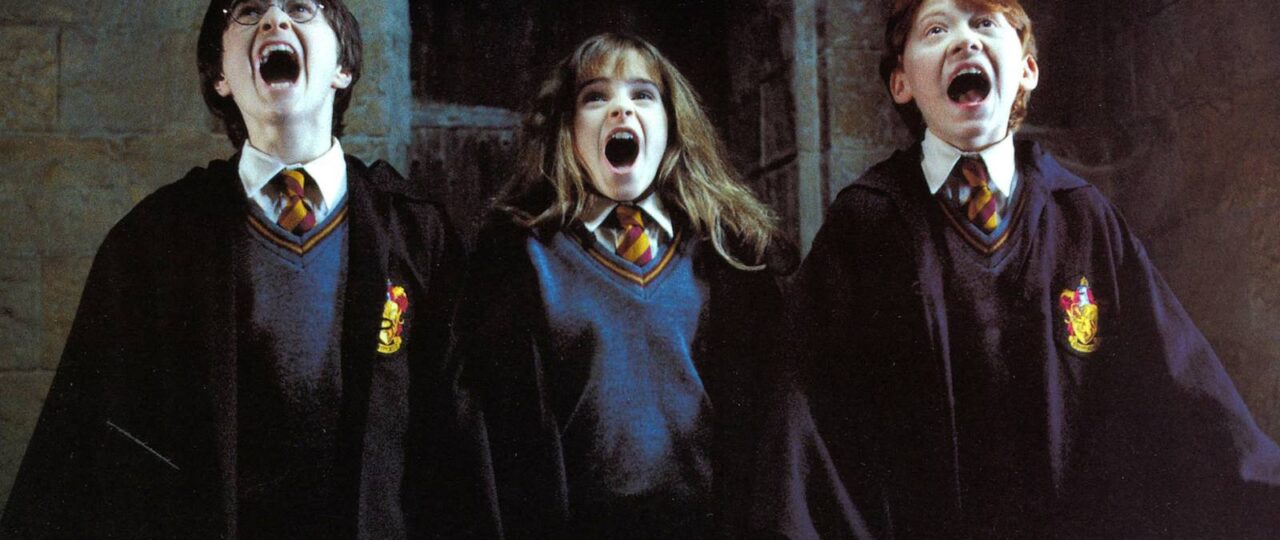
The Harry Potter movies have faced plenty of criticism for leaving out beloved characters and storylines from J.K. Rowling’s books. From missing explanations about Voldemort’s past to the absence of entire characters, fans have spent decades debating what the adaptations should have included. However, some of those omissions were arguably the right decisions, particularly when considering details about Harry Potter that become more apparent to adult audiences.
Adapting seven increasingly lengthy novels into eight feature films required considerable compromises. The later books, particularly Harry Potter and the Order of the Phoenix, contain enough material to fill several movies. Keeping every subplot would have created exhausting runtimes and potentially distracted from Harry’s increasingly dangerous struggle against Lord Voldemort.
Although some of the Harry Potter characters are considerably more powerful in the books than the movies suggest, a successful adaptation needs to function independently of its source material. Certain storylines that provide amusing diversions or additional character development in the novels would have contributed relatively little to the movies’ central narratives.
This is not to say these subplots were poorly written or that fans were wrong to miss them. In several cases, the books are richer for their inclusion. However, judging the adaptations as movies rather than illustrated versions of Rowling’s novels reveals six instances where leaving something out was probably the smarter creative decision.
Peeves’ Constant Mischief At Hogwarts
<<img src="https://static0.srcdn.com/wordpress/wp-content/uploads/2020/03/peeves-Cropped.jpg?q=49&fit=crop&w=825&dpr=2" />
</figure>
Among the most frequently discussed omissions from the Harry Potter movies is Peeves, the mischievous poltergeist who torments students and teachers throughout the novels. Unlike the Hogwarts ghosts, Peeves delights in causing trouble, frequently disrupting lessons and tormenting caretaker Argus Filch. He even becomes an unlikely ally when Dolores Umbridge attempts to impose her authoritarian rules on the school.
Peeves adds considerable personality to Hogwarts, but his antics rarely advance Harry’s central story. In fact, Peeves was originally supposed to appear in the movies, with Rik Mayall filming scenes that were ultimately cut. Introducing another recurring supernatural character would have required additional exposition, visual effects, and screen time across multiple films. His absence undoubtedly removes some of the books’ humor, yet the movies already have enough comic relief. Cutting Peeves allowed the filmmakers to concentrate on characters with greater narrative importance.
Hermione’s S.P.E.W. Campaign
<<img src="https://static0.srcdn.com/wordpress/wp-content/uploads/2025/10/emma-watson-looking-concerned-as-hermione-granger-in-harry-potter-and-the-goblet-of-fire.jpg?q=49&fit=crop&w=825&dpr=2" />
</figure>
Hermione Granger’s campaign for house-elf rights becomes a recurring subplot beginning in Harry Potter and the Goblet of Fire. Disturbed by the treatment of house-elves, she establishes the Society for the Promotion of Elfish Welfare, better known as S.P.E.W. Her attempts to secure better working conditions eventually include knitting clothes and leaving them around Hogwarts in the hope of freeing its house-elves.
The storyline raises worthwhile questions about inequality within the wizarding world, although Hermione’s increasingly misguided methods provide much of its humor. However, adapting the campaign properly would have required considerably more attention to Hogwarts’ house-elves and their treatment. The films already establish the cruelty of magical servitude through Dobby, making a lengthy secondary storyline less essential. Its absence also allows Hermione’s determination to remain focused on the increasingly serious threats facing Harry.
Ludo Bagman’s Gambling Debts And Triwizard Tournament Schemes
Harry Potter and the Goblet of Fire introduces Ludo Bagman, a former professional Quidditch player who becomes the Ministry of Magic’s Head of Magical Games and Sports. He plays a prominent role in the Quidditch World Cup and Triwizard Tournament, although his cheerful personality conceals substantial gambling debts. His attempts to manipulate the tournament and profit from Harry’s success create an additional mystery surrounding the competition.
Bagman is an entertaining supporting character, but his storyline ultimately serves as a distraction from the far more consequential conspiracy involving Barty Crouch Jr. Among the many book scenes omitted from Goblet of Fire, his subplot is one of the easiest to justify cutting. The fourth movie already struggles to accommodate the tournament’s three challenges, Voldemort’s return, and the complicated circumstances surrounding Harry’s participation. Removing Bagman and his financial troubles makes the story considerably easier to follow without sacrificing its central mystery.
Ron’s Fifth-Year Quidditch Struggles
<<img src="https://static0.srcdn.com/wordpress/wp-content/uploads/2026/03/mcdhapo_ec681.jpg?q=49&fit=crop&w=825&dpr=2" />
</figure>
Ron Weasley’s difficult introduction to the Gryffindor Quidditch team provides a substantial subplot in Harry Potter and the Order of the Phoenix. After becoming the team’s new Keeper, Ron struggles with nerves and his lack of confidence, particularly when Slytherin supporters begin mocking him with a humiliating song. His eventual improvement becomes an important personal triumph, while Harry’s suspension from Quidditch adds to the frustration caused by Umbridge’s increasingly oppressive leadership.
Although Ron’s journey offers welcome character development, the fifth movie has more pressing concerns. Harry is dealing with Voldemort’s return, the Ministry’s attempts to discredit him, and the formation of Dumbledore’s Army. Adding an extended Quidditch storyline would have significantly slowed an already crowded narrative. Ron’s insecurities receive attention elsewhere in the franchise, particularly during Half-Blood Prince, making this particular sporting subplot relatively easy to sacrifice.
Found an error? Send it info@screenrant.com so it can be corrected.
Percy Weasley’s Estrangement From His Family
<<img src="https://static0.srcdn.com/wordpress/wp-content/uploads/2026/05/harry-potter-and-the-order-of-the-phoenix_lmminn.jpg?q=49&fit=crop&w=825&dpr=2" />
</figure>
Percy Weasley’s loyalty to the Ministry of Magic causes an enormous rift within his family after Voldemort’s return. Rather than supporting his parents and siblings, Percy sides with the Ministry’s denial of the Dark Lord’s resurrection and distances himself from the Weasleys. His decision creates considerable tension throughout the later books, eventually leading to an emotional reconciliation during the Battle of Hogwarts.
The storyline adds another dimension to the complicated relationships within the Weasley family, demonstrating how political ambition and misplaced loyalty can damage personal relationships. Nevertheless, the films already contain an extensive supporting cast, and Percy receives relatively little attention even before his estrangement. Developing his conflict would have required additional scenes across several installments for a character whose absence barely affects Harry’s journey. His eventual reconciliation is moving in the books, but the movies would have struggled to give it the same emotional weight.
Hagrid And Madame Maxime’s Mission To The Giants
Following Voldemort’s return, Albus Dumbledore sends Rubeus Hagrid and Madame Olympe Maxime on a dangerous mission to recruit the giants as allies against the Dark Lord. Their journey takes them into remote mountainous territory, where they encounter enormous creatures and attempt to prevent Voldemort’s followers from securing their support. The mission also leads Hagrid to his half-brother Grawp, whom he eventually brings back to Hogwarts.
The expedition expands the wizarding world’s political and magical conflicts, but it unfolds largely away from Harry and the principal characters. Including the journey would have required extensive new locations, creatures, and exposition in a film already tackling the Ministry’s corruption and the emergence of Dumbledore’s Army. The adaptation retains Grawp while omitting most of the elaborate mission that precedes his introduction. It’s an understandable compromise that keeps the focus on Hogwarts, where the fifth movie’s most important developments occur.
Found an error? Send it info@screenrant.com so it can be corrected.
Discover more from NAIRAVOICE.COM.NG
Subscribe to get the latest posts sent to your email.