
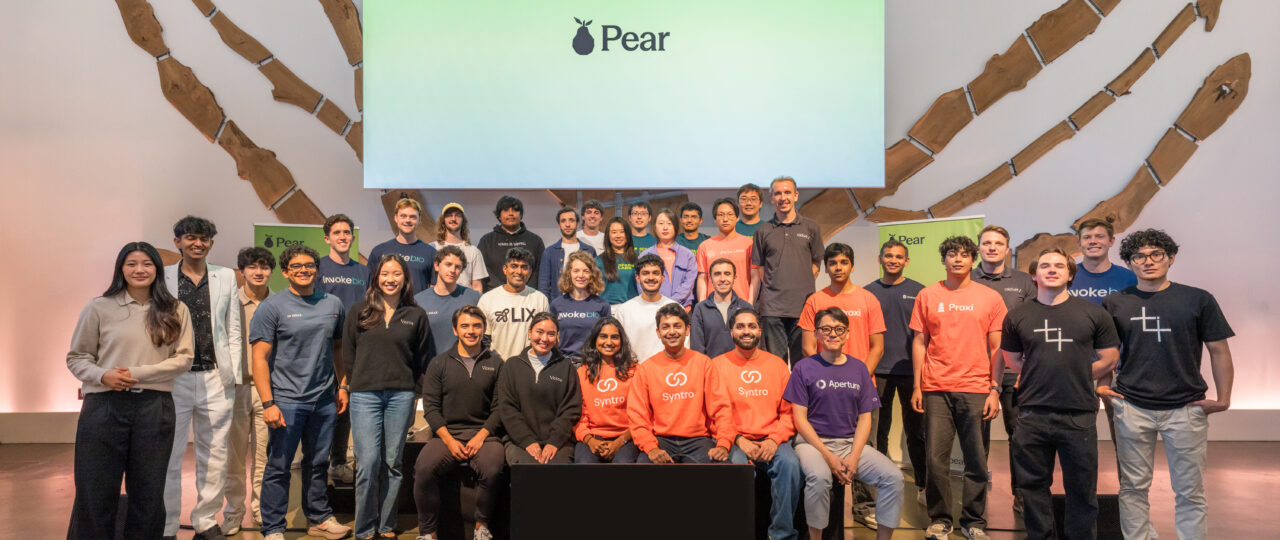
The PearX program distinguishes itself from Y Combinator, the OG of startup accelerators, in several ways. Besides being much smaller, it doesn’t offer companies standard terms. It’s investments can be as high as $2 million. Moreover, unlike YC, where some of the buzziest startups raise funding before the program ends, PearX claims to keep its participants under wraps until demo day.
TechCrunch attended Pear’s latest demo day, which took place in San Francisco last week, and then stuck around to ask some of the VCs about which companies stood out to them out of the 16 startups in the batch.
Below are five of the companies that seemed to have generated the most buzz.
What it does: Spatial foundational models for powering robotics, gaming, and special effects.
Why it stood out: While Speridlabs is certainly not the only startup developing world models to do for 3D space what LLMs did for language, it argues that its more established competitors, including Runway, Odyssey, and Google’s Genie, cannot be queried or modified. To solve this, Speridlabs built Mundus, which it calls a 3D Midjourney because it keeps its geometry persistent when a part is changed.
What it does: building a fast, cost-efficient chip that runs inference directly on device.
Why it stood out: Nvidia’s GPUs and Google’s TPUs require expensive, power-hungry memory that is currently in short supply. Saia claims to have designed a chip that bypasses traditional memory by running AI directly out of flash storage. The startup claims its chip delivers vastly superior speeds and eight times the capacity while using four times less power than Nvidia’s Jetson, a leading local AI chip and board. Saia says it’s already in discussions with Samsung regarding memory integration, plans to start fabricating test chips next year, and aims to launch mass production by 2028. Developing hardware is notoriously brutal, but 20-year-old founder Ayaan Govil managed to convince Pear VC co-founder Mar Hershenson, a semiconductor engineer with a PhD in circuit design, to take a chance on his vision.
What it does: a more secure AI personal assistant.
Why it stood out: Ren claims to offer functionality similar to Muse and Instinct, but with a heavy focus on security and privacy. The startup says it keeps data on-device where possible or uses a secure private cloud, checking actions against strict user-set guardrails. Furthermore, Ren distinguishes itself from competitors that rely on human operators to place phone calls by using a fully automated voice system, keeping human involvement entirely out of the loop to protect user privacy.
What it does: AI native trust and estate planner.
Why it stood out: Setting up a trust is expensive and time-consuming. Veros wants to simplify the work normally done by attorneys, wealth managers, and trust administrators by employing AI to recommend structures and manage assets over their lifetime. Already managing $250 million in AUM, the startup is also in the process of securing a trust charter so it can operate as a regulated trust company itself.
What it does: AI engineer for industrial design.
Why it stood out: Datum wants to expedite physical product development by helping engineers find and use what they built previously. The startup indexes a company’s library of 3D designs. Using proprietary Geometric Fingerprint technology, Datum identifies parts based on their shape, helping streamline and automate engineering across a massive physical design market.
Discover more from NAIRAVOICE.COM.NG
Subscribe to get the latest posts sent to your email.