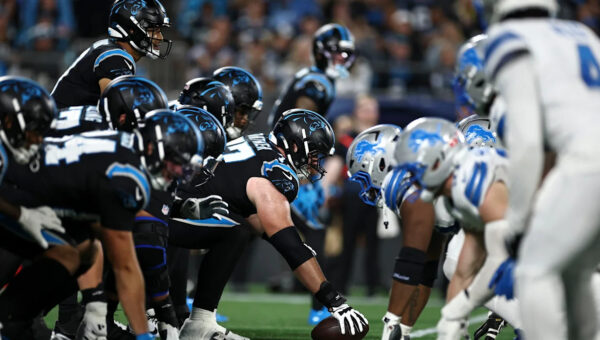

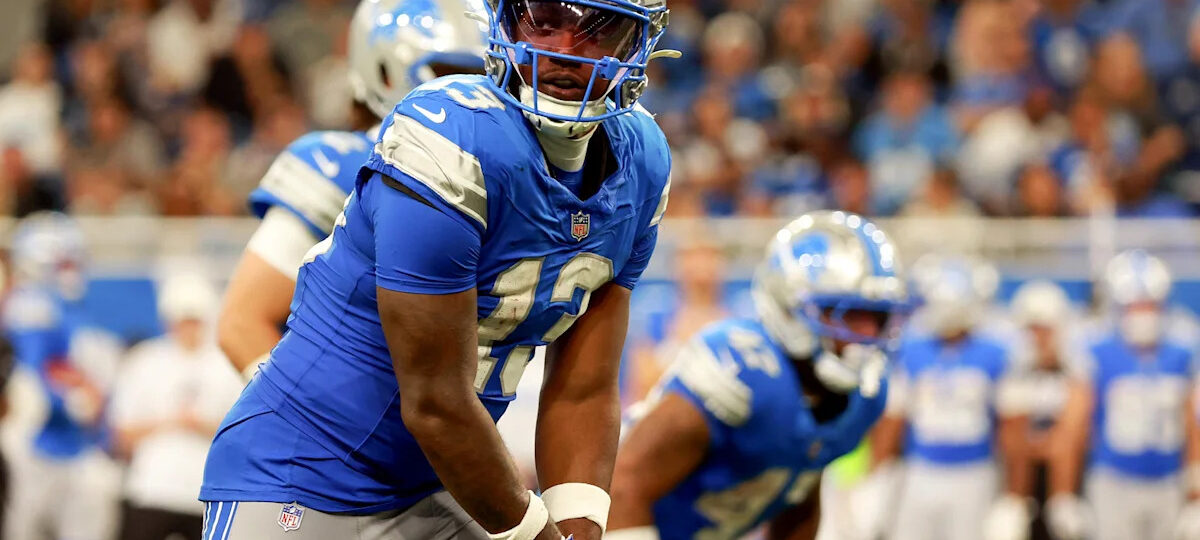

The Detroit Lions got their first win of the 2026 preseason, defeating the Washington Commanders at Ford Field, 17-13. Detroit’s defense was particularly impressive, limiting Washington’s offense to just 35 rushing yards across 17 carries, and surrendering just nine first downs over 45 plays run on offense.
As we’ll do every week throughout the season for this Lions team, we have data we can comb through, courtesy of Pro Football Focus, that helps us better understand the football the Lions have played thus far—and what to look forward to in the coming weeks. Let’s take a closer look at the Lions by the numbers after their preseason win over the Commanders.
Pro Football Focus’ premium statistics are an invaluable data point for football fans to better understand the game. Consider subscribing to PFF to have full access to a plethora of stats and grades to keep you informed about the NFL—and college football, too. Also, NFL Pro is supplying some innovative and illustrative advanced statistics of their own that are worth checking out for the price of admission.
In what we can assume to be Tate Ratledge’s only snaps of the preseason, it was a reminder of just how effective the second-year player is at this point in his career. Ratledge earned a pristine 100.0 pass-blocking efficiency score—a signature stat from Pro Football Focus that measures pressure allowed on a per-snap basis with weighting toward sacks allowed—not allowing a single pressure, hurry, quarterback hit, or sack across his seven pass-blocking snaps. After a rewatch of the tape, Ratledge was a positive force in the run game, working double teams and getting active at the second level. Among the 95 qualifying guards in the preseason’s Week 2, Ratledge’s combined score of his pass-blocking efficiency and his run grade made him PFF’s 12th-highest-rated guard of the week.
As previously mentioned, the Lions defense was stifling against the Commanders. There are plenty of individual performances to highlight, including the preseason debut of Derrick Moore and the Lions debut of DJ Wonnum, both of whom picked up sacks. Skyler Gill-Howard flashed more of the disruption and playmaking that’s earned him attention and praise during training camp. The starting cornerback duo of D.J. Reed and Rock Ya-Sin allowed a combined two receptions for 9 yards.
But the best way to capture just how productive the Lions defense was against the Commanders is to look at how many defensive stops they made on Saturday. While Washington ran 45 plays on offense, Detroit’s defenders combined to record 26 defensive stops—PFF’s stat that measures how many tackles constitute a “failure” for the offense. That’s a lot of failure from the Commanders, and that was all without Aidan Hutchinson, Alim McNeill, or Jack Campbell taking a snap.
Teddy Bridgewater’s sudden retirement has put the Lions in a bit of a bind at the backup quarterback position. Detroit was quick to make a move for another quarterback, signing Joshua Dobbs less than two weeks ago. We’ve seen how this coaching staff values experienced players at positions all over the field, but there’s been a clear emphasis on having the backup quarterback be a veteran. And while Dobbs’ 600+ dropbacks in the regular season and familiarity with Drew Petzing seem to make him the frontrunner for the QB2 role in Detroit, his play against the Commanders didn’t look like that of a veteran.
The sack fumble on the team’s second snap of the game wasn’t entirely Dobbs’ fault after Larry Borom was beaten off the snap, but Tyler Conklin’s assignment was clearly to block any extra pressure at the LOS—which he did—and release to the flat. Dobbs didn’t diagnose the possibility of Amik Robertson blitzing—the cornerback did disguise it until the last moment—but instead of dumping the ball off to his checkdown—Conklin—Dobbs tried to roll out to his left, but ran right into the pressure of Robertson. On the next series, facing a third-and-6 from their own 45-yard line, Dobbs was guilty of trying to do too much again. After bailing on a fairly clean pocket, he launched a throw across his body to the middle of the field that sailed past his target and was easily intercepted. Reviewing the play, Tay Martin was open on a drag route at the end of Dobbs’ dropback, which likely would have resulted in a first down—or at the very least, an opportunity to go for it on fourth-and-short.
All that said, Dobbs faced pressure on five of his 13 dropbacks against the Commanders, going 0-4 on those throws and earning PFF’s second-worst passing grade (20.9) for quarterbacks under pressure. By contrast, Luke Altmyer faced pressure on seven of his 17 dropbacks, completing one of his three attempts for 3 yards, choosing to eat a sack instead of committing any turnover-worthy plays.
One celebration for the coaching staff this offseason has been the development of Jackson Meeks. Meeks’ transition from wide receiver to tight end, which started last season, has turned into a pleasant surprise for the Lions as they potentially look to increase their usage of multiple tight end sets. It might sound surprising, but through two preseason games, Meeks leads the team in receptions (5) and receiving yards (50).
Against the Commanders, Meeks recorded 2.75 yards per route run, the eighth-best mark among 42 qualifying tight ends in Week 2 with at least two targets. Meeks is still in pursuit of a spot on the 53-man roster, but if he keeps making plays like his forced fumble on special teams that helped seal the win for the Lions on Saturday, it’s going to be hard to keep him from being a part of this football team come September.
To put it plainly, as it stands today, Jacob Saylors is the best running back not named Jahmyr Gibbs in Detroit. With Isiah Pacheco and Sione Vaki unable to take the field due to injury, Saylors has made the most of his opportunities through two preseason games, running the ball 14 times for 87 yards. His 5.3 yards per carry against the Commanders led the way for the four running backs who carried the ball on Saturday, but if you want to look around the league, his 6.2 yards per carry is the fourth-best mark among the 67 qualifying running backs with at least 10 carries this preseason. If you add on his 28 yards receiving, he’s seventh in total yards from scrimmage among running backs this preseason.
Pacheco is the most proven runner behind Gibbs, but injuries are getting in the way for the veteran. Vaki has the most potential of this group, as his athleticism and football IQ make him a prime candidate to be the next best running back on the team, but without the reps, it makes it harder to count on Vaki with opportunities in the regular season. All of this leads back to me currently believing that Saylors is closer to being the team’s RB3 instead of RB4, thus making him a safe bet to make the 53-man roster.
Discover more from NAIRAVOICE.COM.NG
Subscribe to get the latest posts sent to your email.