Sometimes, it’s hard to find something to watch while at home in the afternoon. Streaming services have so many movies and TV shows that it’s tough to pick one, and going out is often less than desirable, especially when you’ve already settled in. Then again, you can always read a great book — in fact, few things are better than reading a truly great book, and luckily for you, some of the best are rather short.
Indeed, we’re talking about those books that you can feasibly finish in a single afternoon. These entries are all novellas due to their length, and range across different genres, from fantasy to drama, and cover a wide range of themes. Yet, they remain compelling and impossible to put down once you’ve started them. So get ready to spend a quiet afternoon at home with some of literature’s greatest characters. Could there be a better plan for a Saturday evening?
‘The Strange Case of Dr. Jekyll and Mr. Hyde’ (1886)
<<img src="https://static0.colliderimages.com/wordpress/wp-content/uploads/2026/08/dr-jekyll-mr-hyde-robert-louis-stevenson-book-cover.jpg?q=70&fit=crop&w=825&dpr=1" />
Image via Penguin Random House</figure>
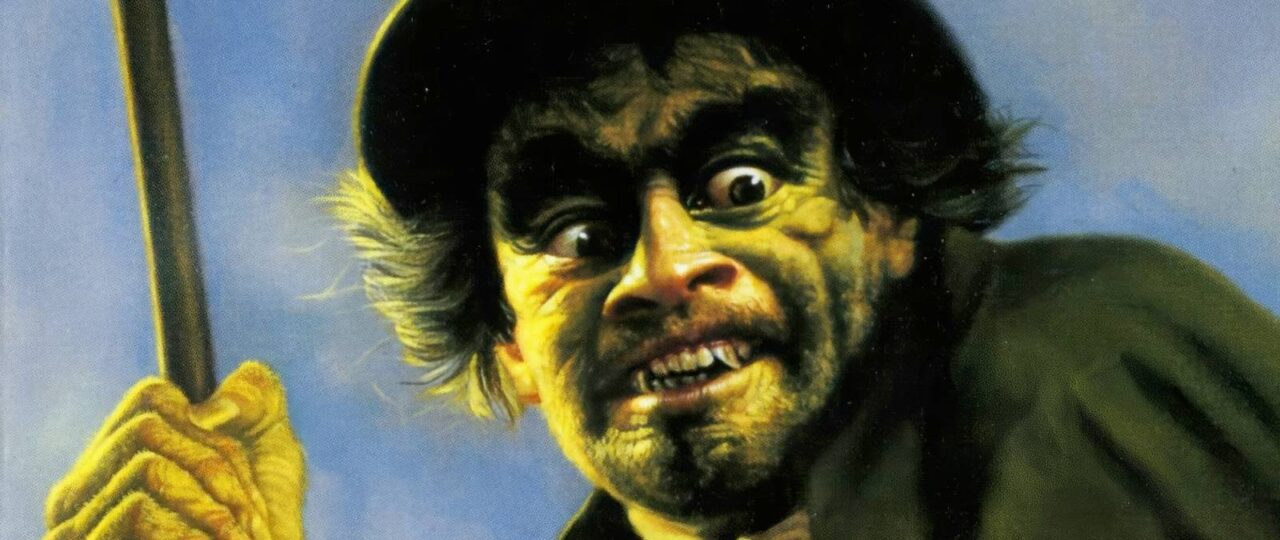
Every book on this short list is a classic, but this first one is perhaps the biggest of all. The Strange Case of Dr. Jekyll & Mr. Hyde is a proper foundational text of Gothic horror, one of those stories that has become archetypal when discussing dual personalities. The plot is well-known by now: legal practitioner Gabriel John Utterson investigates the possible connection between Dr. Henry Jekyll, a respectable gentleman from Soho, and Edward Hyde, a murderous and mysterious man.
Originally published without the article at the beginning, The Strange Case of Dr. Jekyll and Mr. Hyde has now become an enduring part of literary culture. The novella is ubiquitous in pop culture, with the term “Jekyll and Hyde” universally used to describe a two-faced individual. Yet, while you might indeed be aware of it, you might not have actually read it, and you should. The writing by Robert Louis Stevenson is atmospheric and descriptive, making the short length an absolute breeze to get through. In its first edition, it was just 141 pages, and most modern editions stick to that same length, meaning it’s a perfect choice to go through in an afternoon.
‘The Metamorphosis’ (1915)
<<img src="https://static0.colliderimages.com/wordpress/wp-content/uploads/2026/07/metamorphosis-kafka-book0.jpg?q=70&fit=crop&w=825&dpr=1" />
Image via Little Clothbound Classics</figure>
Now we go on to another book whose mere title evokes strong feelings. Franz Kafka‘s Metamorphosis is the story of salesman Gregor Samsa, who wakes up one day to realize he’s become “a monstrous vermin,” also translated as an insect, most commonly interpreted as a cockroach. The book then follows his struggle to come to terms with his new state, also dealing with his family’s reaction and adjustment.
Many interpretations about The Metamorphosis exist, ranging from the sociological to the psychological and religious. However, it’s always best to treat it as a self-contained tale of the hardship of everyday life and the way we, as individuals, adapt and either move past it or succumb to it. There is indeed a theme of otherness and sacrifice that could give the story any number of readings, but Kafka’s prose is engaging and complete, even without any subtext injected into it. Indeed, The Metamorphosis is among the best books you can read because it delivers an entire experience, demanding very little in return. And at just 70-something pages, depending on the edition, it’s a book that you can read in a matter of hours.
‘Breakfast at Tiffany’s’ (1958)
<<img src="https://static0.colliderimages.com/wordpress/wp-content/uploads/2026/09/breakfast-at-tiffany-s-book-cover-1958.jpg?q=49&fit=crop&w=825&dpr=2" />
Image via Vintage</figure>
Lastly, we have a book that has been far surpassed by its movie adaptation but which remains a worthy read for anyone interested in literary fiction. Truman Capote‘s Breakfast at Tiffany’s follows an unnamed writer who chronicles his early days in 1940s New York, specifically in the Upper East Side, where he makes the acquaintance of his neighbor, the spirited and quirky Holly Golightly. Throughout the story, the writer sees many wealthy figures come in and out of Holly’s life, while she herself remains adrift.
While Audrey Hepburn forever immortalized the role of Holly Golightly with the 1961 movie adaptation, the girl in Capote’s novel is different and wholly engaging in her own way. Described by Capote as “an American geisha,” 18-year-old Holly lives off the presents and attention of wealthy men, one of whom she hopes to marry. Breakfast at Tiffany’s is overall nostalgic: there is a sense of loss throughout the story, not only because it’s being told from the future, as the narrator reminisces about his friendship with Holly, but also because you understand this girl will forever be running away from something. Yet, there’s also an undeniable romanticism to Holly’s depiction, her eternal pursuit of an idealized life and her connection with Tiffany’s. It’s a whole experience contained in fewer than 200 pages, making it the ideal read for a fall afternoon.
Discover more from NAIRAVOICE.COM.NG
Subscribe to get the latest posts sent to your email.