


2027 ODI World Cup format controversy: Explaining why ICC are under fire from associate nations originally appeared on Cricket News.
Add Cricket News as a Preferred Source by clicking here.
KEY TAKEAWAYS:
- Scotland and the Netherlands have criticised the ICC over changes to the 2027 ODI World Cup format.
- The three lowest-ranked teams will now play a Super Series, with only one advancing to the main stage.
- Associate nations argue the changes reduce meaningful opportunities for emerging teams.
MORE:Full list of teams that have qualified for ICC Men’s ODI World Cup 2027
Associate nations criticise ICC over late 2027 World Cup format change
The International Cricket Council (ICC) has come under fire from associate nations after making a late change to the format of the 2027 Men’s ODI World Cup.
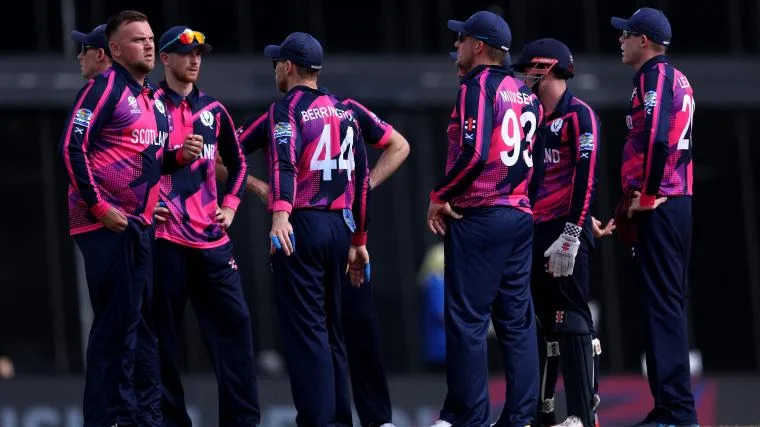
Cricket Scotland and the Royal Dutch Cricket Association (KNCB) have publicly criticised the governing body, describing the lack of communication around the changes as “disappointing and disrespectful”.
The two boards argued that the new structure could undermine the progress made by associate nations and reduce their opportunities to compete against the world’s leading teams.
A joint statement from Cricket Scotland and the Royal Dutch Cricket Association (KNCB).
➡️ https://t.co/LXig37xx2mpic.twitter.com/cuSIW5VVO6
— Cricket Scotland (@CricketScotland) August 10, 2026
MORE:How WI can still reach the 2027 ODI WC after missing direct qualification
What has changed in the 2027 ODI World Cup format?
The 2027 World Cup will see 14 participating nations as compared to the 10 nations in the tournaments organised in 2019 and 2023, but about 15 months before the start of the tournament, a major format revamp was announced by the ICC.
There will be the inclusion of a ‘Super Series’ comprising the three worst-ranked teams out of 14 qualifying teams. This will comprise the round-robin tri-series, and only the winning team from it will make it to the next round.
This team will join the other 11 teams to enter the second round, where the 12 teams will be divided into two groups of six teams each. Then the top three teams from each group and the fourth-best team from the two groups will reach the seven-team ‘Super 7’ round.
The top four teams of the Super 7 round will move forward to the semifinals. Thus, there will be 57 matches in the 2027 World Cup.
MORE:What is the BCCI CoE? The purpose, functions and head of Centre of Excellence detailed
Why are Scotland and Netherlands unhappy with the ICC?
As part of their joint statement, Cricket Scotland and the KNCB referred to the new system as a step backwards and cautioned that it might “risk weakening the integrity and credibility of international cricket.”
“At a time when cricket is seeking to expand its reach, attract new audiences and strengthen its position on the international sporting landscape, reducing meaningful opportunities for emerging nations sends entirely the wrong message,” the statement added.
“Changing those structures at short notice creates significant uncertainty, disrupts planning, and places additional operational and financial pressure on organisations that are already operating with limited resources.”
Besides, both Scotland and the Netherlands felt strongly about the fact that they were not consulted for the new changes. It was pointed out that teams and players work hard to prepare for the World Cup and the qualification paths cannot be changed midway.
MORE:India’s 2036 Olympic bid receives ECB support
ICC must balance competitiveness with opportunity
The ICC is indeed justified in its quest for competitiveness in the World Cup, but the apprehensions aired by Scotland and the Netherlands have brought into sharper focus the balance the governing body strikes between these two.
In the context of the Associate members, qualifying for the World Cup means years of effort spent on developing cricket and gaining an extremely rare opportunity to measure up to some of the best in the world.
The newly introduced Super Series reduces this opportunity to only two games for two of the three worst qualifiers to the World Cup.
There certainly is justification for increasing the bar for progression, but implementing this change with less than 18 months until the next tournament has understandably upset some members. The ICC could have easily avoided most of this controversy with prior and clearer communication with the relevant boards.
If the Associate members are to put effort into reaching the World Cup, they must believe that they have an actual opportunity to compete there.
For all the latest cricket news, opinion and commentary and to share your voice head to our Facebook, Instagram and X (Twitter) pages.
Discover more from NAIRAVOICE.COM.NG
Subscribe to get the latest posts sent to your email.