

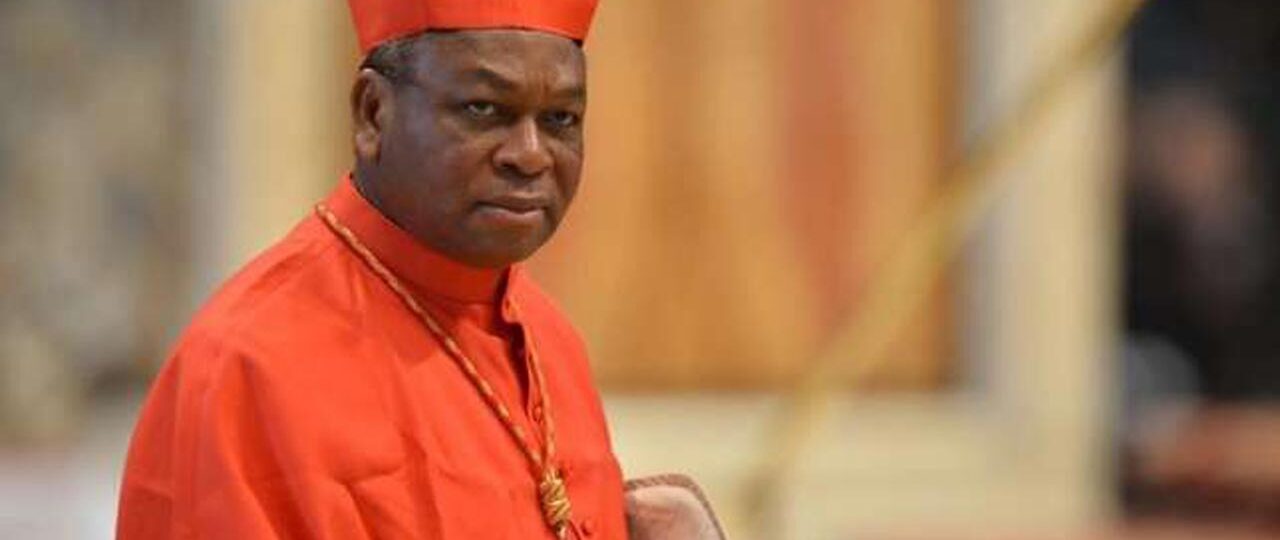
Catholic Archbishop Emeritus of Abuja, Cardinal John Onaiyekan, former Nigerian Bar Association President Afam Osigwe, SAN, and other speakers at the 22nd All Nigeria Editors Conference have called for electoral reforms to ensure that Nigeria’s elections are decided at the polls rather than through prolonged court battles.
The conference, organised by the Nigerian Guild of Editors (NGE), was held in Enugu under the theme, “The Ballot, the Media and the Task of Keeping Democracy Alive,” with a focus on combating AI-generated misinformation ahead of the 2027 elections.
Speaking at the event, Onaiyekan said the judiciary should resolve electoral disputes, not determine who wins elections.
“The judiciary is supposed to be the last stage in the electoral process. It should be stressed that the judiciary is not to determine elections about who wins, but rather to adjudicate disputes when they arise,” he said.
He said Nigeria’s recent experience had increasingly seen electoral contests decided in courtrooms.
“Our experience in the recent past has almost become that we have been witnessing a situation where our elections are being determined not at the polls, but in the courts by the tribunals,” he added.
Onaiyekan proposed reforms, including the creation of special election tribunals, the resolution of election cases before elected officials are sworn in, greater involvement of voters in electoral litigation and a review of the process for appointing INEC leadership.
He also called for a presidential candidate to score at least 50 per cent of the votes cast to be declared the winner.
On the need to resolve disputes before inauguration, he said: “More seriously, we must do all that is necessary to dispose of all tribunal cases before swearing in any candidate.”
He also questioned a system in which a declared winner could use state resources to defend an election victory in court.
“A situation where a candidate has been declared a president still going to tribunal to defend his position using state means and state resources to defend himself against his opponents is not serious as far as natural justice is concerned,” he said.
Osigwe, speaking on “Election Petition in the Digital Age: Independence, Evidence, BVAS,” said Nigeria had become one of the countries with a high number of election petitions.
“I see that Nigeria is one of the countries with the highest number of election petitions, and all because the courts are very frequently involved in determining either the outcome or who won,” he said.
He raised concerns about the evidential treatment of BVAS and the INEC Result Viewing Portal (IReV), arguing that technology designed to improve transparency should not make it harder to prove alleged electoral irregularities.
He also criticised the political culture of telling defeated candidates to “go to court,” saying public confidence in the judiciary and electoral institutions was crucial to the legitimacy of the democratic process.
The Minister of Information and National Orientation, Mohammed Idris, represented by the Managing Director of the News Agency of Nigeria, Ali M. Ali, warned that AI had made it easier to fabricate convincing photographs, videos, audio recordings and documents.
“A false statement can be produced in the voice of a public official. A fabricated video can be circulated within minutes. An old photograph can be presented as a current event,” he noted.
He urged journalists to verify information before publication and clearly distinguish between fact, allegation and opinion.
The Obi of Onitsha, Igwe Alfred Nnaemeka Achebe, similarly warned that AI could place political candidates at events they never attended or make public officials appear to say things they never said.
“A voice that sounds exactly like a governor can now say what he never said. A video can place a candidate where he never was,” he noted.
Achebe proposed a joint Election Rapid Response Desk for newsrooms to identify and debunk viral falsehoods.
“The credibility of the ballot must be protected so that the courts do not have to replace the citizenry in determining who should represent the people,” he noted.
Political economist, Prof Patrick Utomi warned that weak electoral institutions could undermine public confidence and the wider stability of the country.
Enugu State Governor Peter Mbah, meanwhile, urged journalists to strengthen investigative reporting and establish facts amid growing AI-generated misinformation.
“Government must be transparent about what it is doing and be accountable for the results. The press must establish the facts and report the truth,” the governor said.
Discover more from NAIRAVOICE.COM.NG
Subscribe to get the latest posts sent to your email.