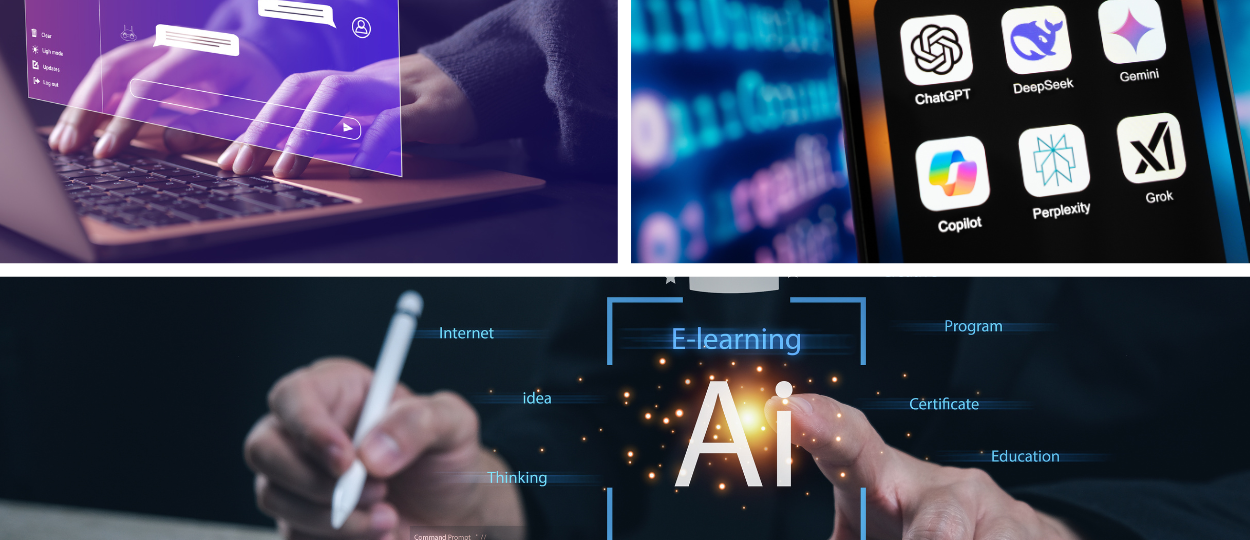
- AI Can Support Research and Independent Learning
Research is an important part of education, particularly at tertiary level. However, finding relevant information, identifying reliable sources and understanding unfamiliar topics can be challenging.
AI helps students begin their research by explaining concepts, suggesting relevant keywords, generating research questions and providing summaries of broad topics. It can also recommend different perspectives that students may wish to investigate further.
Although AI should never replace credible academic sources, it serves as an excellent starting point that enables students to approach research with greater confidence and direction.
7. AI Can Encourage Curiosity Beyond the Classroom
One of the most exciting benefits of AI is its ability to encourage continuous learning outside formal education.
Students are no longer limited to what is taught during school hours. They can explore astronomy, psychology, coding, entrepreneurship, philosophy, climate change or virtually any topic that captures their interest.
This freedom nurtures curiosity, which educational experts consistently identify as one of the strongest drivers of lifelong learning. Students who develop the habit of asking questions and seeking deeper understanding often become more independent thinkers throughout their academic journey.
8. AI Can Help Develop Valuable Career Skills
Education today extends beyond passing examinations. Employers increasingly value practical skills such as communication, digital literacy, critical thinking and adaptability.
AI provides opportunities for students to learn coding, practise interview questions, improve presentation skills, draft professional emails, prepare CVs and even understand workplace scenarios.
Students can also use AI to explore career paths, understand industry trends and identify skills required in different professions. This exposure helps them make more informed educational and career decisions long before graduation.
9. AI Can Make Learning More Inclusive
Every learner faces unique challenges. Some students learn more slowly than others, while others require additional explanations, visual examples or simplified language.
AI contributes to inclusive education by offering multiple ways of presenting information. It can explain concepts in plain English, generate examples, translate certain materials and adapt explanations according to different learning needs.
For students studying independently or living in areas with limited educational resources, this accessibility can significantly improve learning opportunities and reduce educational barriers.
10. AI Can Build Students’ Confidence to Learn Independently
Many students hesitate to ask questions in class because they fear giving the wrong answer or being judged by classmates. Over time, this fear can prevent meaningful learning.
AI provides a private learning environment where students can ask unlimited questions without embarrassment. Whether they need an explanation repeated five times or wish to explore seemingly simple questions, they can do so comfortably.
This confidence often carries over into the classroom. Students who first develop understanding through independent learning become more willing to participate in discussions, answer questions and engage actively with teachers. Rather than replacing classroom learning, AI can strengthen it by helping students arrive better prepared and more confident.
Conclusion
Artificial intelligence is transforming education in remarkable ways. It enables students to understand difficult concepts, organise their studies, improve their writing, revise more effectively and develop skills that extend far beyond the classroom. When used responsibly, AI becomes more than just a technological tool—it becomes a personalised learning companion that supports curiosity, independence and academic growth.
However, students should remember that AI works best when it complements genuine learning rather than replacing it. Reading textbooks, attending classes, participating in discussions and thinking critically remain essential parts of education. AI can provide guidance, but students must still do the intellectual work required to truly understand and apply knowledge.
Ultimately, the future of education will not be shaped by artificial intelligence alone but by students who know how to use it wisely. Those who embrace AI as a learning partner instead of a shortcut will be better prepared to succeed in an increasingly digital and knowledge-driven world.
Discover more from NAIRAVOICE.COM.NG
Subscribe to get the latest posts sent to your email.