With so many incredible anime out there, it’s hard for viewers not to feel like they have to make the most of their watch time. There are innumerable hidden gems in the anime world; there are also countless long-running series like Naruto receiving major updates and new anime, giving viewers a hidden task of hundreds of episodes of homework if they want to embrace the series completely.
Some series are gifts that keep on giving, though. While doing due diligence to avoid spoilers, it’s important to document those series that reward rewatches and viewer investment more than others. Sometimes, one watch of a good series is more than enough—there are many anime that can be binged in a weekend then left behind. But there are some series that really need more than one viewing to get their full effect. These anime are more than worth a viewer’s time; they’re series which will reward viewers for their time in spades.
Attack On Titan
<<img src="https://static0.srcdn.com/wordpress/wp-content/uploads/2026/10/attack-on-titan-promotional-picture-for-season-3-1.jpg?q=49&fit=crop&w=825&dpr=2" />
</figure>
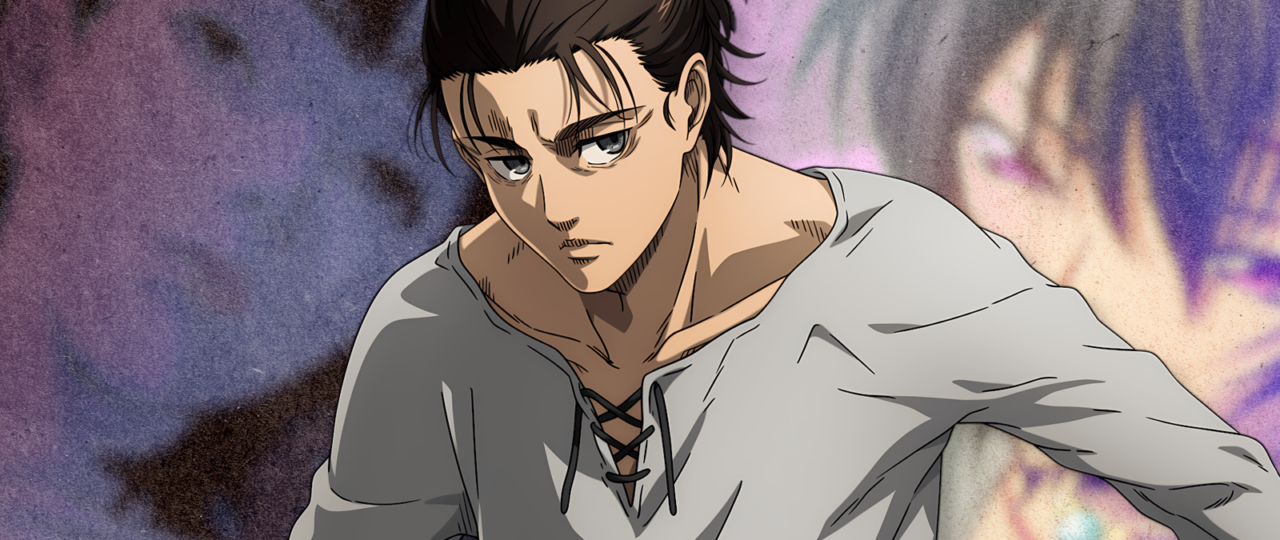
There’s really one seminal example of an anime series that can be revisited over and over: Attack on Titan. Attack on Titan sets an almost archetypal example with its ingenious approach to narrative structure. Attack on Titan‘s incredible foreshadowing basically fundamentally redesigned how shōnen anime can be written, raising the bar for what stories are expected to do.
The end result is that Attack on Titan‘s vast story is one whose ending can be felt from its very beginning. Creator Hajime Isayama famously had a very definitive idea of how the story would end when starting out. In effect, this means its ending could be deeply encoded into its humble beginnings. Once one watches for the first time and knows the general story progression, one can see the way the ending sequence is telegraphed from the very beginning. Attack on Titan is a humbling exercise in long-con storytelling with very little serious competition, especially in the world of anime.
Kaiji: Ultimate Survivor
Generally speaking, Kaiji: Ultimate Survivor is a piece without parallel. On the surface, it’s a death game anime along the same lines as Death Parade and Alice in Borderland. But looking beyond the surface, Kaiji has a foundational loop that makes it impossible to put down and fundamentally thrilling no matter how many times the viewer has seen it. Based around the titular Kaiji, the series follows a down-on-his-luck ordinary worker who is thrust into the world of underground high-stakes gambling in order to recoup his debts.
Its seemingly straightforward premise quickly gives way to one of the smartest psychological thriller anime ever written as the show’s delectable mental calculus plays out in combination with expert pacing and suspense. The first viewing can give the vibe of the series, but subsequent viewings are where the series’ various games and conceits gain a full life of their own, letting viewers enjoy the series on a new level.
Code Geass
Code Geass has become an utter cult classic for very good reasons. Zooming out, the series combines a sort of soapy interpersonal drama with mecha action and effortlessly complex geopolitics. There simply aren’t other anime that do what it does in the same way; it’s a one-of-a-kind series that almost verges into camp with its over-the-top characterization, blatant product placement, and sometimes jarring juxtaposition of goofy gags with high-stakes political writing.
Built around the story of a society where a country called Britannia now rules over the Japanese population in an effective apartheid regime, Lelouch Lamperouge is a dejected once-prince who comes to lead the Japanese rebellion for what are arguably all the wrong reasons. He does so alongside a mystical power called the Geass and a mysterious girl named CC in a story that culminates in one of the most unhinged anime finales ever written.
Code Geass’s melodrama combined with its incredibly dense plot and quirky humor make it a story that can’t just be watched once. Watching Lelouch’s plots unfold a second time comes with an intense sense of dramatic irony knowing his motivations and the consequences of his actions, adding immense retrospective depth that keeps the series from ever getting old.
Death Note
<<img src="https://static0.srcdn.com/wordpress/wp-content/uploads/2025/11/light-yagami-flexing-his-pen-in-death-note.jpg?q=49&fit=crop&w=825&dpr=2" />
</figure>
Death Note is one of the most iconic anime of the 2000s, a product of the golden age of Madhouse that gets everything right from pacing to art-style to sound design. Although the series is singularly unforgettable, it also has the unique quality of getting better with every single rewatch. After high schooler Light Yagami happens upon a supernatural notebook that allows him to kill anybody with just their name and cause of death, a whole philosophical battleground develops as he attempts to evade the prying eyes of those around him and outsmart the concept of law itself.
One can fully grasp Death Note on a first watch. To be honest, its questions and considerations aren’t all that deep. However, it has some of the most clever writing of any psychologically intense anime, and that’s where the rewatch value comes in. Watching Light’s entanglements with his police chief father and the prodigious detective L is a rewarding guilty pleasure that never loses its luster no matter one’s familiarity with the underlying plot.
There are several amazing horror anime that get better after a rewatch. But while some fans might reach for the likes of Higurashi: When They Cry or Paranoia Agent for such an example, Another is constantly left out of the conversation. At a surface level, Another has some of the most disturbing, unexpected deaths in all of horror anime. But what makes the series so compelling is the scaffolding around those deaths.
Brimming with the intrigue of supernatural curses in the Japanese countryside, Another features an understated creeping dread that culminates into a truly chilling plot coalescing around its ominous lead. Although the first watch will give a general overview of the plot, a second watch with the entire context will make the already unforgettable story even more menacing and existentially oppressive.
The Disastrous Life Of Saiki K
<<img src="https://static0.srcdn.com/wordpress/wp-content/uploads/2024/11/the-disastrous-life-of-saiki-k.jpg?q=49&fit=crop&w=825&dpr=2" />
</figure>
The Disastrous Life of Saiki K is a particularly lighthearted entry, but it’s nonetheless worth mentioning. Sometimes a series isn’t worth rewatching solely for the big ideas it presents, nor the breadcrumbs it might be laying from day one. Sometimes, a series is worth rewatching simply because it’s so good, dense, and enjoyable that it will inevitably draw the viewer back from more.
Amidst a crowd of fantastic comedy anime like Gintama and Konosuba, Saiki K serves as a sterling representative of the genre for its ability to always provide a freshness. With its quirky humor and incredibly overpowered protagonist whose powers range from telepathy to teleportation, it’s often compared to One-Punch Man. But Saiki K stands on its own. Its deadpan humor, meandering storylines, and understated identity all serve to curate a story that’s greater than the sum of its parts and which only gains more depth—and consequently more humor—when revisited.
Neon Genesis Evangelion
Neon Genesis Evangelion is an example par excellence of a series that invites several rewatches. It has dense mecha action, but in a way that is totally different from the aforementioned Code Geass; it has substantial personal and existential stakes, but in a way that is deeper than the aforementioned Attack on Titan or Death Note. For a certain depth of characterization, there are very few series that even approach the same level of depth that Neon Genesis Evangelion evokes.
At its heart, Evangelion is a coming-of-age story set in the apocalypse where personal trifles like “coming of age” become both unimaginably egotistical yet fundamentally unavoidable. Its primary cast—Shinji Ikari, Asuka Langley, and Rei Ayanami—all use the idea of “coming of age” or “becoming adults” as a vessel for coming into roles determined for them, and the series is incredibly sharp in how it translates those stories into philosophically dense mecha-bound drama peppered with Freudian psychoanalysis of its own characters.
In fact, Neon Genesis Evangelion is notable precisely for its psychoanalytic angle, emerging in a period where Japanese youth themselves had plenty of reason to feel hopeless. But what gives Eva its unique rewatchability is the humanity with which its characters are written; upon a rewatch, their motivations and hang-ups become evident, compelling motivations very early on, sometimes ten or twenty episodes before they’re properly explored or elucidated, giving the characters extra dimension with every watch as they become case studies for the viewer more than oblique fictional characters.
Perfect Blue
<<img src="https://static0.srcdn.com/wordpress/wp-content/uploads/2026/03/perfect-blue.jpg?q=49&fit=crop&w=825&dpr=2" />
</figure>
Satoshi Kon’s Perfect Blue is admittedly not a series, so it breaks up the rhythm of this list. But the reality is that Perfect Blue gets at something that so many anime series—Ergo Proxy, Serial Experiments Lain, and Kon’s own Paranoia Agent—gesture toward in terms of the structure of its narrative: an unreliable, schizoid storytelling that threatens the boundaries of consciousness itself.
What makes Perfect Blue worthy of mention on its own isn’t just that it’s one of the best anime films ever made—it is—but how the apparent conclusions of a first watch beg for a second. The irony is that the second watch won’t ever complete the circuit; certain things might be clearer or put into a different context, but that doesn’t mean the second watch illuminates the truth. So it begs for a third watch, then a fourth.
This circuit of open-ended, eerily human storytelling applies to all the aforementioned series here, which might even be considered as honorable mentions. If one watches Perfect Blue and can’t resist a second watch, then they have opened up an entire new horizon of anime that base themselves on destabilizing narratives and rewarding rewatches, although they all do it in vastly different ways.
<<img src="https://static0.srcdn.com/wordpress/wp-content/uploads/2026/06/johan-liebert-monster.jpg?q=49&fit=crop&w=825&dpr=2" />
</figure>
Monster is one of the best psychological thriller anime of all time, and not for no reason. But its value isn’t exhausted by a first viewing. It’s by no means a spoiler to say that its core relationship exists between Dr. Kenzou Tenma and former-patient-turned-serial-killer Johan Liebert; that dynamic is established within its first ten episodes, and forms the fundamental conflict of the series as the wrongly-suspected doctor aims to clear his name and bring the serial killer Johan to light.
And while the series might tackle deeper existential themes, like Tenma’s feelings of responsibility for Johan’s very life, and it might mull over Johan’s sophisticated architecture behind his crimes, the true value of the series becomes apparent in its intricate scaffolding. Seemingly minor characters like Lunge, Grimmer, and Heinemann wind up playing massive roles in the story’s overarching narrative that are best appreciated with hindsight, making for a story that truly opens up upon a second viewing.
Rainbow: Nisha Rokubou No Shichinin
Rainbow: Nisha Rokubou No Shichinin is a hard series to recommend. It’s also essential viewing, and might be one of the most underrated anime of all time, truly proving that anime can be works of art. What makes Rainbow worthy of mention is that it can’t be watched two times in succession. It’s such a heavy anime. The first viewing unlocks certain plot elements and certain epiphanies that are shocking and disarming all at once.
While these would be recontextualized with a second viewing—as would the epiphanies of many entries on this list—what makes Rainbow unique isn’t simple recontextualization. Rainbow doesn’t beg for a second viewing simply because its plot can be understood with more depth. What makes Rainbow beg for a second viewing is the inevitable relationship viewers build with its characters.
Rainbow‘s anime is a tragedy in a certain sense: the manga indeed proceeds past the anime’s scope, and more mileage could have been obtained from its source material. But the anime is rounded off nicely, and perfectly envelops the unique emotional resonance of the series. That’s what bites at viewers over and over after a first viewing.
It’s the kind of series that always exists at the outskirts of your memory, demanding a rewatch you’re not quite ready for. And yet the temptation is there, always looming, knowing a second viewing would only be just as good if not better than the first. There could hardly be a better candidate for an anime that can’t just be watched once: Rainbow eats at your soul, and lives forever in your head.
Discover more from NAIRAVOICE.COM.NG
Subscribe to get the latest posts sent to your email.